
In the Studio with Georgia Hardinge
Free-flowing, romantic and mathematically precise, step into the studio of the London-based designer with a predilection for pleats
Read more
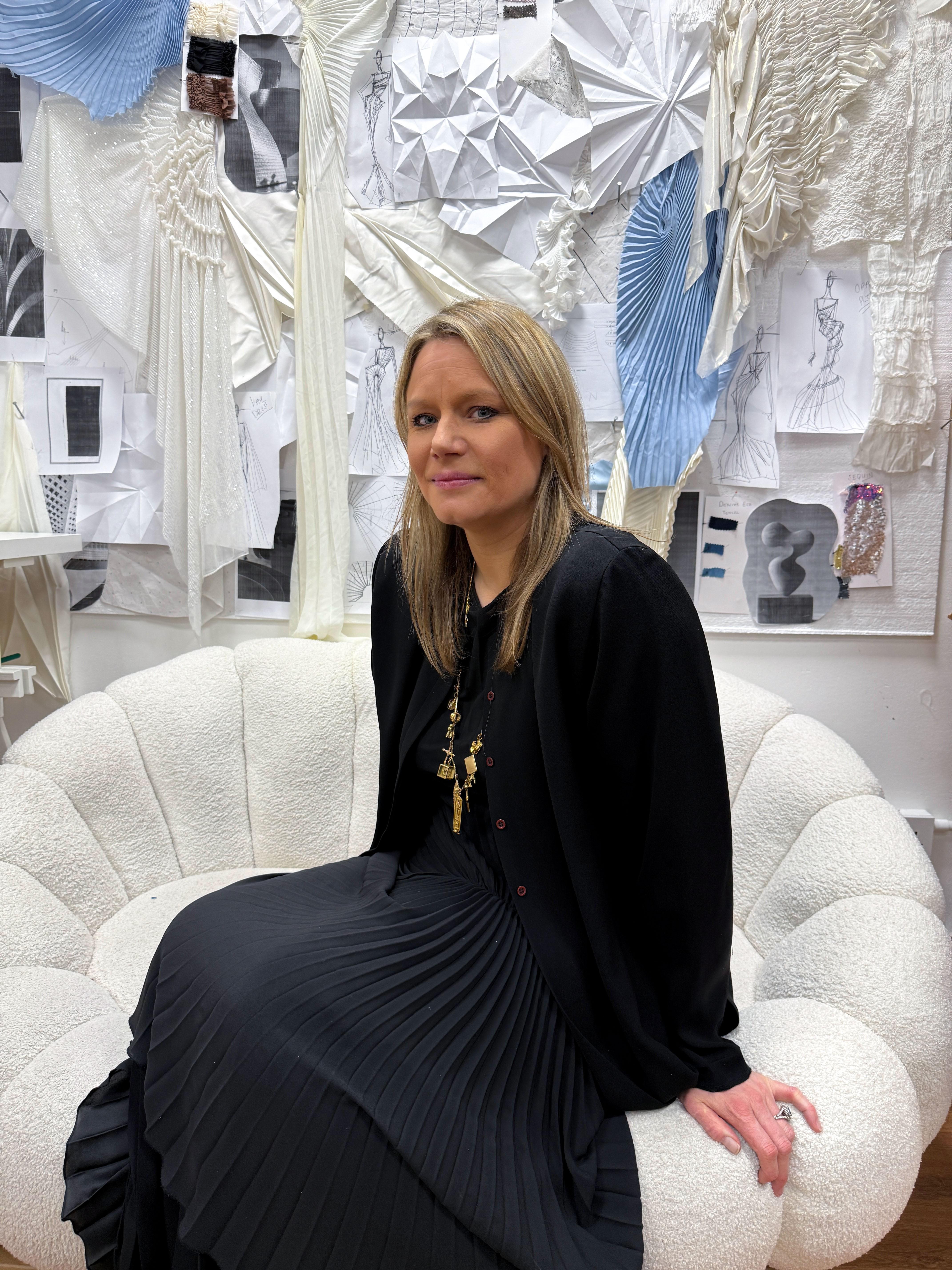
In the Studio with Georgia Hardinge
Free-flowing, romantic and mathematically precise, step into the studio of the London-based designer with a predilection for pleats
With their sculptural swirls, alluring whorls and delicate drapery, London-based designer Georgia Hardinge’s dresses are like no other. Instantly recognisable, and utterly beloved, by those in the know, Hardinge’s romantic yet boldly individual aesthetic combines inspirations from art, architecture, mathematics and beyond to create dresses that brim with a uniquely covetable sense of style.
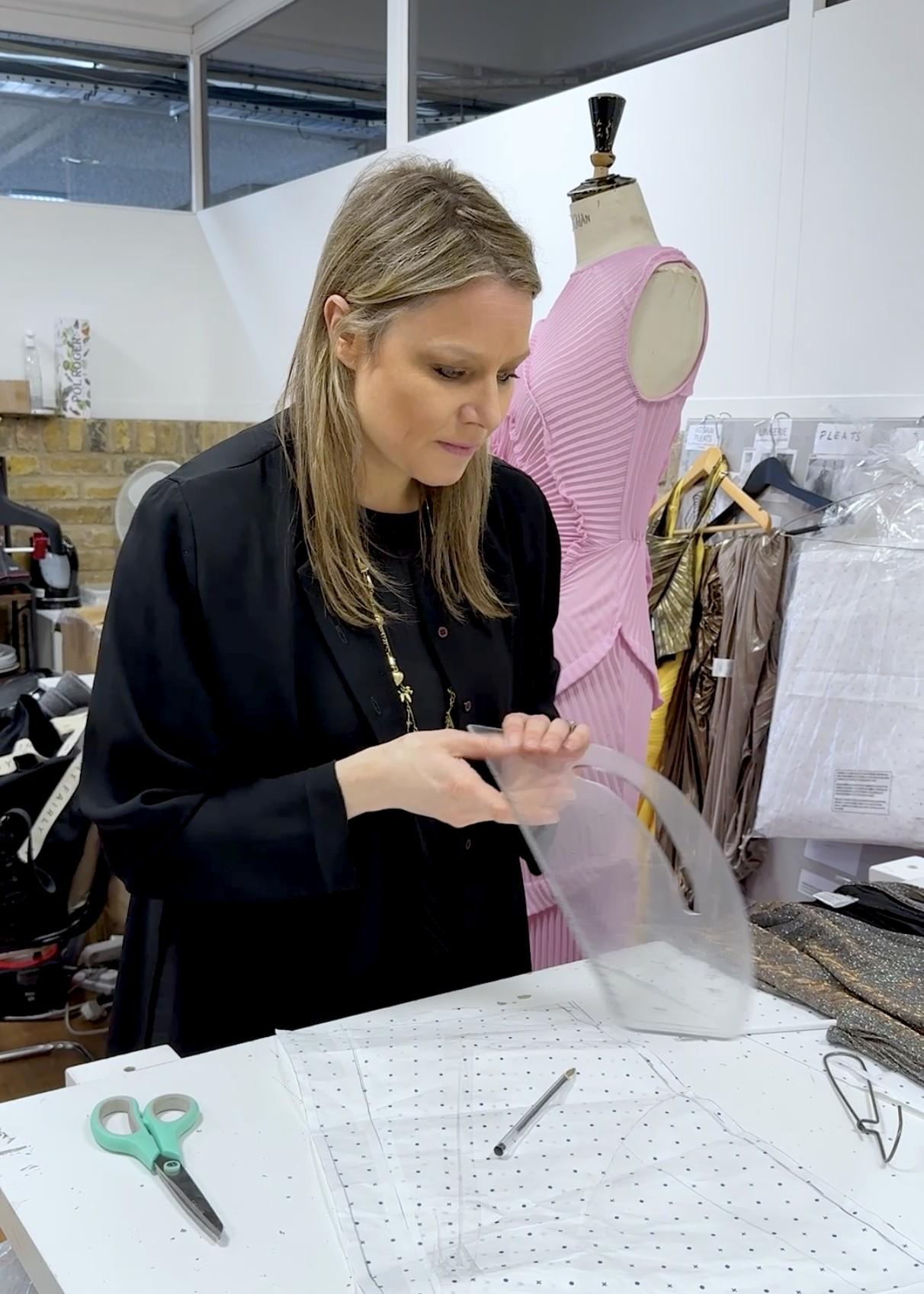
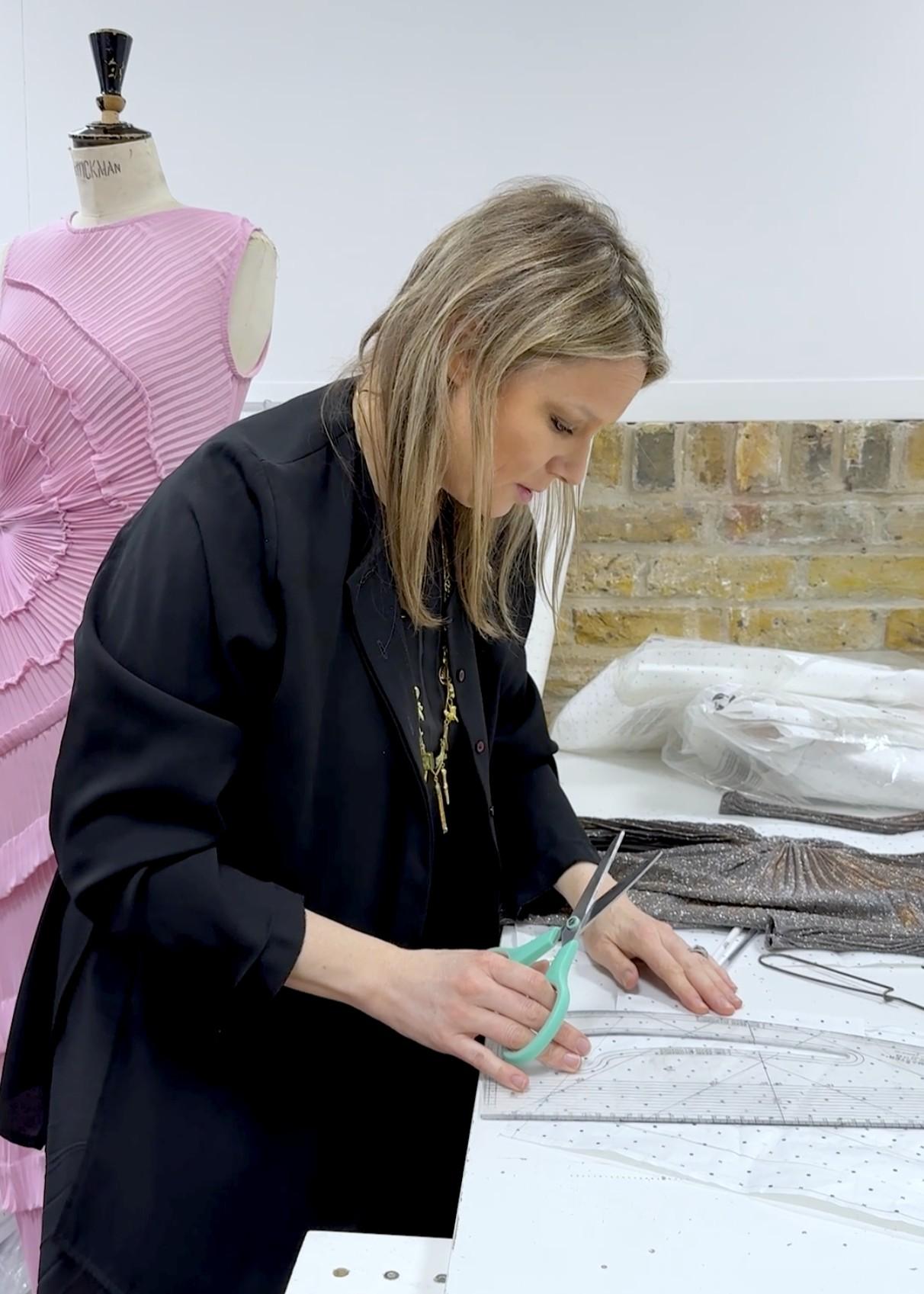
While her dresses adorn their wearers at grand occasions: weddings, parties, celebrations – even the odd awards ceremony – the work behind each creation takes place in the brand’s modest east London studio. Perched looking out over the Victorian chimneys and glittering skyscrapers of Brick Lane, the studio is an organised explosion of creativity.
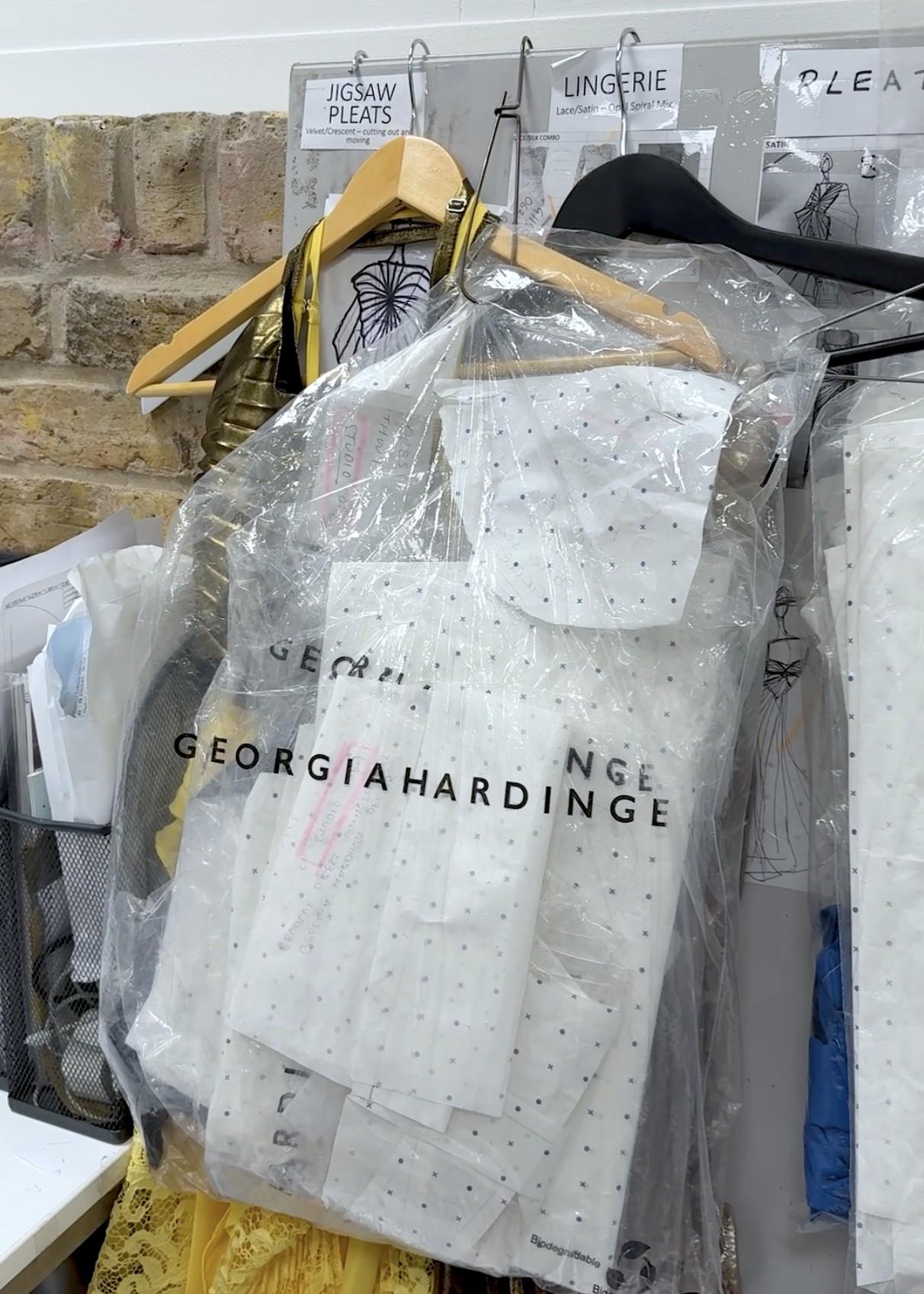
Patterns, fabric swatches, pleat samples and rails of dresses are ranged around the room, around an enormous cutting table and two prised stockman mannequins, outside the door is a set of gigantic suitcases, freshly unpacked following a showcase in Paris.
Since graduating from the legendary Parsons School of Design, Hardinge has grown her signature, pleat adorned aesthetic into one of London’s most recognisable womenswear brands. Now, from her studio, and with her brand stocked at Liberty for the first time, she dresses women around the globe. As the brand’s new collection launches into store, she sits down with Liberty to share the story of her brand, her aesthetic and the secrets behind her signature pleats.
How would you describe the Georgia Hardinge woman?
The Georgia Hardinge woman is an informed, modern individual who likes to stand out. I create sculptural pieces that are wearable, and I manipulate fabric accordingly. From far away it looks sculptural, but actually it’s free-flowing, comfortable, and flattering around the body.
How would you sum up your signature aesthetic?
I work a lot with pleating manufacturers and I also create my own pleats. My work involves manipulation of fabric through steaming, gathering, sewing, and drapery. I love creating negative and positive patterns so I can form three-dimensional pieces that remain very soft and free-flowing.
What originally drew you to fashion?
I’ve always wanted to be an artist. From a very young age, I wanted to be an architect or a sculptor. Then I realised I wanted my work to be tangible. I wanted people to feel something I’d made. I loved the idea of making something 360 around a body, something for the everyday person rather than just an art piece you put on a wall.
I’m drawn to creating something unique, wearable, easy, and free-flowing that still looks complicated. I really enjoyed the journey of going from a sculptural design into something two-dimensional and then making it into production.
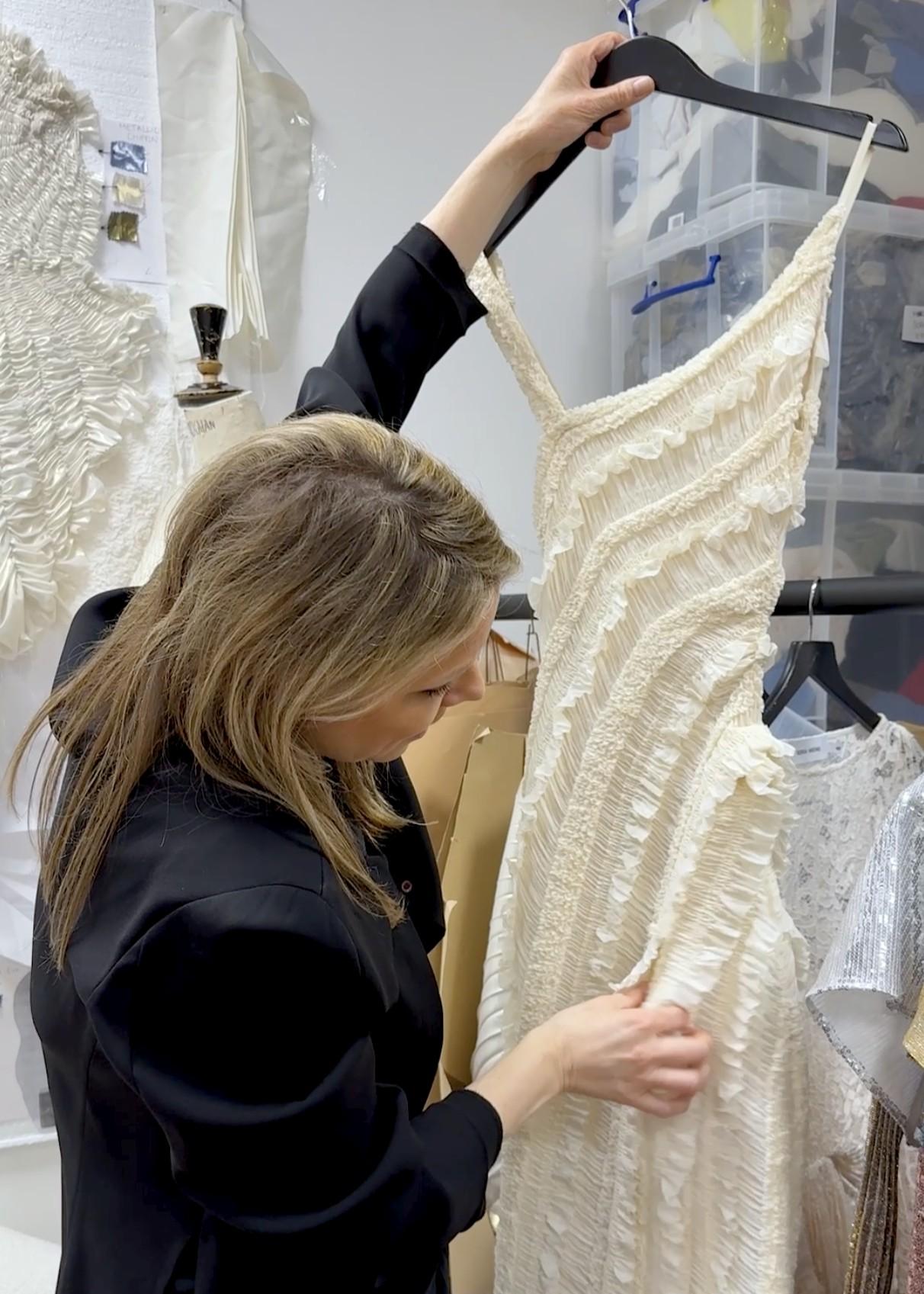
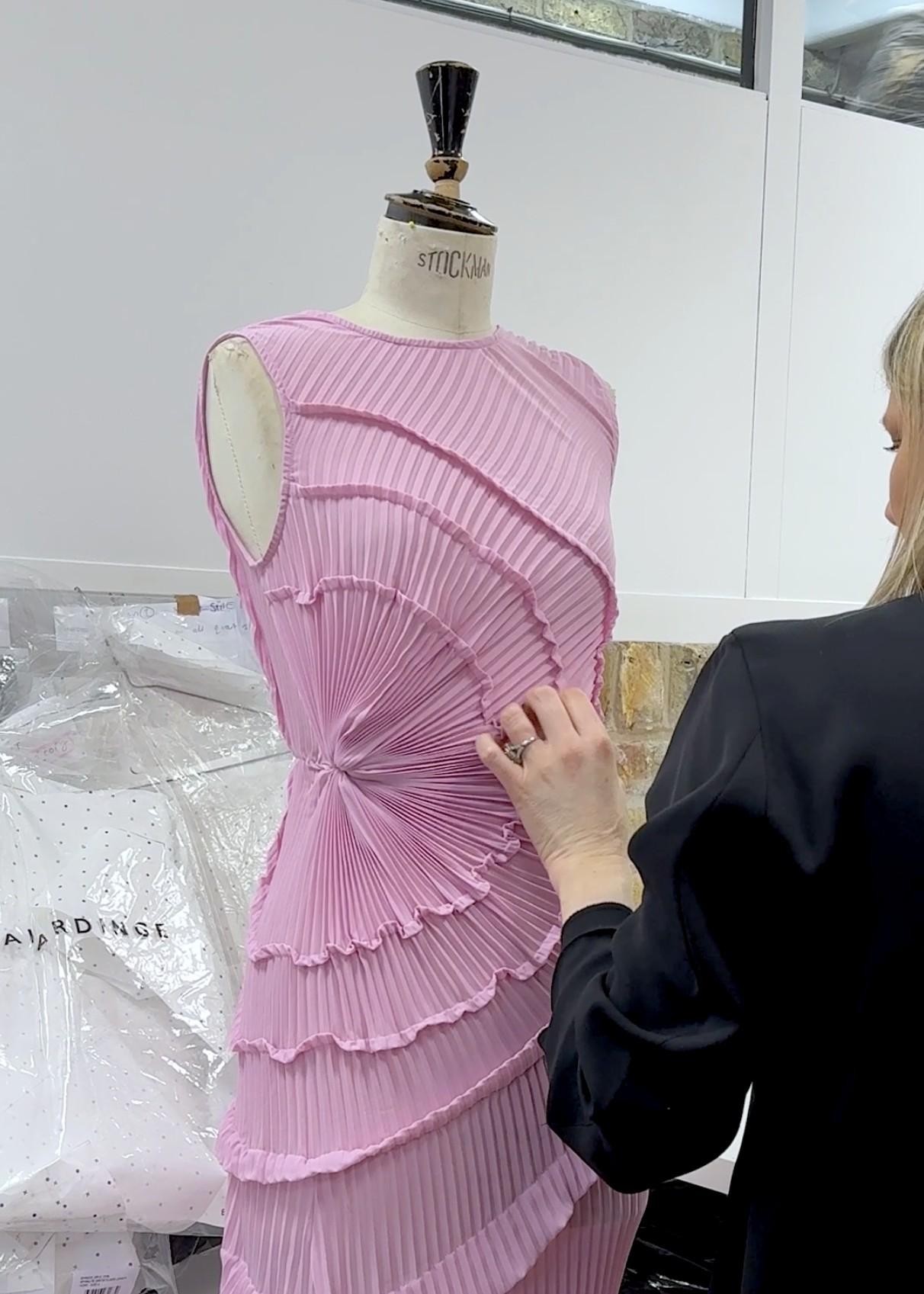
Your designs are often described as mathematical. How does maths influence your work?
All my patterns are made from maths. Pattern cutting is very much about equations. With pleating, for example, you’re always calculating because you’re working in 360 degrees. If a pleat dimension is two centimetres by two centimetres, you have to multiply that to allow the garment to collapse correctly.
Some dresses require extraordinary lengths of fabric before pleating: entire studio-length patterns that later compress to fit around the body. I enjoy that challenge of working with complex patterns that ultimately become easy to wear.
What was your relationship with fashion growing up?
I’ve always been fascinated by art and sculpture. When I was young, I would collect things from my environment and turn them into little sculptures around the body. I experimented with three-dimensional forms and became interested in how something could look visually striking yet still relate to a person.
That naturally led me towards garments, the idea that fabric itself could become sculpture.
How would you describe your design process?
I work very closely with fabric. I start by developing a drape or a technique. When I feel I’ve modernised or improved something from previous seasons, I translate that into sketches or begin pattern cutting.
I work a lot with pattern making and think very mathematically. It’s about solving equations and understanding how a flat surface transforms around the body. I enjoy making garments that appear complex but feel effortless.
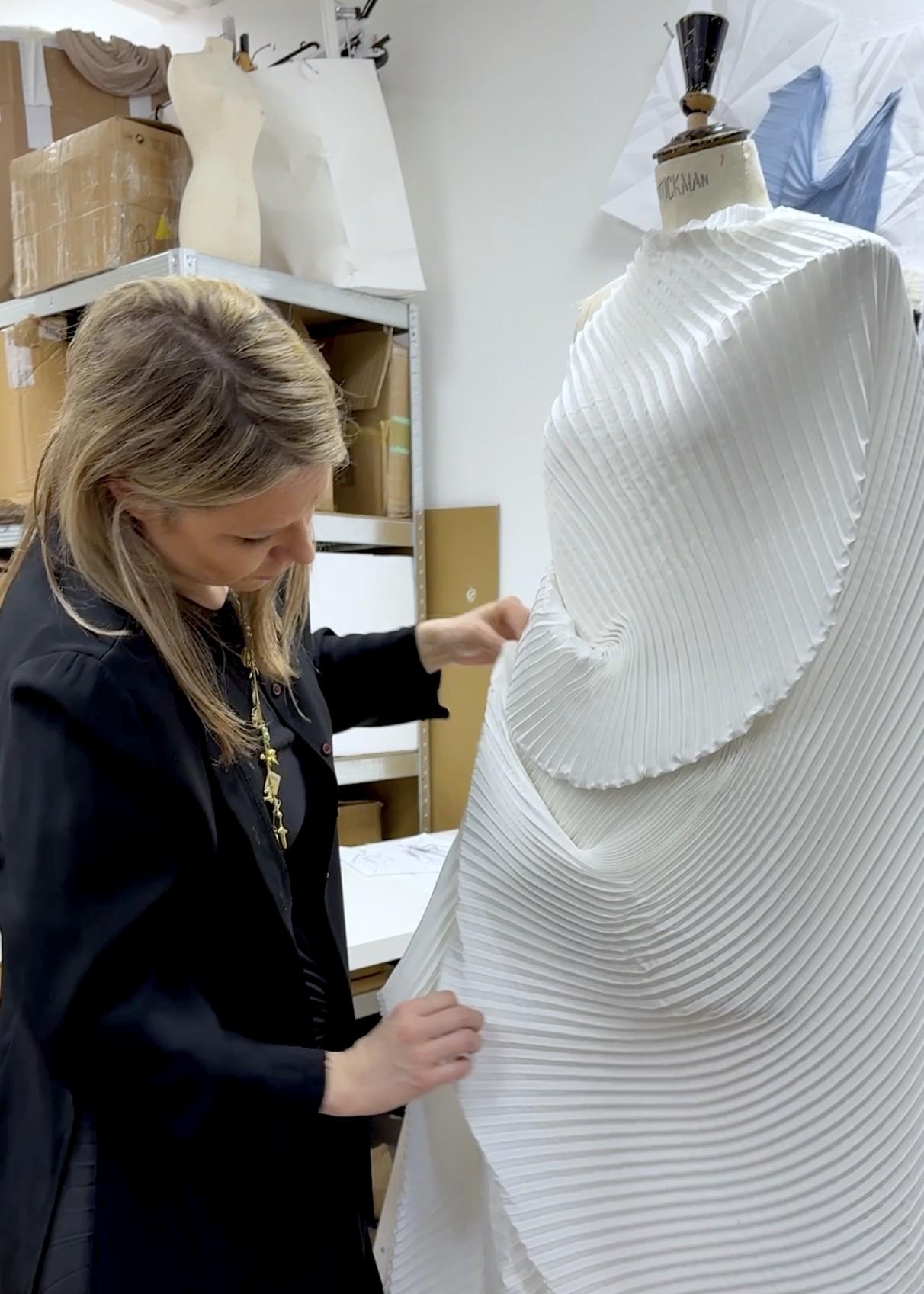
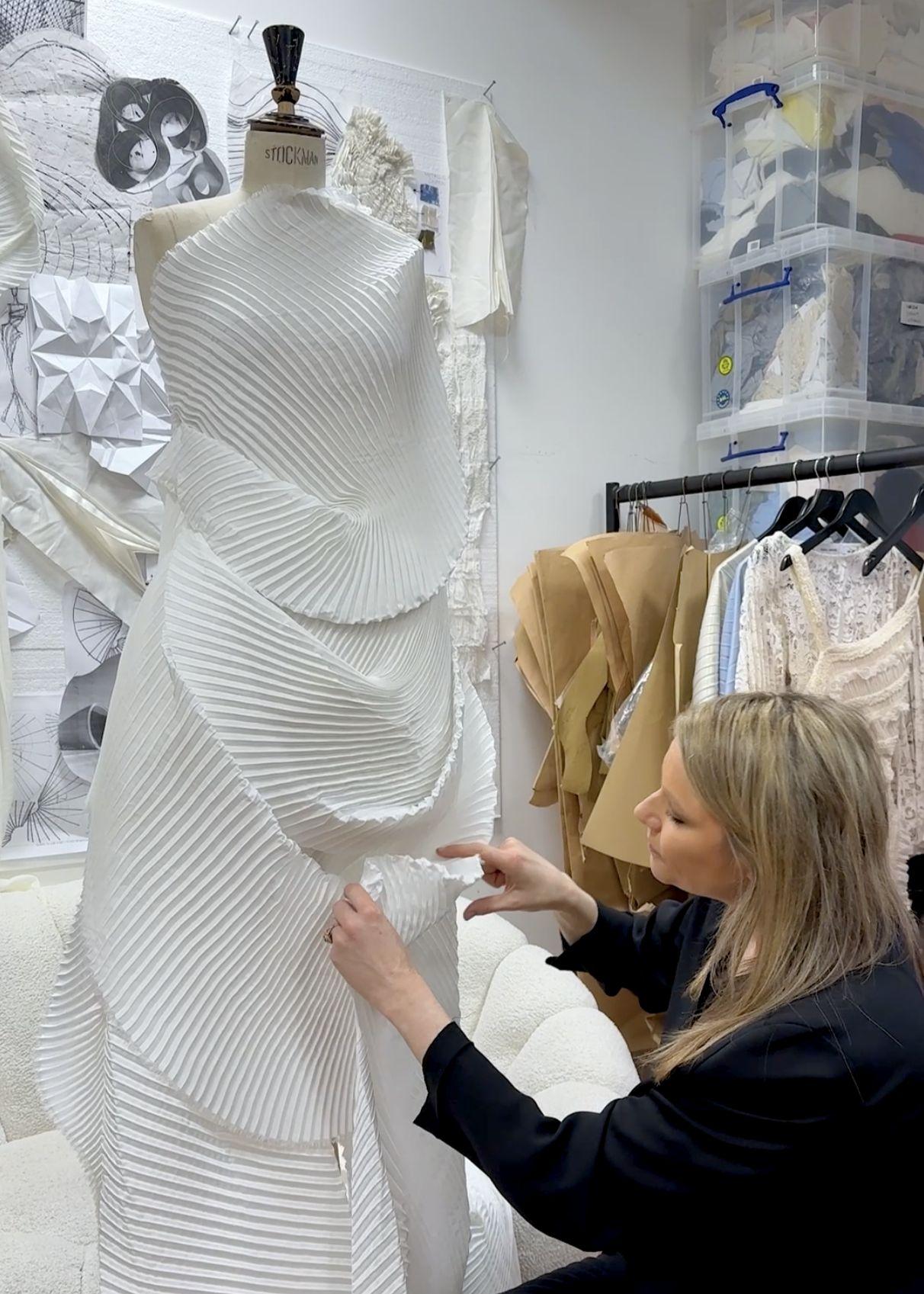
Pleating is central to your work. What fascinates you about the technique?
Pleating is an extraordinary craft because you’re compressing a garment through heat to create dimension. It transforms fabric into something sculptural. Every fabric behaves differently, so temperature, timing, and handling are incredibly important.
What I love most is the contrast, you can achieve dramatic structure while keeping the garment soft and fluid.
How do you keep your creativity fresh each season?
Every year you have to better your best. Design time is precious, so when I have that moment, I put all my energy into it. Running a brand is largely business, but the design process is what I absolutely love.
I look at previous collections to understand what worked and what resonated with customers, but my inspiration doesn’t come from fashion. I look at art and sculpture. I try to create something new and innovative each season, always furthering the craft.
How has your perspective evolved over the years?
I’ve learned that a brand isn’t just about design. It’s about nurturing customers and building a journey with them. Creating longevity and connection is incredibly important.
I’ve also learned not to lose myself in external pressures. It’s important to protect the brand’s values and aesthetic while continuing to refine processes and techniques.
Understanding where you fit within the market is one of the hardest parts. Having a clear and unique point of view is essential. There are always challenges and ups and downs, but persistence is everything.
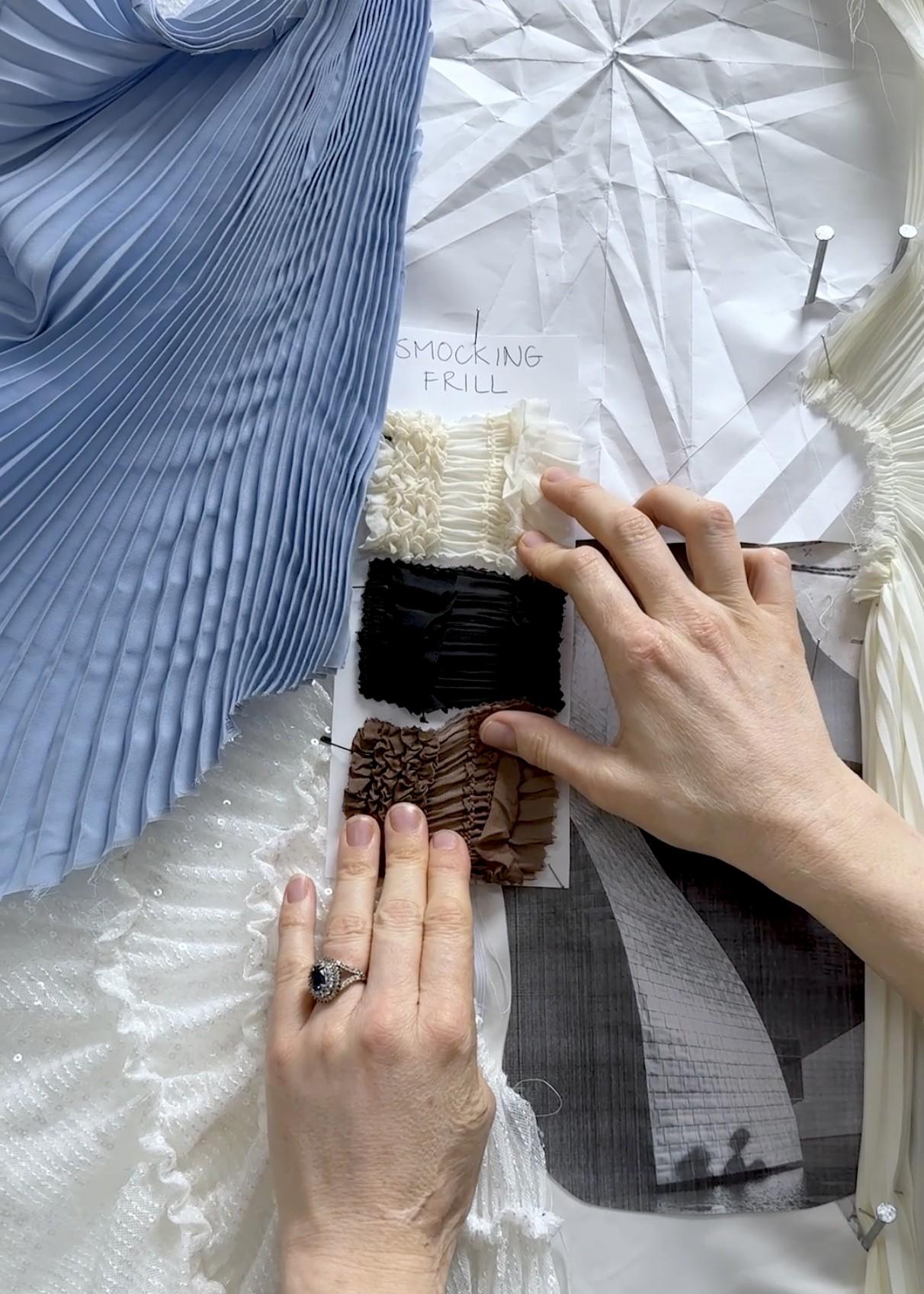
Are there moments you’re particularly proud of?
I’m really proud of the journey, from starting with patterns on the floor to building a successful brand with amazing customers. Being stocked at Liberty has been incredibly meaningful for me as a UK designer.
While dressing well-known figures has been exciting, dressing the customer is much more important to me. Seeing someone walking down Oxford Street wearing one of my dresses is genuinely thrilling. It means they’ve chosen something that makes them feel good, and that is the most rewarding part of my work.
What keeps you inspired?
Creativity is constant. I don’t like to look too closely at other things because I prefer not to be influenced. Many ideas come subconsciously – often when I’m asleep – which is a fascinating part of the process.
I have a deep appreciation for art and sculpture, which continue to shape how I think about form and design.


?fmt=auto&qlt=default&metadata=true$poieg$&w=1000&h=1300&sm=c&poi={$this.metadata.pointOfInterest.x},{$this.metadata.pointOfInterest.y},{$this.metadata.pointOfInterest.w},{$this.metadata.pointOfInterest.h}&scaleFit=poi)


