
In the Studio with Moira Firth
Step into the Newcastle studio of the artist behind the botanical works illuminating Liberty’s latest windows: Beauty in the Making
Read more
In the Studio with Moira Firth
Step into the Newcastle studio of the artist behind the botanical works illuminating Liberty’s latest windows: Beauty in the Making
As we shine a spotlight on the botanical derived actives behind some of skincare’s hottest brands and formulas, Liberty turned to the artistic world to illustrate the journey from stem to serum.
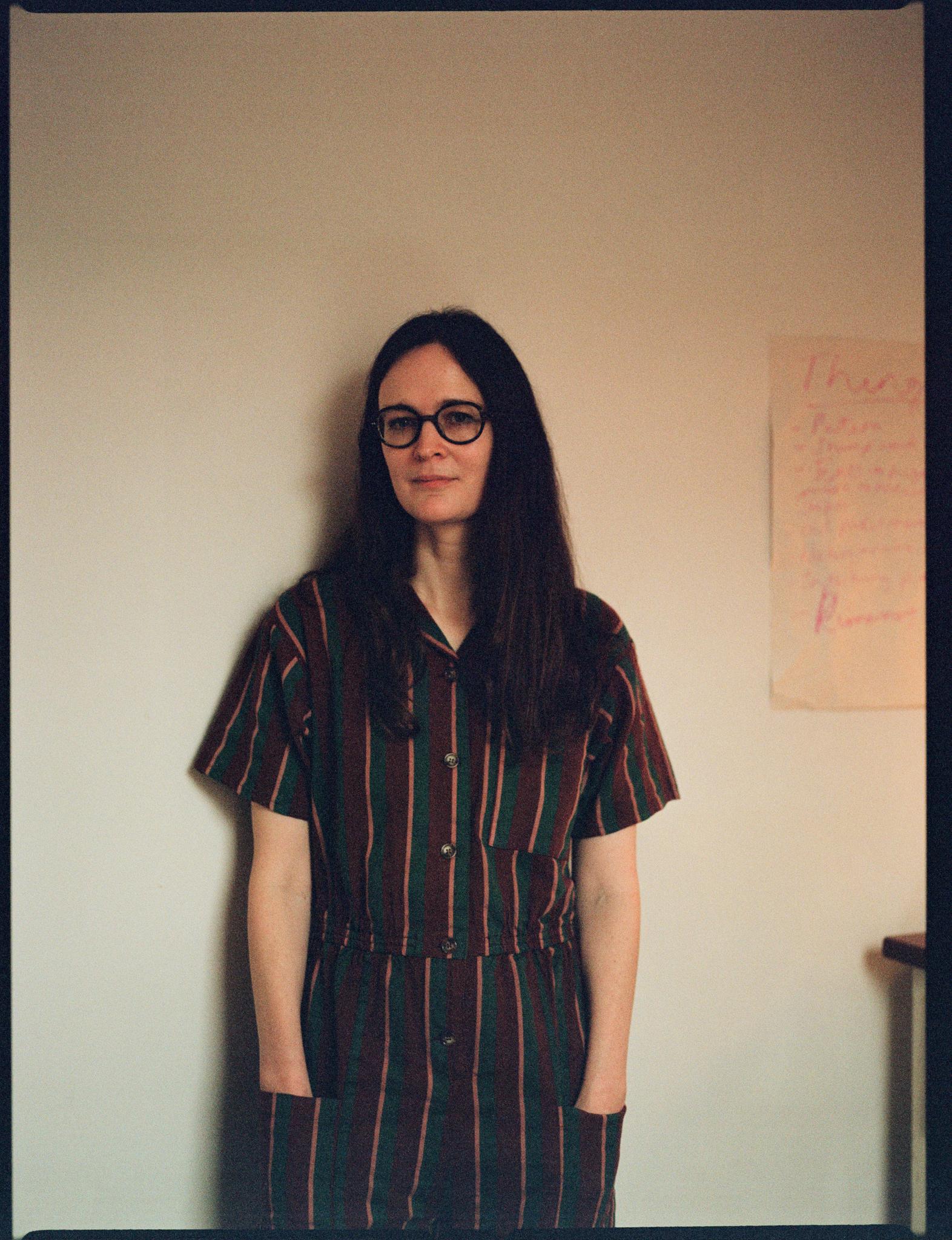
Newcastle based artist and illustrator Moira Frith, whose watercolour practice often focuses on the natural and botanical, crafted a series of bespoke illustrations featured across Liberty’s windows, store and digital platforms – each work informed by the natural derivations of products within Liberty’s skincare edit.
From black rose to alpine herbs, prickly pear, green tea and cedar, Moira’s illustrations evoke the power of nature behind each formula. As an ecologist herself, her expertise and innate understanding of the natural world run through each image she creates, with expressive, dramatic brush strokes paired with ethereal detailing on each design.
Liberty paid a visit to Moira’s studio on the outskirts of Newcastle Upon Tyne, to take a glimpse into her creative process and discover her own artistic story.
How would you describe your aesthetic?
Although I reference material from life and like to observe things closely, I don’t like anything to look too naturalistic. I like to think about how I might flatten out subject matter, for example, and how a composition might fill the page.
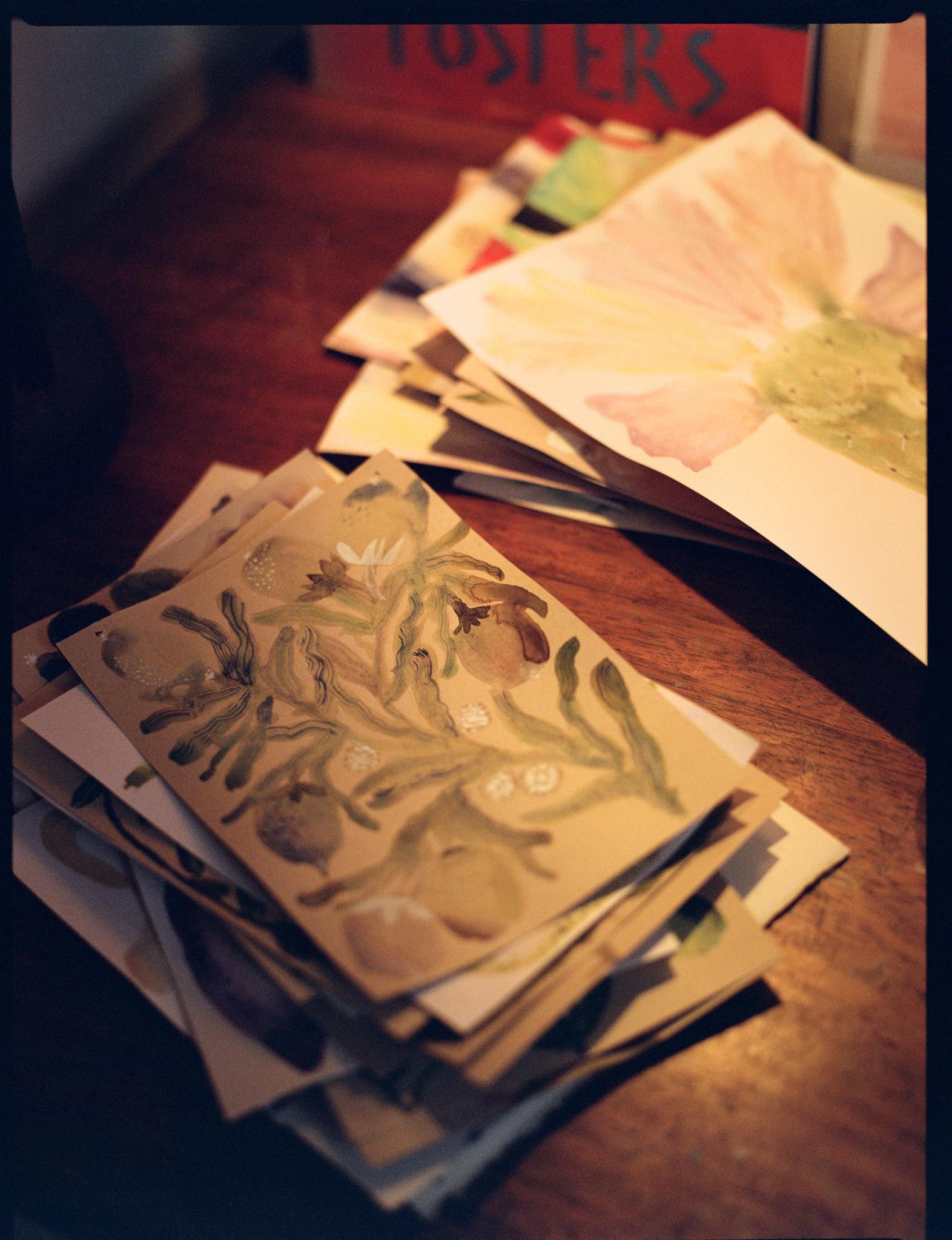
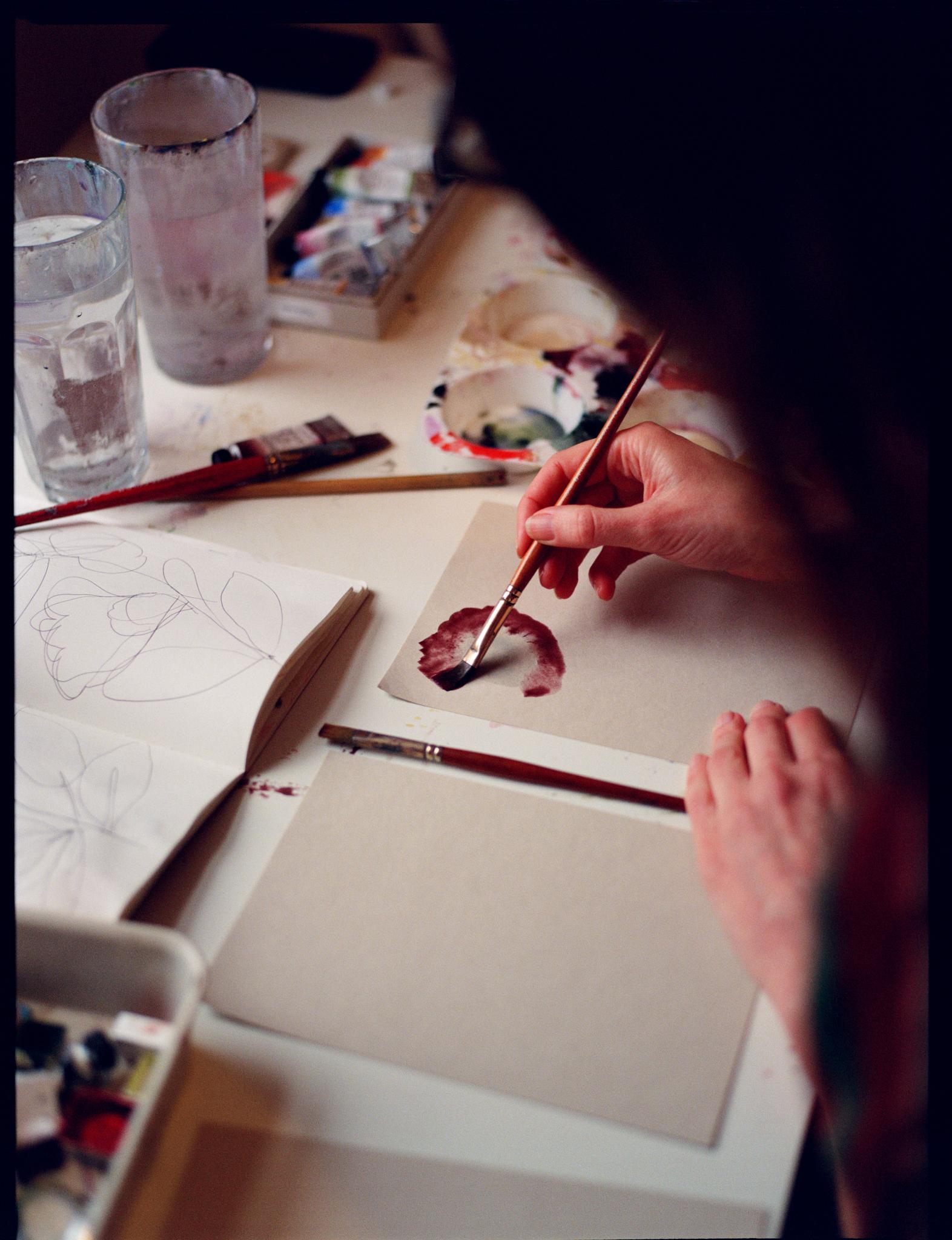
Because I work in watercolour, one of the aspects I enjoy is that, depending on how you use the paint, you can’t fully control what you get. If you’re working wet on wet, there’s a lot of serendipity involved. I like that element of chance and the fluidity you get with those marks.
What is your preferred medium and why?
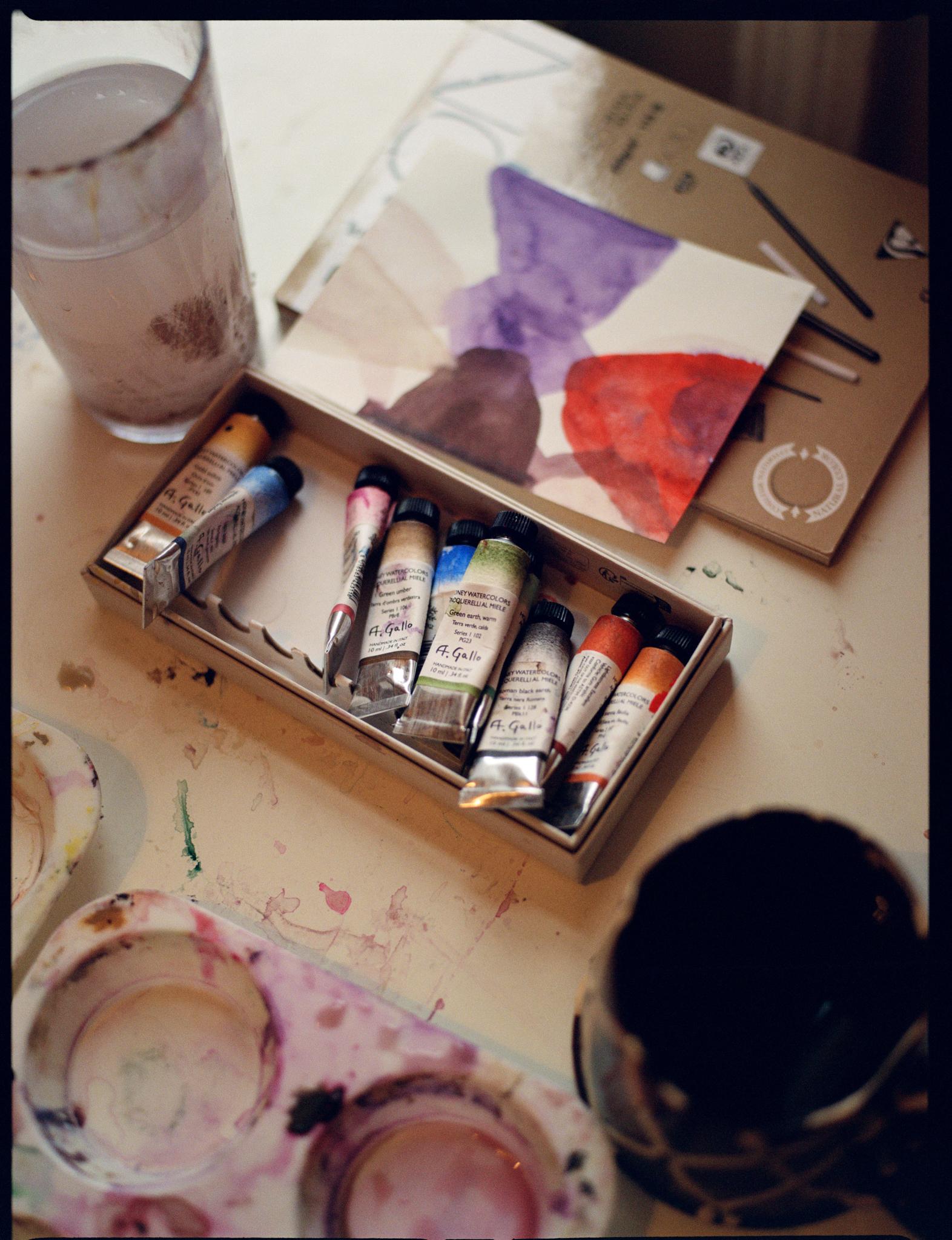
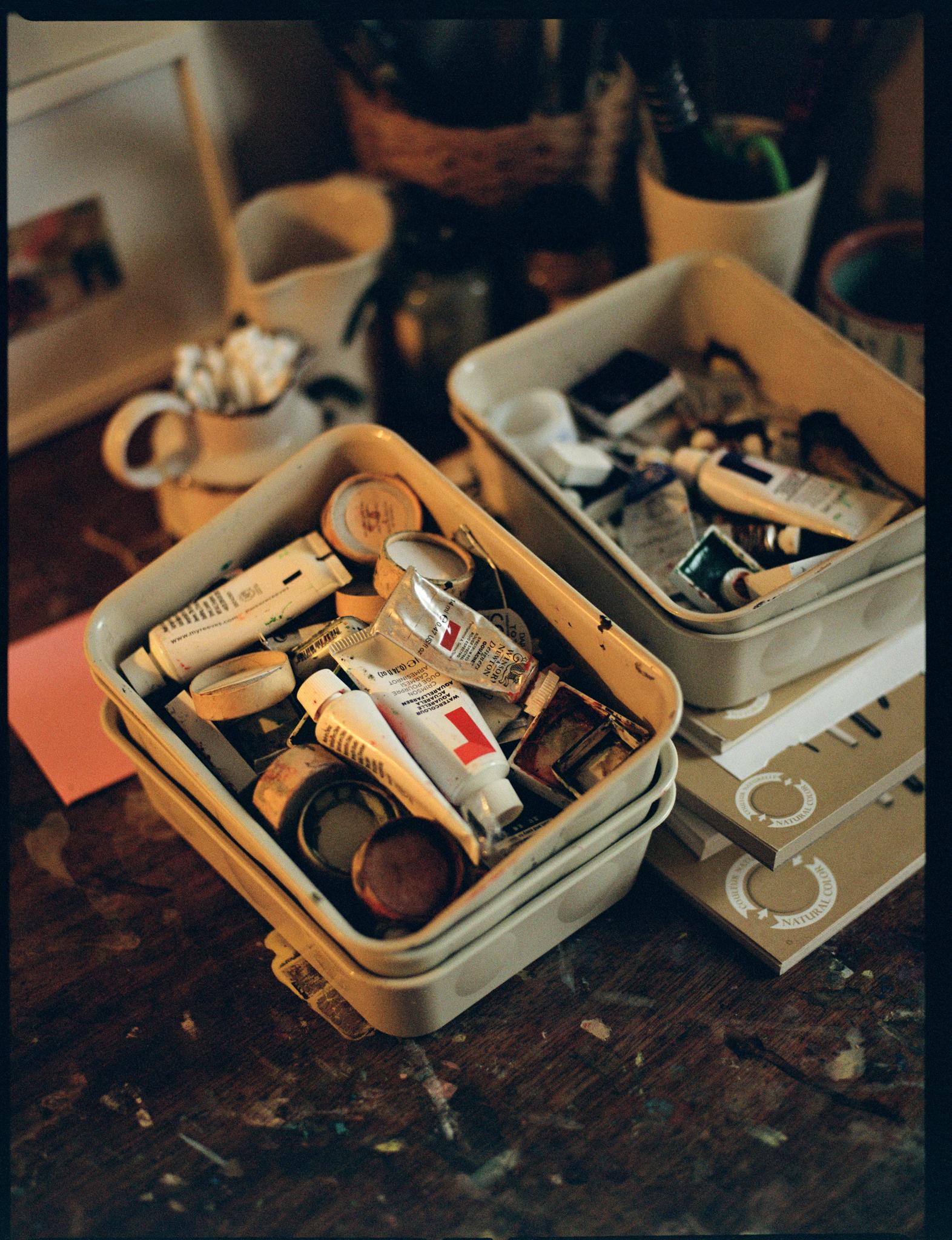
My preferred medium is watercolour. A long time ago I did a lot of printmaking. Whilst I enjoyed it, there’s a lot more mess involved. Watercolour is great for many reasons. Partly it’s practical. You don’t need much equipment. You can work with a small palette, some brushes and paper. I think of it as drawing with paint rather than painting as such.
I like the fact that it’s accessible and that you can do many different things with it in terms of mark making. You can be loose and playful, working very wet with washes and bleeds, but you can also be very precise. I often think of traditional botanical and natural history illustrators who made incredibly detailed works through careful layering. I like that versatility and the fact that you can achieve a lot with the medium.
What was your route into art? Did you always want to be an artist?
It’s quite a circuitous route. I studied art at school until A level, then took a different path and went down a science route. I studied zoology at university, then a master’s in ecology, followed by a PhD in molecular ecology. I spent several years working for NGOs and in conservation.
After finishing school, I didn’t really make much at all for about ten years. I was always interested in looking at art, but didn’t have a practice myself. When I had my oldest daughter in 2015, I had a different kind of time because I wasn’t at work. I picked up a set of watercolours and started drawing and painting again.
At that stage, I was figuring out both the technical side and what I was artistically drawn to. I became really interested in folk art and the idea that you don’t have to represent something realistically. I found that very inspiring and tried to bring back a sense of naivety into my work.
Initially, it was more of a hobby. Then, through posting work online, I was fortunate to be picked up by a couple of small galleries and have done various collaborations over the years.
Were you creative as a child?
Yes, although I think most children are creative. My mum was very creative. She ran a handmade textile business when I was small, decorating T shirts, shoes and headbands. There was always making going on in the house.
I loved art at school. It was one of my favourite subjects, alongside biology, which makes sense when I think about what I do now. I really enjoyed making things.
You have a background in science and ecology. How does that impact your art?
I currently work in science and ecology and have done for many years. That has a huge impact on my artistic practice, particularly in the subject matter I’m interested in.
Whilst the connection isn’t direct, I don’t draw or paint for my day job. There are different ways to appreciate the natural world. One is from a scientific or analytical perspective. Another is more intuitive or emotional.
When I think about what I like to draw and paint, I’m interested in beauty and the inner essence of the subject I’m capturing. The subject matter is strongly linked, but the way I interpret it is quite different depending on the context.
Where do you look for inspiration?
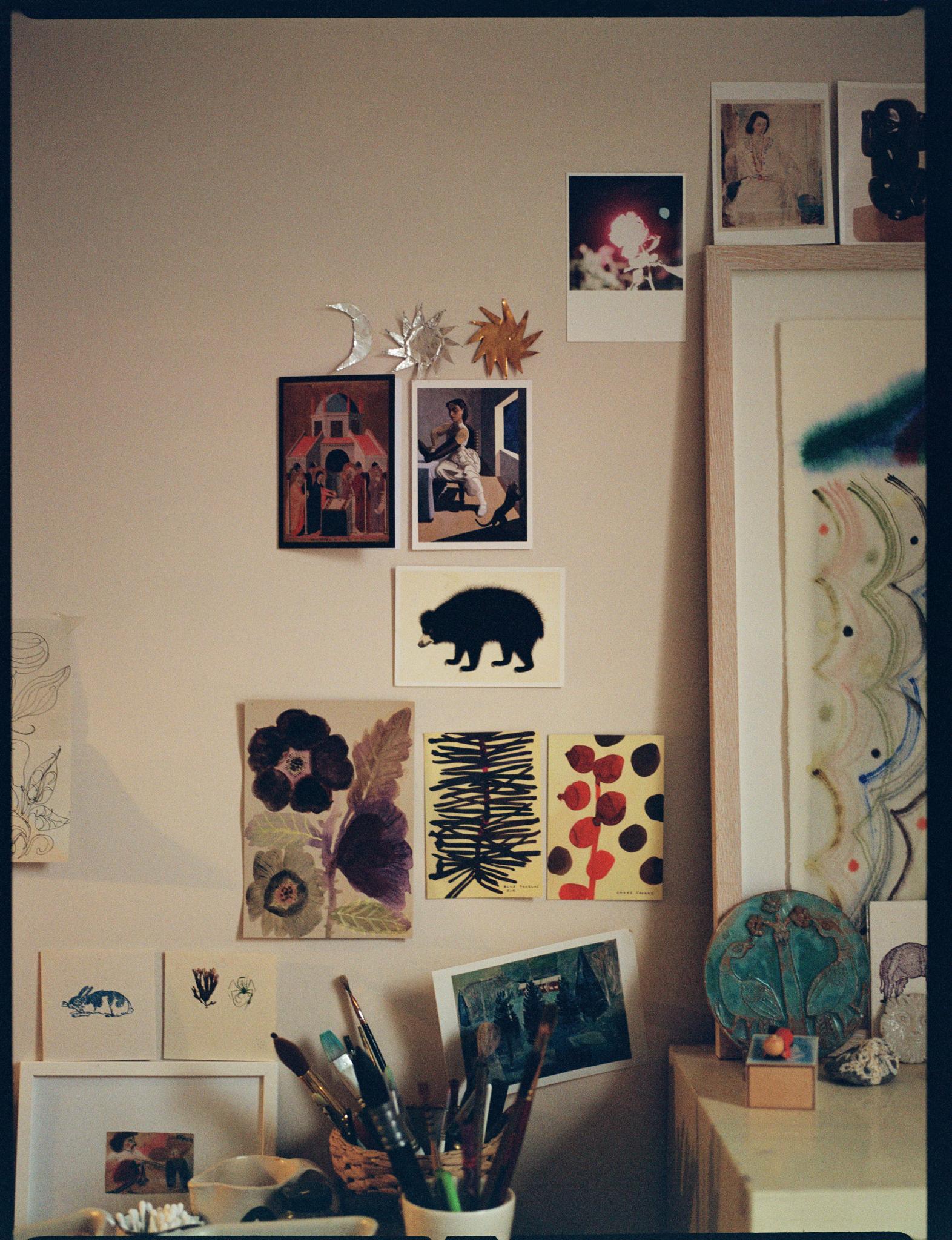
I’m inspired by nature, plants, animals and the natural world, but also by the work of other artists. I enjoy going to exhibitions, museums and galleries, looking at objects and thinking about how people have made and interpreted things.
There’s an image I find particularly inspiring by the French ceramicist Marguerite Carbonell. She made extraordinary tiles for her home featuring birds in bright colours. You could tell what they were, but they weren’t tied to any specific species.
I found that incredibly inspiring. It reinforced the idea that you can take subject matter and interpret it very loosely, thinking about form and colour rather than strict realism. It becomes more about enjoying the process of playing with shapes and colour.
Where do you start when developing a new project?
It depends on the brief. For example, for the Liberty project I was given specific botanical references. I begin by researching the species and gathering photographic references.
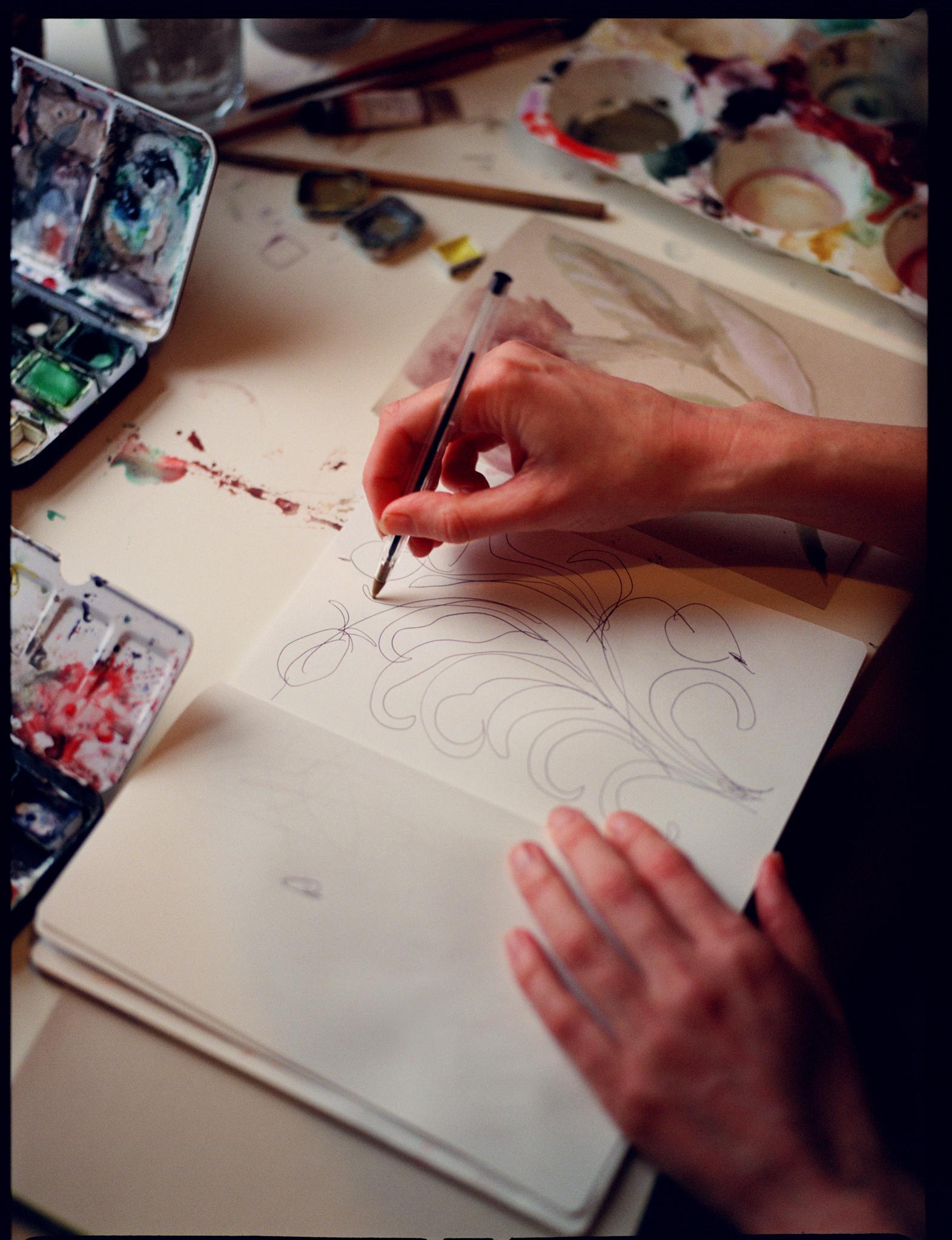
Once I understand what something looks like, I start with lots of quick pencil and pen sketches in very cheap sketchbooks. I fill pages working out compositions. These early drawings may not resemble the final piece, but they help me understand how the elements will work on the page.
I then move into loose watercolour sketches, thinking about whether ideas translate into paint. After that, I begin making final pieces.
I have a very high failure rate. I make many images, discard a lot of them, and let that process guide me. Those so-called failures are essential. I often feel that I think best by doing rather than imagining.
How do your surroundings influence your work?
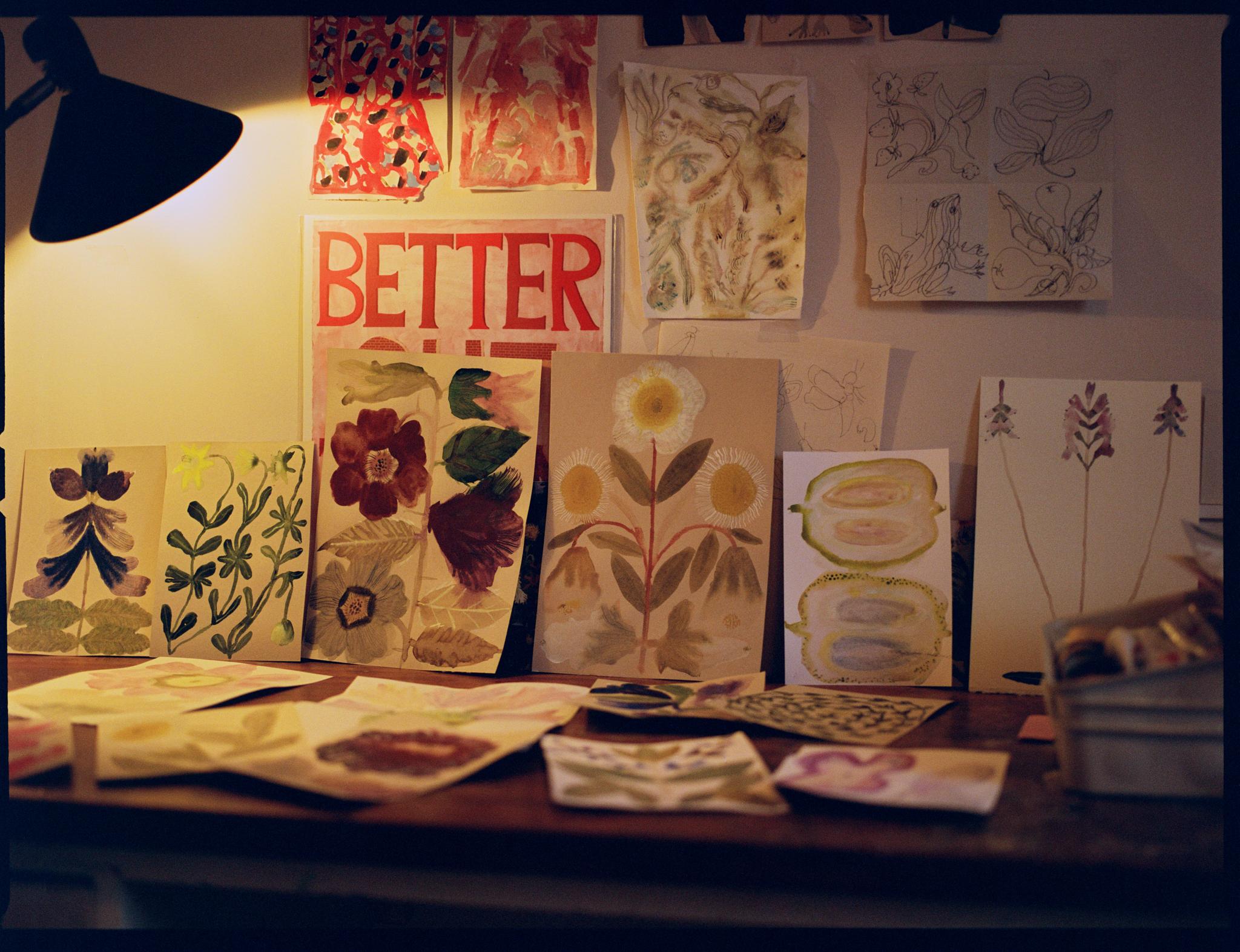
I moved into this house about a year ago. Prior to that, I’d never had a dedicated workspace and worked at the kitchen table. Having my own studio has been incredibly important. A room of one’s own.
It allows me to keep my materials out, make a mess and work privately. I value that privacy and the freedom to make mistakes.
Living in the West End of Newcastle also has an influence. We’re near large areas of common land where cows graze in the summer. It’s surreal. You walk through the city and suddenly feel like you’re in the countryside.
If I’m feeling stuck, going for a walk, looking at gardens, being outside in the fresh air or rain can be very uplifting and helps shift my headspace.
From a creative perspective, how did you develop the works you created for Liberty?
The mood depended on the product. Each brief included both the ingredient to illustrate and what the product was intended to convey.
For one product, the featured plant had very tall stems and a delicate appearance. I wanted to capture a sense of strength within fragility. Something tall, light and resilient.
Although I wanted the paintings to reference the species, I didn’t want to be overly literal. I focused on forms that worked well together and colours that complemented the packaging.
Do you have a favourite among the works you created?
My favourite is probably one of the rose paintings. It was one of the first pieces I made. I like the deep purples and reds, along with darker, muddier tones, a palette I’m naturally drawn to. I also enjoyed the opportunity to paint large flowers.
If I’m being honest, I rarely like what I make at first. I often have to step back and remind myself that a piece doesn’t have to be perfect. It simply has to do the job.


?fmt=auto&qlt=default&metadata=true$poieg$&w=1000&h=1300&sm=c&poi={$this.metadata.pointOfInterest.x},{$this.metadata.pointOfInterest.y},{$this.metadata.pointOfInterest.w},{$this.metadata.pointOfInterest.h}&scaleFit=poi)


?fmt=auto&qlt=default&metadata=true$poieg$&w=1000&h=1300&sm=c&poi={$this.metadata.pointOfInterest.x},{$this.metadata.pointOfInterest.y},{$this.metadata.pointOfInterest.w},{$this.metadata.pointOfInterest.h}&scaleFit=poi)


