
Back to Roots with Mulberry
From its bucolic Somerset home, the heritage accessories brand is stitching a crafted, considered future. Rosie Wollacot, head of sustainability tells us more…
Read more
Back to Roots with Mulberry
From its bucolic Somerset home, the heritage accessories brand is stitching a crafted, considered future. Rosie Wollacot, head of sustainability tells us more…
The serene surrounds of leather accessories brand, Mulberry’s, Somerset home are a near-enough perfect picture of the English countryside. The imposing limestone townhouses of Bath swiftly make way for gently rolling hills, dotted with blossoming trees and startling yellow fields of flowering rapeseed – all under a pristine, cloud-spotted sky. For a brand that has become an enduring and beloved symbol of British heritage, it’s the ideal home.
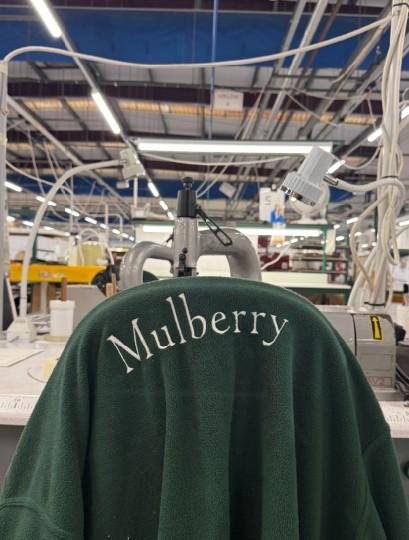
The Rookery, as the Somerset base is known, is home to Mulberry’s flagship factory, product testing and development teams, as well as various business functions. When Liberty pays a visit to the factory, machines are whirring, teams are buzzing and a steady parade of perhaps the most iconic of the brand’s creations – The Bayswater Tote – are carefully being stitched together by Mulberry’s expert craftspeople.
It is this focus on craft and artisanal skills that sits at the core of The Rookery, and of Mulberry as a whole. Each member of the team working in the factory is trained by Mulberry to the very highest level of leatherworking skill, something which is instantly apparent in the care, attention and rigor at each stage of a bag’s creation. Some team members began their careers here as apprentices, and many have worked with Mulberry for decades – there are even a scattering of family connections with mothers and daughters, fathers and sons and sets of siblings all based in the factory.
While craftsmanship has been a core pillar of the brand since it launched in 1971, and is one of the reasons its bags are so beloved – frequently becoming treasured heirlooms – it has become even more pertinent in recent years, as the brand focuses on its Made to Last Manifesto. To find out more about the strategy, and to learn more about the craft behind each of Mulberry’s ever-so-British bags, the brand’s head of sustainability, Rosie Wollacott sat down to explain more…
?fmt=auto&qlt=default)
?fmt=auto&qlt=default)
Back to Roots with Mulberry
Can you explain your role and journey with Mulberry?
My career at Mulberry started at The Rookery as a trainee stitcher making Bayswaters. I then transitioned into a few different roles which led me onto the sustainability path, where I have been working on our strategy for the last eight years.
In our 50th anniversary year, 2021, Mulberry published the Made to Last Manifesto, committing us to transform the business to a regenerative and circular model. This vision has been guiding our sustainability work for the last five years.
Tell us about the brand's history.
Mulberry was born in Somerset in 1971, built on big ideas, British craftsmanship and a spirit of duality - heritage and modernity, structure and spontaneity, timelessness and reinvention. What began as a small, rural leather business, founded by Roger Saul, has grown into a global lifestyle brand, but those origins still shape who we are today. Mulberry has always combined quality, sustainability and a distinctly British sense of style - values that continue to guide the brand more than 50 years on.
?fmt=auto&qlt=default)
?fmt=auto&qlt=default)
What are some of your core principles when it comes to the pieces you create?
Our Made to Last strategy is distilled into The Three C’s; this is our strategy in practice day-to-day. Climate informs our material choices, guiding us to select lower impact materials. Circularity means that we design with consideration for repair, supported by our Lifetime Service Centre. Community lends itself to the people within our supply chain, including our own two UK factories and our long-standing suppliers.
Would you say Mulberry has a signature aesthetic? How would you describe this?
Heritage meets modern, from city to country, refined yet relaxed. Our bags are worn by royalty, actors, musicians, celebrities and influencers. They’re also stuffed with laptops for the commute and slung over the chair at the pub. There’s a Mulberry bag for everyone.
?fmt=auto&qlt=default)
?fmt=auto&qlt=default)
Are there any techniques or processes that have been the same since the brand began - or that you see as “signatures” for the brand?
Leather craftsmanship has always been central to Mulberry, and it remains a defining signature of the brand today. Many of the techniques used in our products are rooted in traditional leathercraft, passed down and refined over decades.
This year, we are celebrating 20 years of our apprenticeship scheme, launched in 2006 to help safeguard specialist leather skills in Somerset for generations to come. Since then, over 100 apprentices have completed our Leather Craftsperson standard, with many now progressing into senior and management roles. This ongoing investment in people and skills is fundamental to preserving the craft at the heart of Mulberry.
What role does The Rookery play for Mulberry? What happens here?
The Rookery is our flagship factory in Chilcompton, a village 13 miles south of Bath. It’s also our legal HQ, and home to many of our office-based teams, such as sourcing, finance and customer care. On the factory floor, we have a team of skilled craftspeople who are crafting new Mulberry bags - the Bayswater in Salcombe Sand suede was coming through the production line as I walked to my desk today!
At The Rookery we also have our Lifetime Service Centre, which plays a key role in extending the life of our products. Last year, the team repaired and rejuvenated just under 10,000 bags, either for customer repairs or as part of our circular business model, The Mulberry Exchange. Through this programme, we buy back pre‑owned Mulberry bags from customers, carefully refurbish them, and then offer them for resale both online and in stores, giving each piece a new chapter while keeping craft and quality at the forefront.
The Rookery is also home to our Development Centre, who work hand in hand with our London-based design team to bring their drawings to life, and get them ready for production.
?fmt=auto&qlt=default)
?fmt=auto&qlt=default)
How do you weave heritage and sustainability into your creations?
The principles of traditional craftsmanship - repair, longevity, careful material selection - naturally align with a more sustainable approach. We design pieces to endure, choose materials responsibly and continuously work with our suppliers to improve their environmental and social practices. Sustainability isn’t a separate layer; it’s embedded in how we make and think about our products.
Why is this something that is important to Mulberry as a brand?
As a brand built on craftsmanship and longevity, it’s vital that we consider the long‑term impact of everything we do - from the materials we use to the communities we work with.
Becoming a B Corp certified business in 2024 was an important milestone for Mulberry because it holds us to high, independently verified standards across social and environmental impact, governance and transparency. But it’s not an endpoint - it’s a framework that helps us continually challenge ourselves and make better decisions as a business.
?fmt=auto&qlt=default)
?fmt=auto&qlt=default)
Heritage and craft are central to the brand - how does this fit into your approach to both design and sustainability as a brand?
Craft is inherently sustainable when it’s done well. A carefully made product, designed with intention and skill, has a longer life and greater value. Our approach to design starts with respect for materials and the hands that shape them. By investing in craftsmanship - whether through our own Somerset factories or long‑term supplier relationships - we support a slower, more thoughtful model of manufacturing, where quality, responsibility and design are deeply aligned.


?fmt=auto&qlt=default&metadata=true$poieg$&w=1000&h=1300&sm=c&poi={$this.metadata.pointOfInterest.x},{$this.metadata.pointOfInterest.y},{$this.metadata.pointOfInterest.w},{$this.metadata.pointOfInterest.h}&scaleFit=poi)


