
Hypernova 150: The Icons | Episode 5: The Nelson Coat
Precision cutting, a faultless fit and historic details combine in a coat crafted to outerwear perfection.
Read more
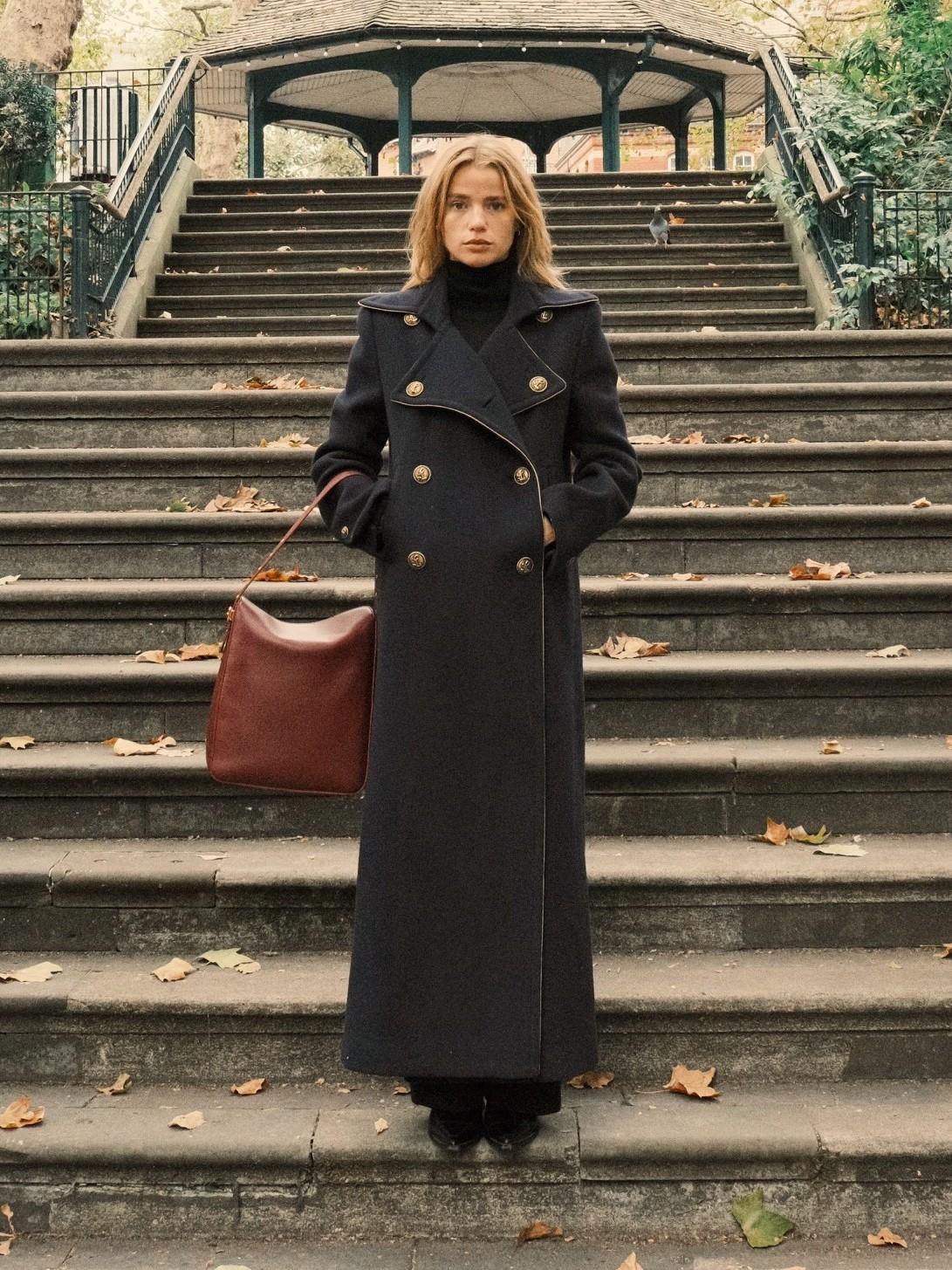
Hypernova 150: The Icons | Episode 5: The Nelson Coat
Precision cutting, a faultless fit and historic details combine in a coat crafted to outerwear perfection
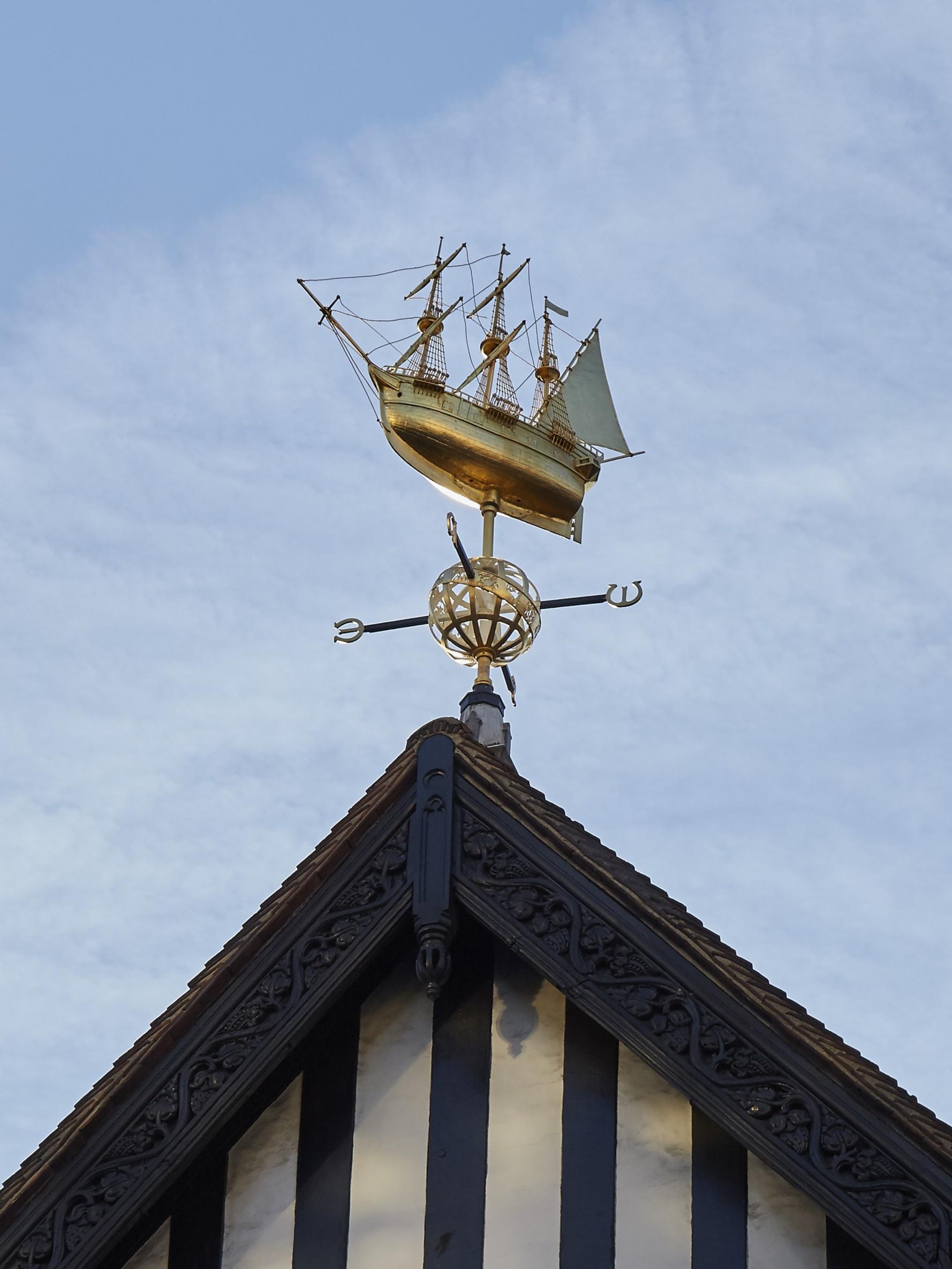
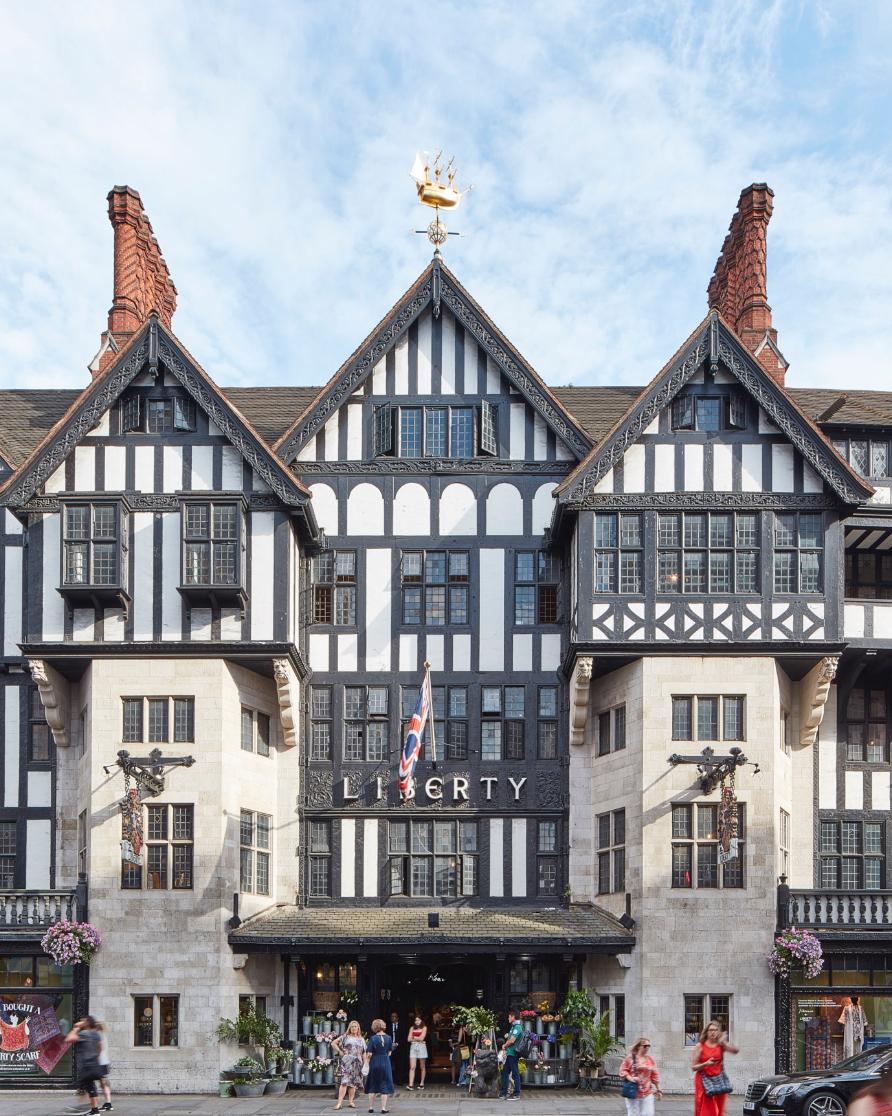
Perched atop the Tudor walls of Liberty’s London home, there sits a glimmering golden sailing ship. For many, this ship is as synonymous with Liberty as our prints, and is a instant, sparkling nod to the maritime history entwined in Liberty’s story.
It was this nautical thread, that artistic director Frida Giannini drew from when designing the Liberty Hypernova 150 collection. The collection shines in its deeply referential symbols, translated into the contemporary through Frida’s creative eye and mastery of design.
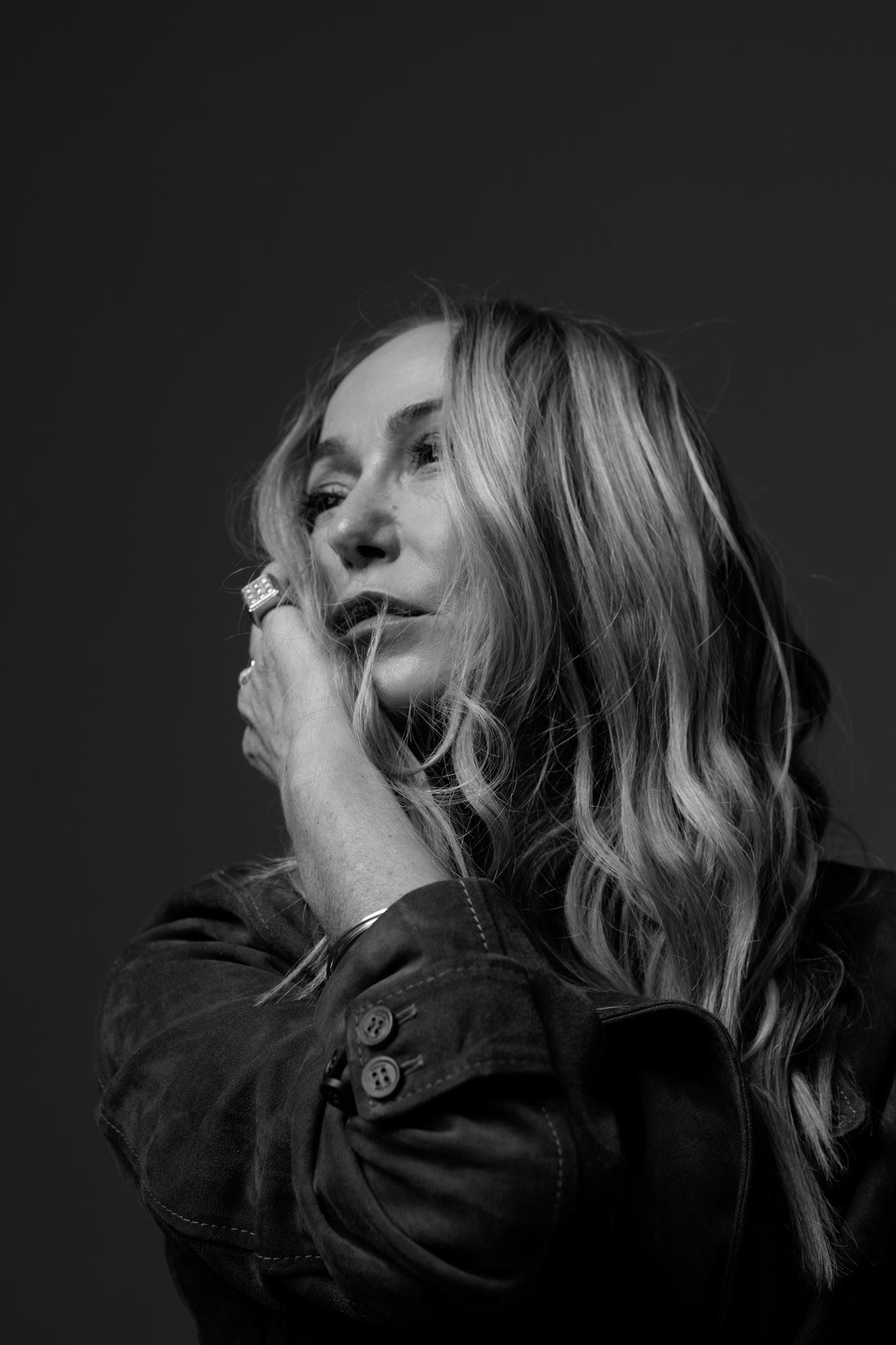
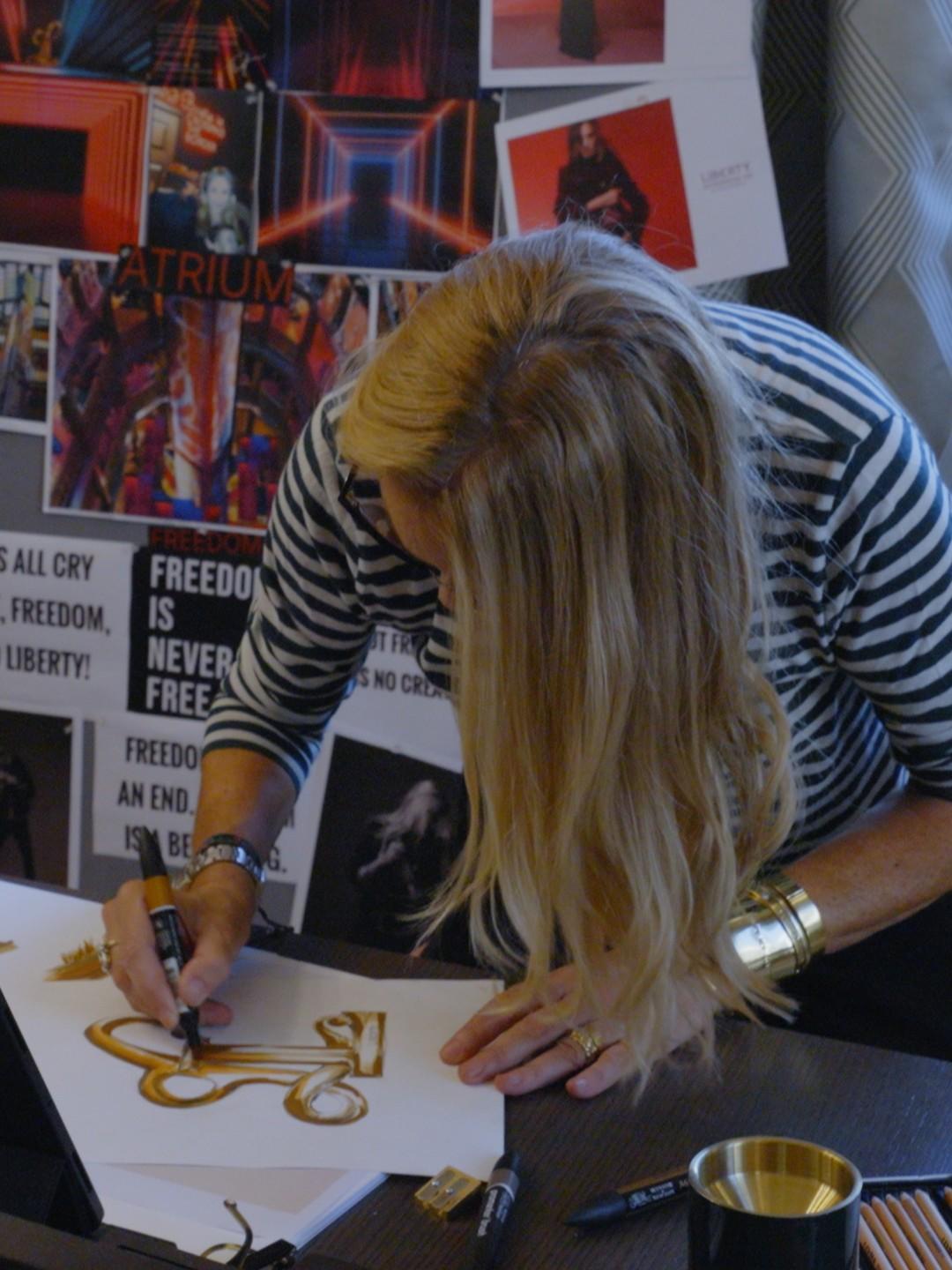
While the inspiration for The Nelson Coat lies in Frida’s exploration of Liberty’s past, it’s true beauty stems from the craft that lies behind its creation. Meticulously designed and refined by Frida for a fit that is fluid yet structured, elegant yet bold and details that are works of art within themselves. The final creation, with its intricacy, heritage and masterful craft, is such that Frida professes the Nelson to be her favourite coat she has designed ever designed.
Naval Inspirations
As its name and form suggest, The Nelson Coat alludes to the historic Naval and military codes that form part of Liberty’s own story. Beyond the golden weathervane, inspired by the Mayflower, nods to the Royal Navy are dotted throughout Liberty’s flagship. In fact, the timber walls themselves were built from the hulls of two decommissioned Navy ships, the HMS Impregnable and the HMS Hindustan.
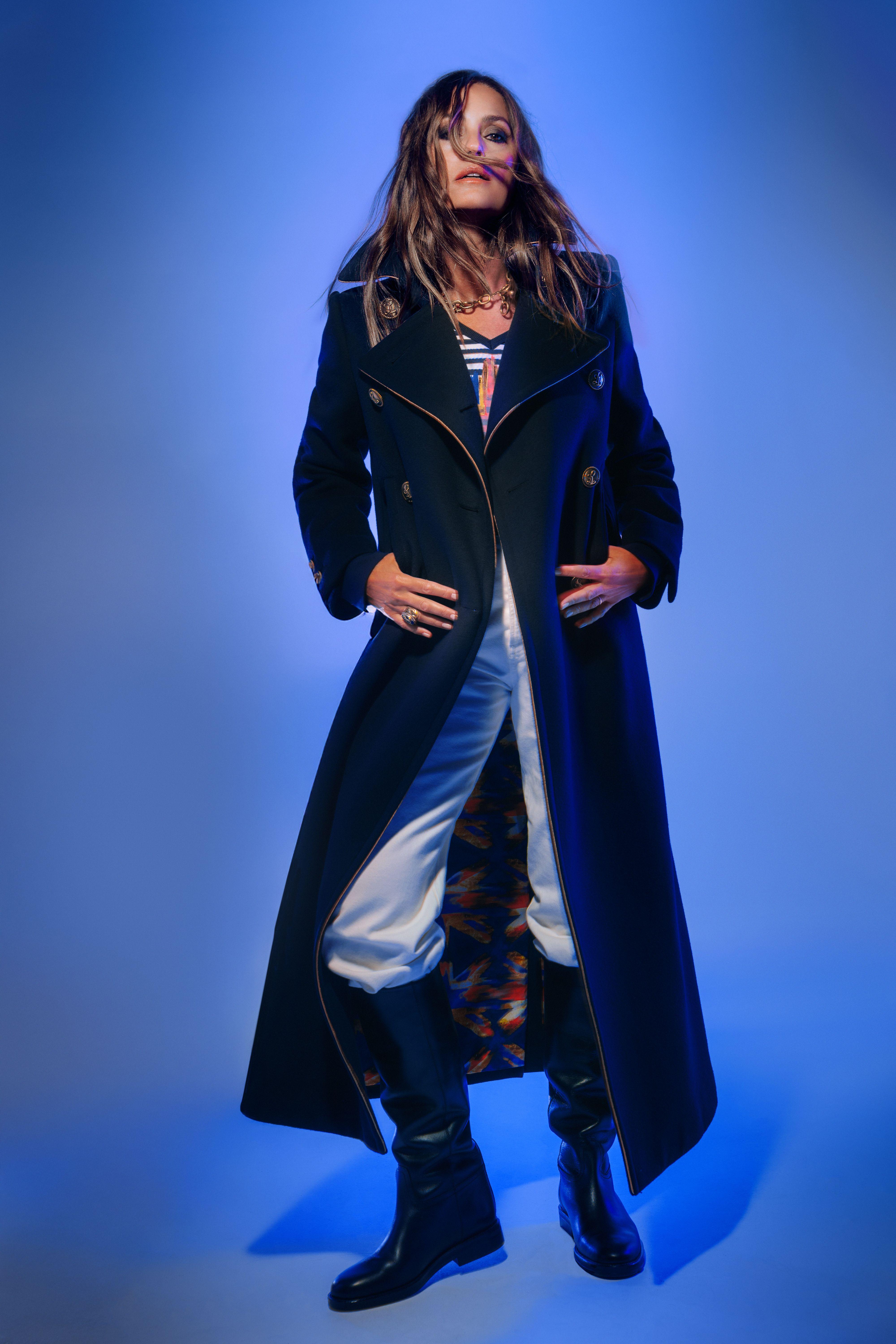
With its felted cashmere fabrication, structured shoulders and military tailoring references, Frida explains that the silhouette and mood of the coat nod to these historic details. “I made this coat because I wanted to create a very “miliary” posture,” she notes. “It gives a strong attitude to the coat.”
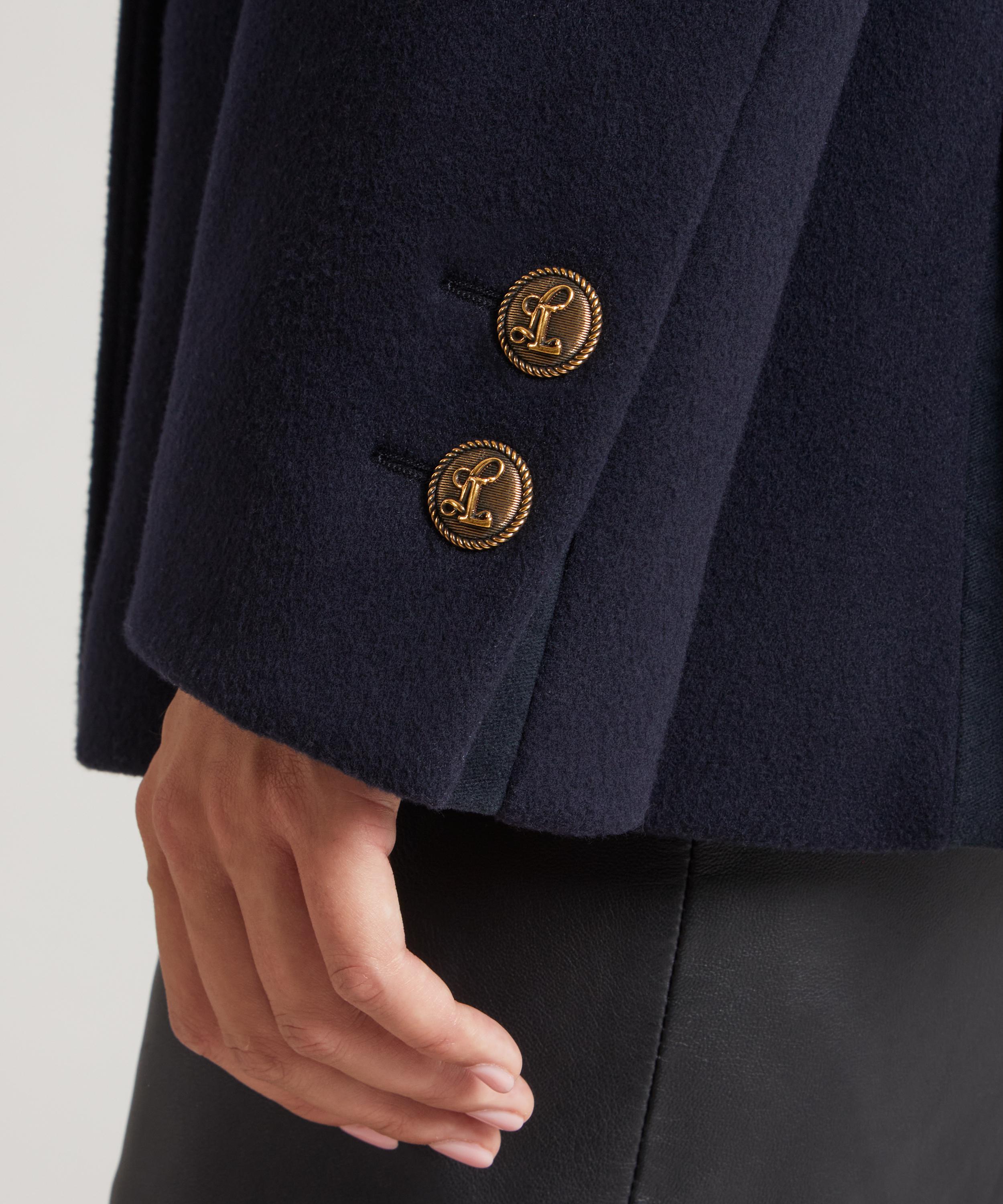
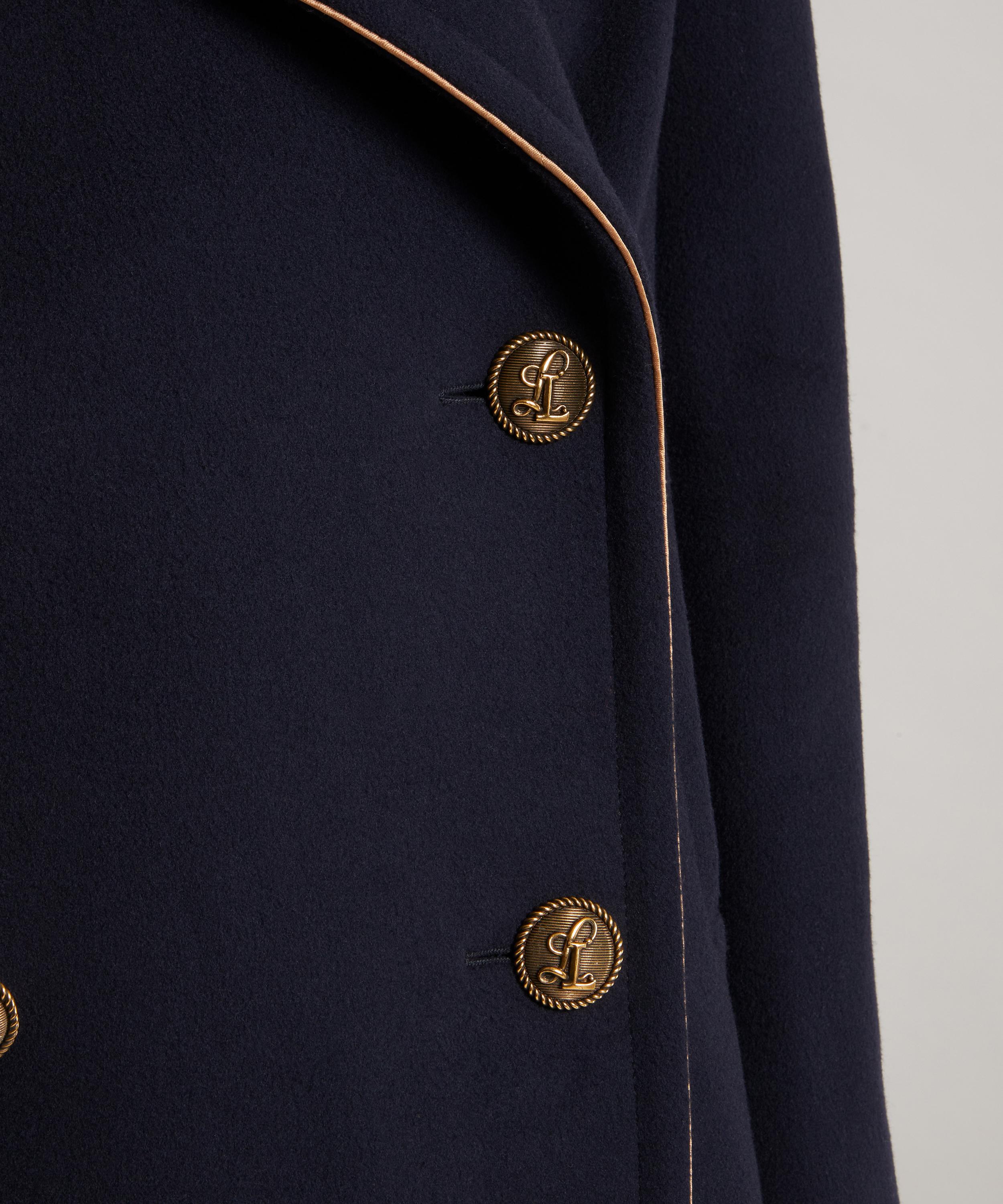
The guilloche buttons further allude to this theme, cast in bronze and featuring the collection’s signature “Double L” motif, accompanied by a marinière-inspired rope rim.
?fmt=auto&qlt=default)
A Pattern of Precision
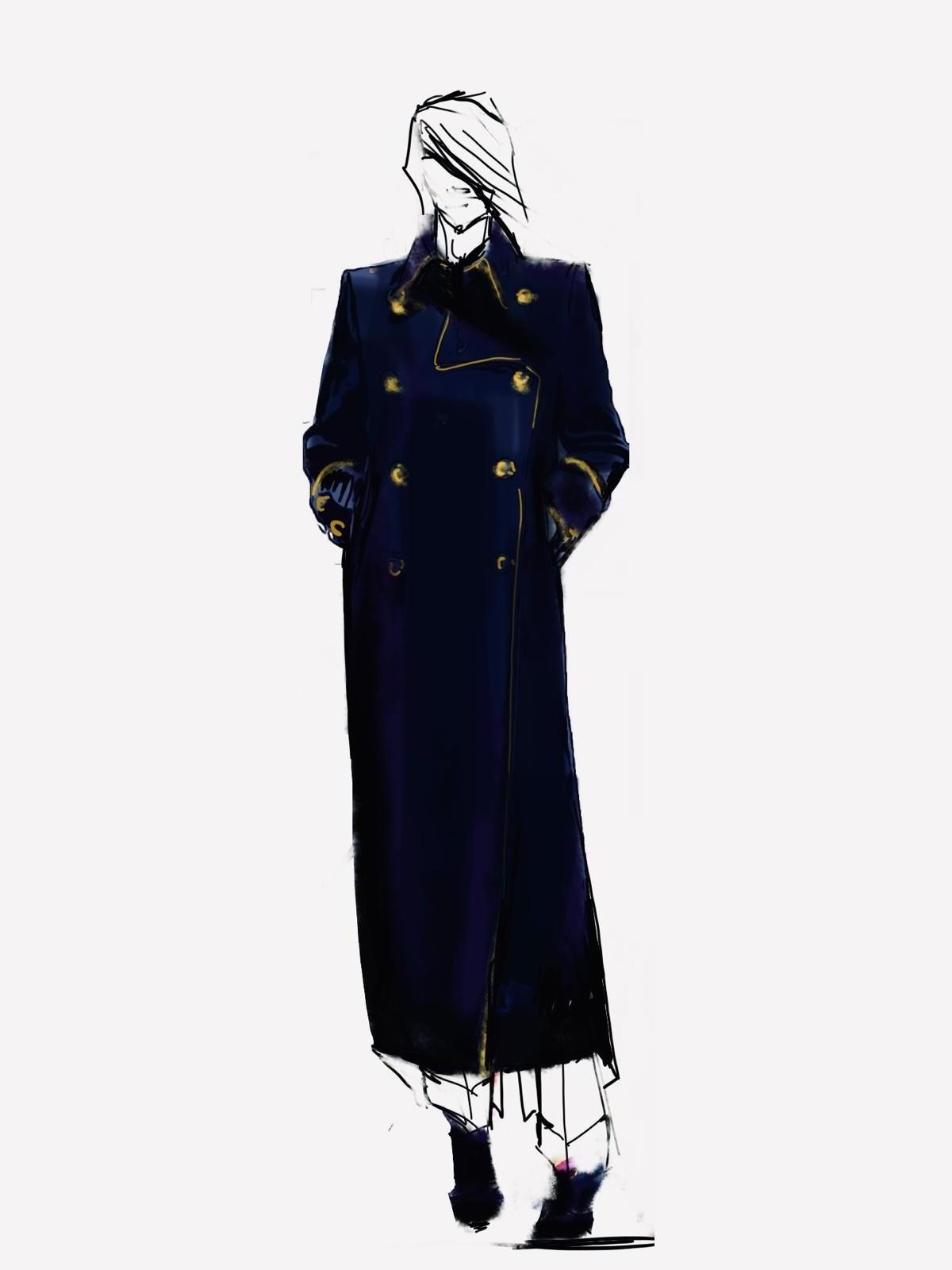
Much of the beauty of the Nelson Coat lies in a deceptive simplicity. Its balanced proportions and clean architecture ensure a natural, elegant fit for the wearer, a feat which required a meticulous approach, utilising the finest tailoring techniques and pattern cutting expertise.
The final design features 18 wool and five velvet panels, carefully paired together to give a subtle depth and sense of ease to the garment when worn. To achieve this result, Frida worked with the Liberty design teams on three rounds of pattern drafting, far beyond the standard for ready-to-wear collections, and more akin to bespoke production practices. With each iteration, the balance, drape and proportions were refined and perfected, until the final result was achieved.
Tailored for Perfection
Complimenting the refinement of the pattern, fine tailoring techniques and pinpoint detailing elevate the Nelson Coat’s natural structure and softness – finishing touches which set the coat apart as a beacon of artisanal excellence.
The construction of the coat makes use of traditional tailoring techniques rarely seen in women’s outerwear – imbuing the coat with it’s unique feel and finish. These techniques showcase a fusion of British and Italian tailoring skill, embodying Frida’s collaboration for the Liberty Hypernova 150 collection. For example, saddle shoulder construction, a British tailoring technique used in military tailoring, gives a smooth rounded and natural curve to the shoulders. Meanwhile, the Italian “rollino” technique, derived from 1930s Neapolitan tailoring, gives the shoulder structure while maintaining a natural finish.
Frida explains that each detail in the coat was selected to enhance its proportions. “The length of buttons goes all the way down the front from the shoulders, which makes for a good silhouette,” she says. “[Also] the bronze piping was a nice detail to underline the shape and silhouette of the coat, and the curve of the dresses as well.”


?fmt=auto&qlt=default&metadata=true$poieg$&w=1000&h=1300&sm=c&poi={$this.metadata.pointOfInterest.x},{$this.metadata.pointOfInterest.y},{$this.metadata.pointOfInterest.w},{$this.metadata.pointOfInterest.h}&scaleFit=poi)


