
In The Studio with Story Mfg.
The designer duo designer duo sits down with Liberty to talk community building, perfect imperfection and the secret behind the very best pair of jeans
Read more
In The Studio with Story Mfg.
The designer duo sits down with Liberty to talk community building, perfect imperfection and the story behind the very best pair of jeans
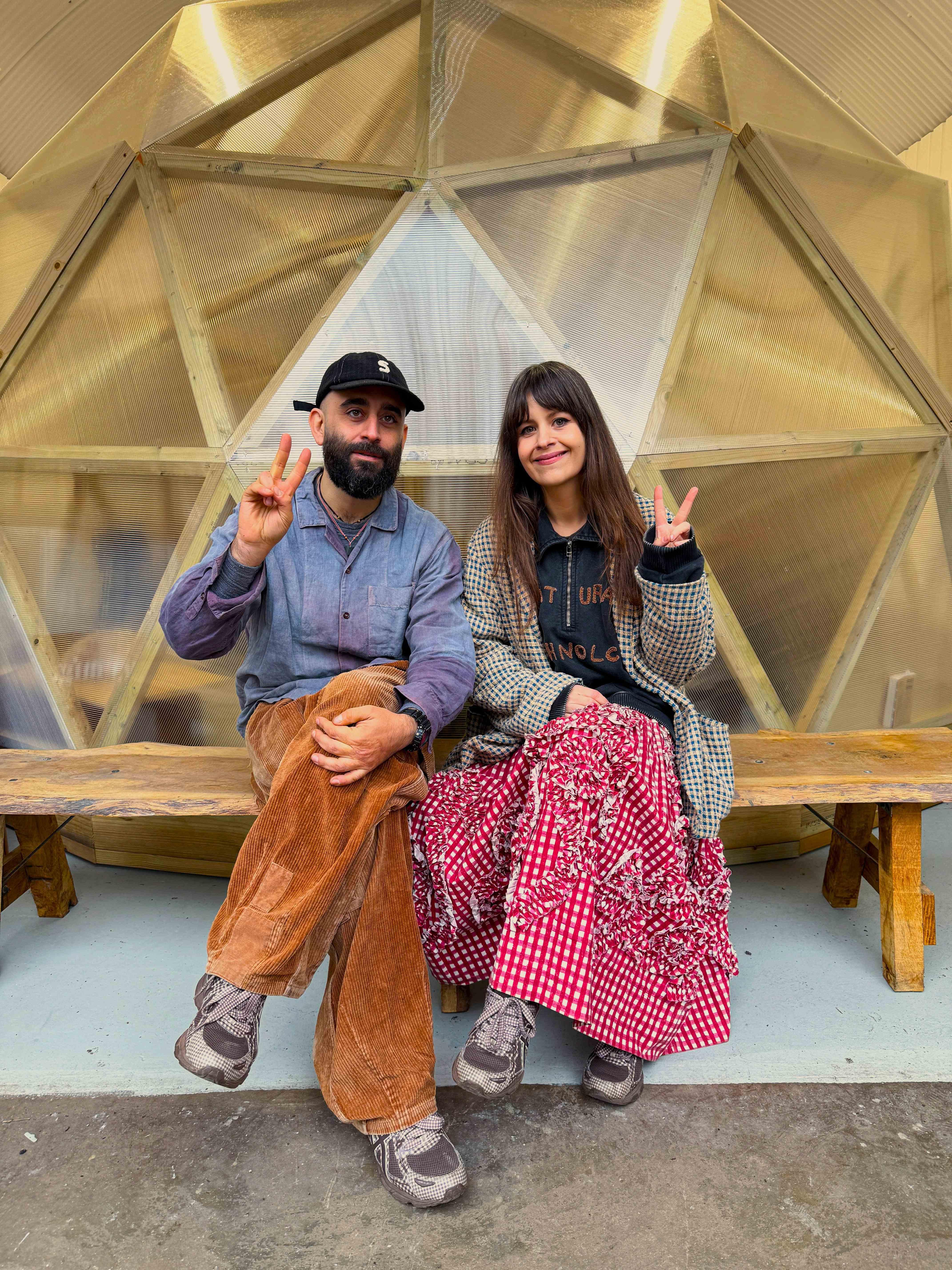
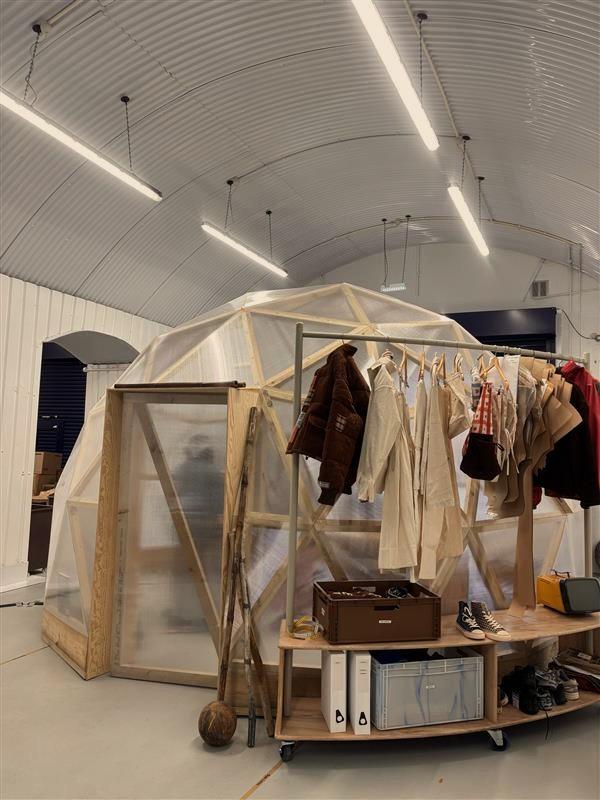
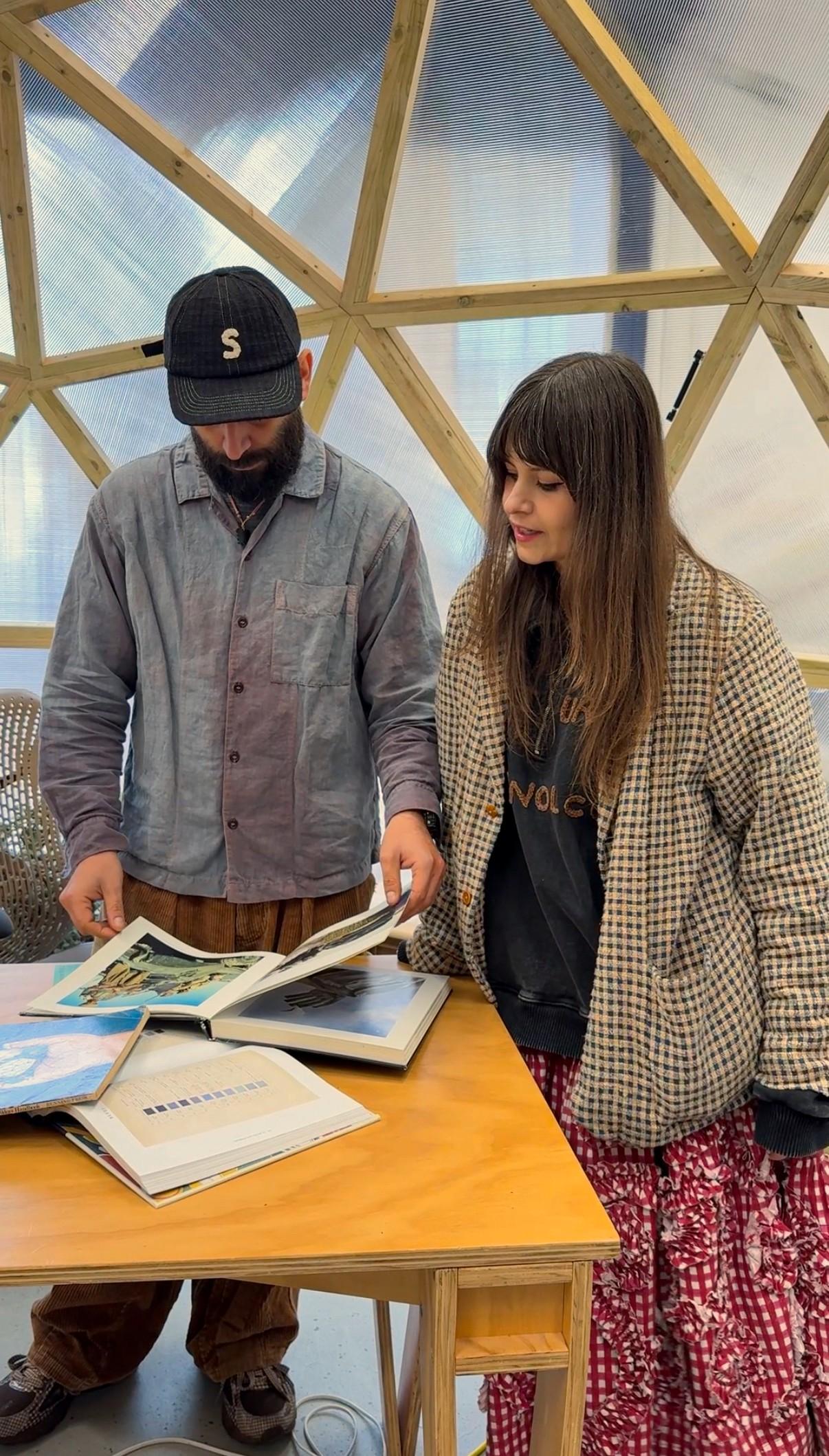
The first thing you see when you enter Story Mfg.’s east London studio is a wooden geodesic dome, large enough to house a six-seater wooden desk. Here, founders Katy and Saeed Al-Rubeyi lean over their laptops, getting one last email sent before showing Liberty around. The studio (dome included) is satisfyingly on brand – it’s all raw textures, natural fibres and earthy tones, a fitting introduction to a brand that above all else, loves nature.
Story Mfg. has garnered a cult following since its launch in 2013 but, despite this, Katy and Saeed say they never really intended to create their own brand. Even their “launch” wasn’t really a launch. The couple had just started dating when they decided to make one pair of jeans. The perfect pair of jeans - made as consciously as possible. After the jeans came a jacket, a shirt, another jacket and so on... Now, they have a team of 15, not including the artisans in India or the weavers in Thailand that they’ve worked with since the beginning.
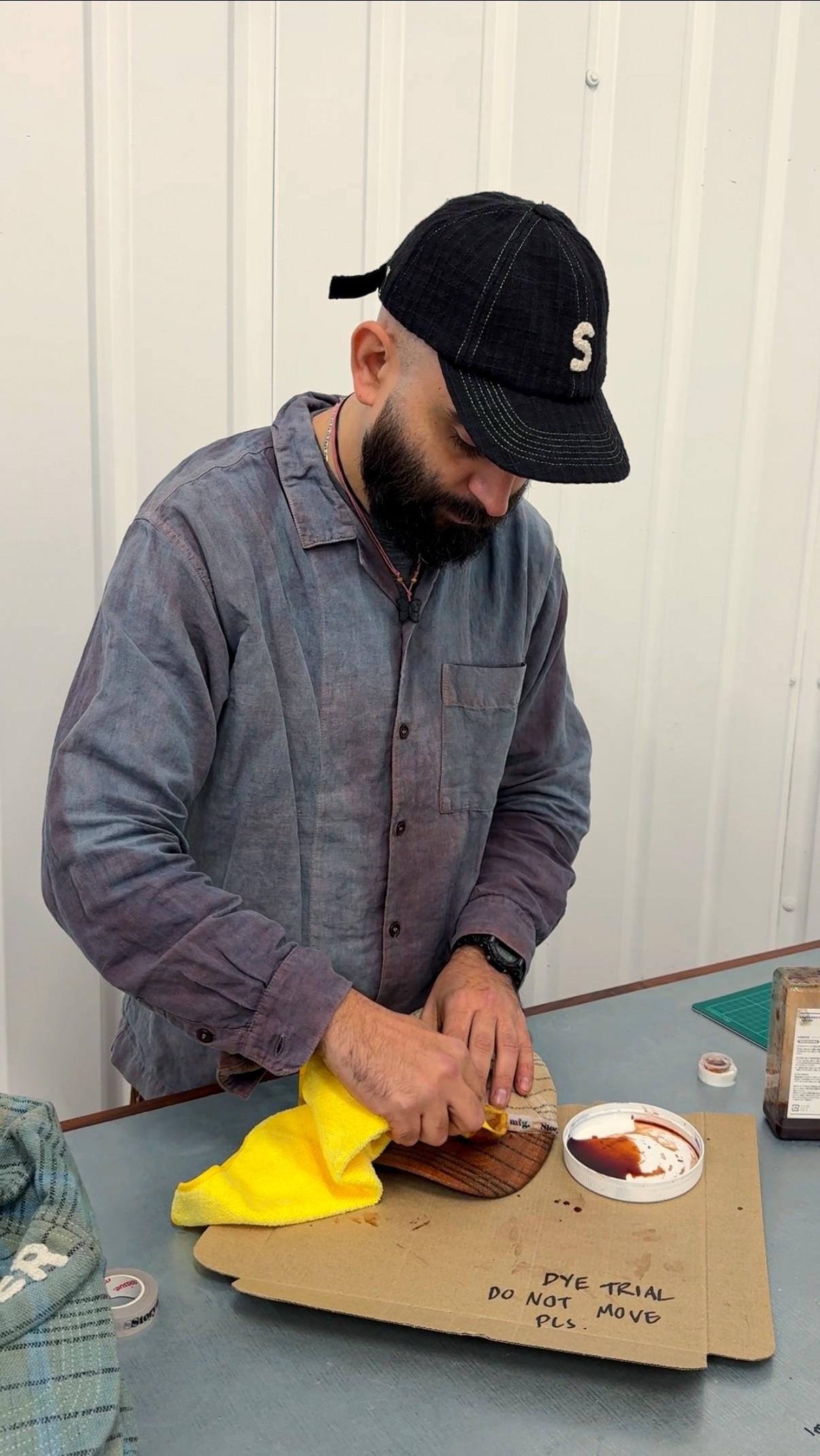
The brand centres around natural materials and dyes, as well as the astonishing techniques the human hand can offer, whether dyeing, weaving stitching and even block-printing. In each piece since that first pair of jeans is evidence of those techniques – the irregularities and delicate wobbliness that is, for them, “the pinnacle of luxury”.
As their latest collection launches at Liberty, the husband-and-wife designer duo sat down with Liberty in their studio, to talk all things craftsmanship, storytelling, and the beauty of imperfection.
What inspired you to start your own brand?
Katy: I was working for a trend forecasting company when we started dating, and I was traveling a lot attending fabric trade shows. I’d come back and talk to Saeed about all the really cool, niche developments mills were working on that you never saw in shops. We weren’t planning to start a brand; we just wanted to find something interesting and maybe make one jacket or one pair of jeans. At a show, someone I knew from visiting mills told us about natural dyeing in India and encouraged us to go.
We went to India almost immediately and met artisans using ancient, natural techniques you don’t find anywhere else. We still work with them today. From there, it evolved very slowly. For the first two or three years, we didn’t even have a collection - maybe five pieces at most. We both had full-time jobs, and we were also very limited financially.
You started the brand by designing denim - what drew you to that, and why did it feel right to start with denim?
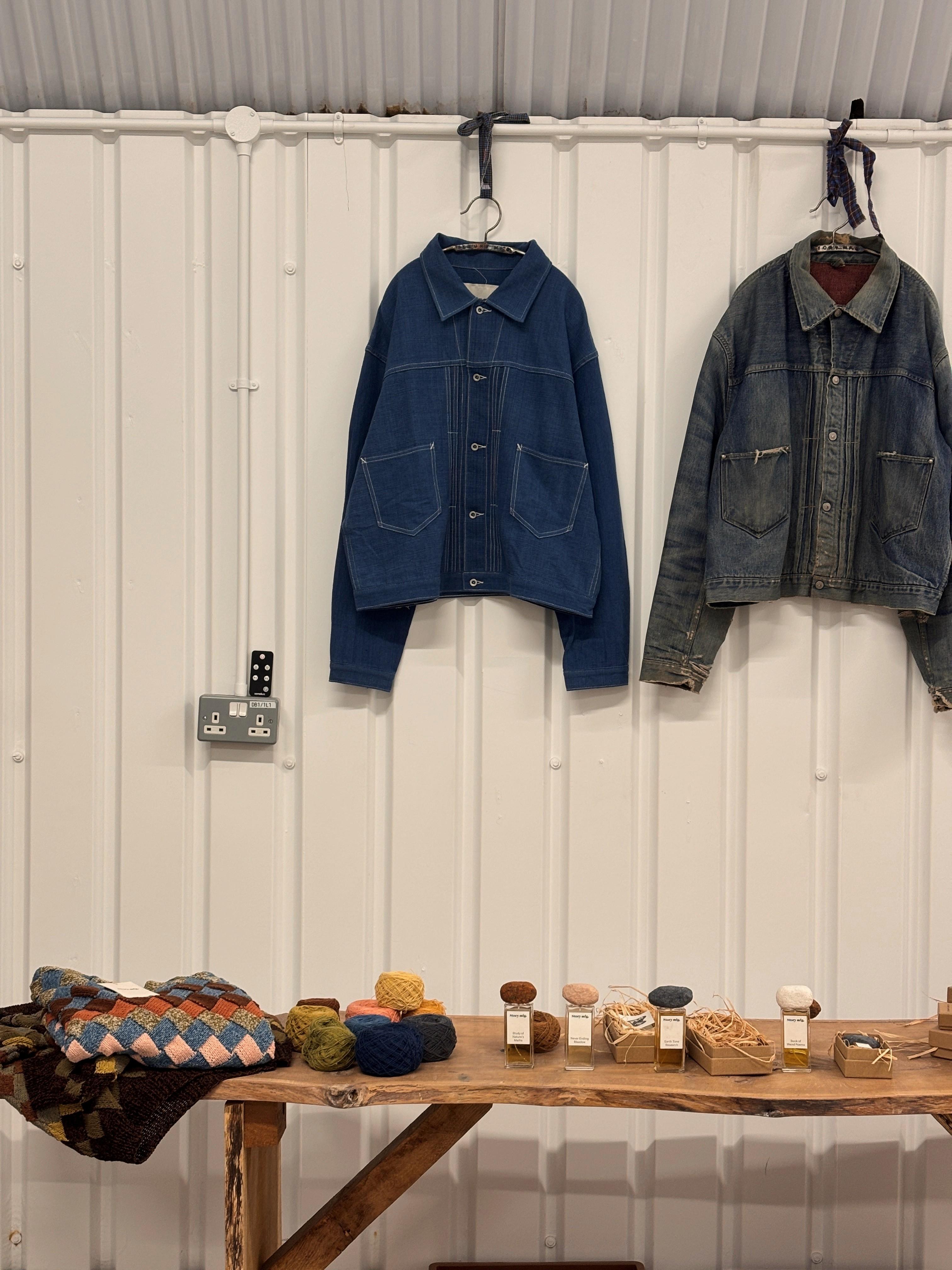
Katy: Denim was my background so all my knowledge was focused there. But denim is also such an iconic fabric. It connects to workwear, history, and everyday clothing in a really meaningful way. It’s incredibly difficult to make properly, especially the way we do it. Our denim is handwoven, which is an extremely old process. That led us to discover other handwoven fabrics and eventually to a broader fascination with craft and handmade processes.
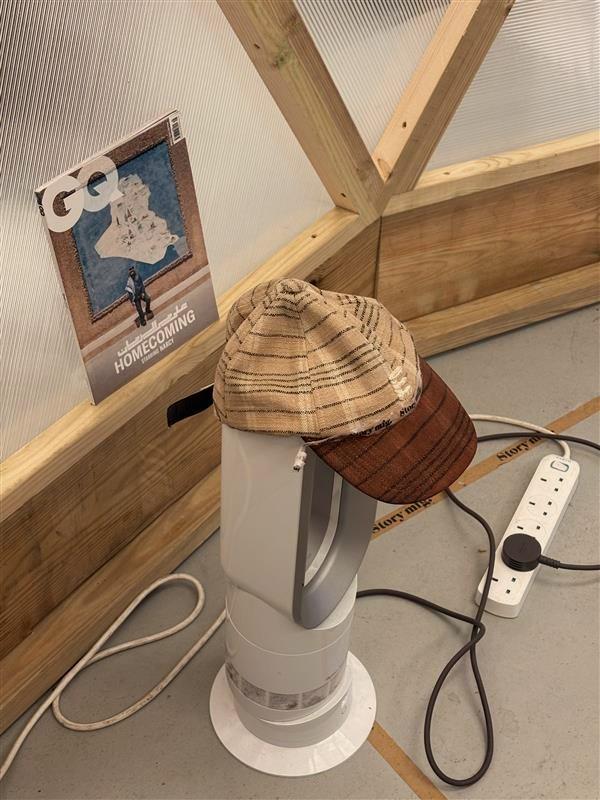
Saeed: What we loved about denim in the beginning was the irregularity - the texture, the imperfections. That led us into vintage, heritage, and storytelling more broadly. Even small details became meaningful. For example, we noticed a line running through the fabric - loom chatter - which would normally be considered a flaw. When we asked about it, the weaver said it happened when he stopped to have a cup of tea and the tension changed slightly. That kind of everyday human detail felt beautiful to us. Denim is an everyday fabric, and so is having a cup of tea. That connection really resonated.
How would you describe the brand’s core ethos?
Saeed: We wrote what we’ve called a Positive Product Manifesto right at the beginning, before we had any products. Our website wasn’t transactional - it only had the manifesto. We needed a way to explain what we were trying to do before we had anything to show. We wrote down what was important to us: craft, natural dyes, how products should be made, what they should be made from, and where they fit in the world. It has evolved slightly over time, but nothing has really been removed - only added to.
How would you describe the Story Mfg. aesthetic?
Katy: Fun, colourful, and very craft based. One of the most important things is evidence of the hand. You should be able to see that something is handmade. We like imperfection - wonky stitching, irregularities - but done consistently and intentionally. It’s imperfect but perfectly made. That balance is really important to us.
Saeed: Everything is rooted in vintage inspiration, particularly workwear and outdoors clothing. We love old garments that have been repaired, embroidered, or altered over time. There’s something very human about that. Comfort and functionality are also key. We like easy fits, oversized silhouettes, and natural materials. Everything should feel wearable and relaxed.
Where do you find inspiration?
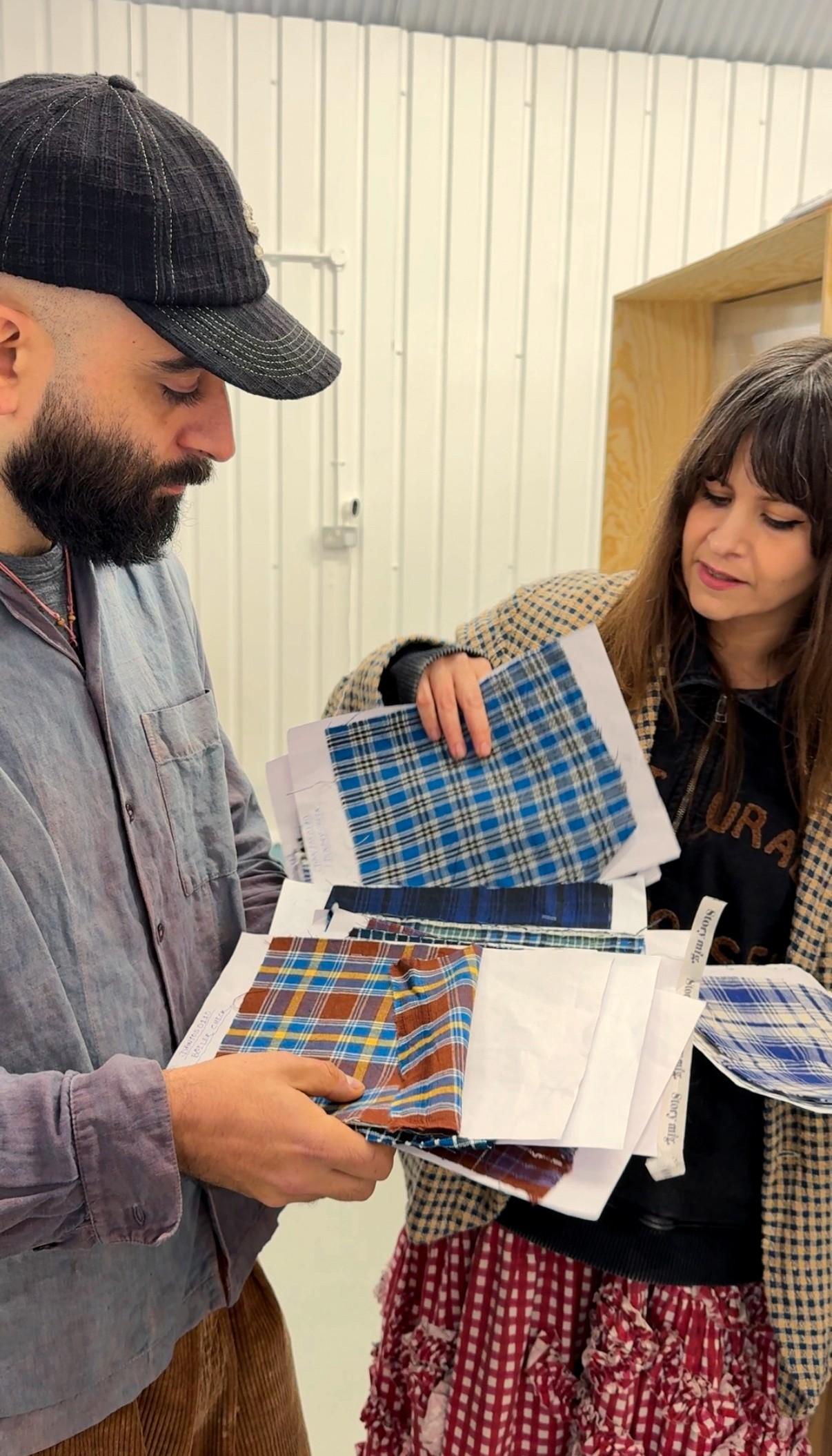
Katy: At the beginning, inspiration came from vintage, outdoors, history, science fiction, and naïve art. Now, we’re at a point where we often look inward - revisiting and reworking our own archive. We’re very sensitive to trends. If we see other brands doing something similar, it often puts us off, and we’ll step away and come back to an idea later.
Saeed: Nature is also a collaborator. Because we use natural dyes, we can only design to a certain point - after that, nature decides. The same applies to our manufacturing processes. Everything we do uses old-school, handmade techniques, which naturally shapes the outcome.
Could you tell us a little bit about your studio?
Saeed: Our previous studio was in Brighton, and we missed London and wanted to bring everything back together - design, production, warehouse, and retail. Plus, I’ve always loved railway arches. It feels really important for us to be working closely together again, with everything happening in one place.
How has your community shaped the brand?
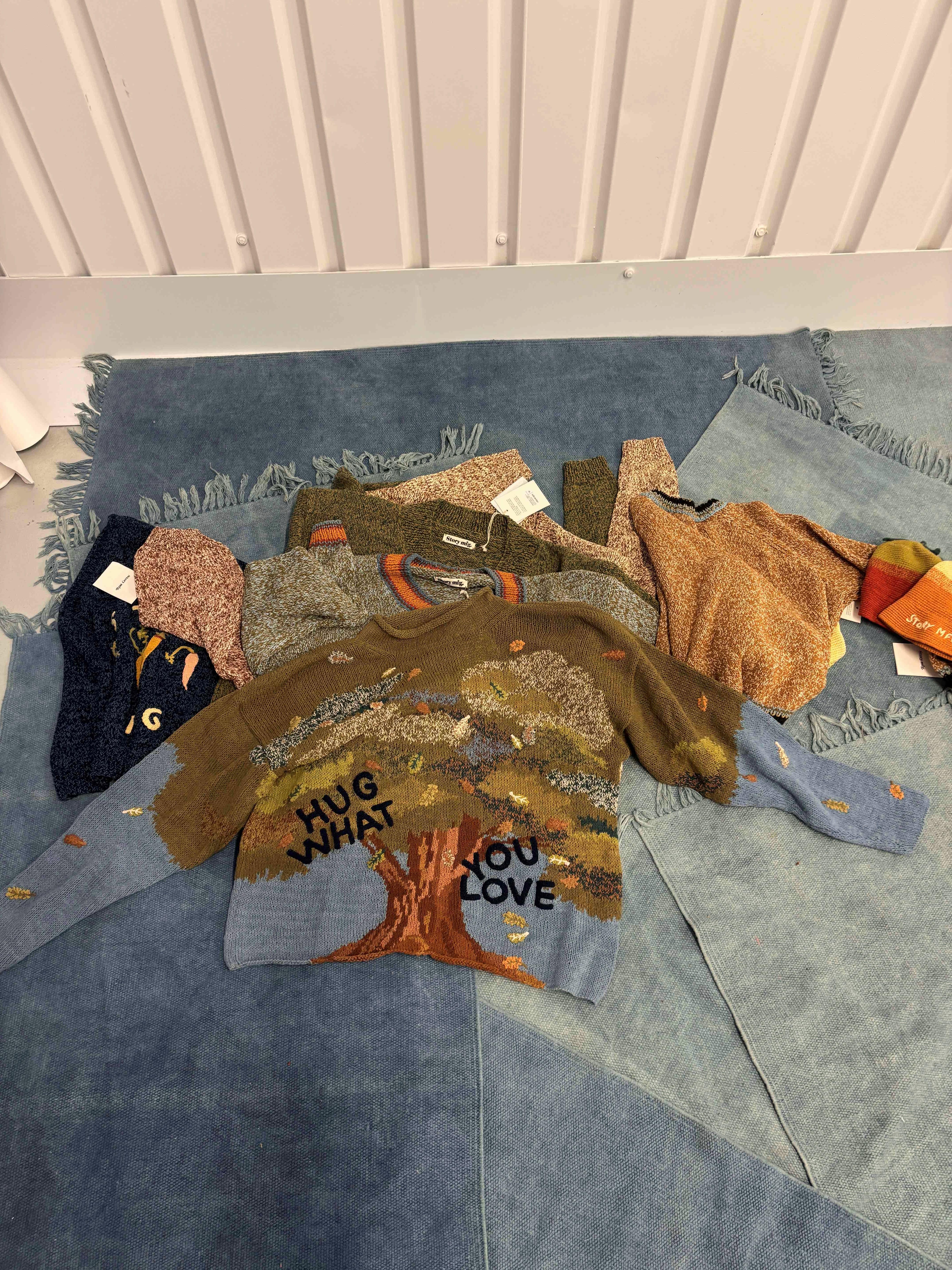
Saeed: People often discover us through a single product, then become curious about how it was made. They learn about natural dyes, handweaving, and our values, and they become deeply invested. There aren’t many brands that combine all these elements in the same way, so people who connect with it tend to really stay with us. We’ve built up over ten years of stories, and people love going deep into that history. It wasn’t something we expected, but it’s one of the most rewarding parts of what we do.
You’re a husband-and-wife team - what kind of perspective does running a business together give you?
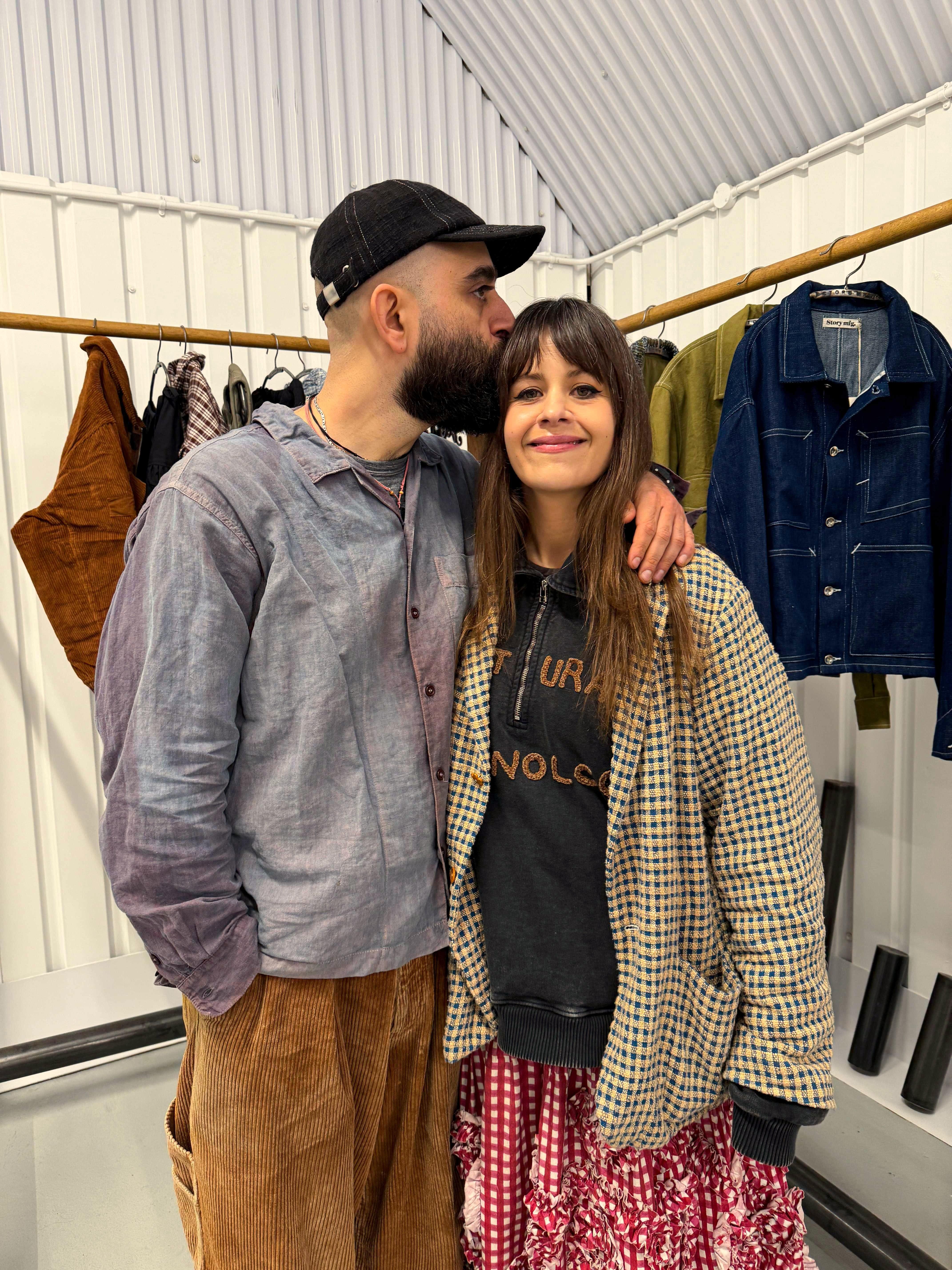
Saeed: Having had a brand for like eight years together and having to get really honest before having kids made it possible – but it’s hard.
Katy: We talk a lot about boundaries, because I’ll never stop working if there’s something to get done – and that’s not healthy, so I’m told…
Shop Story Mfg.


What does Liberty mean to you?
Katy: Liberty mattered to us personally - my mum loved it, and Liberty’s focus on storytelling is essential for a brand like ours. When it finally happened, it felt like the timing was right - like we were ready. As designers, you hope buyers will understand what you’re trying to do. With Liberty, it really worked out.


?fmt=auto&qlt=default&metadata=true$poieg$&w=1000&h=1300&sm=c&poi={$this.metadata.pointOfInterest.x},{$this.metadata.pointOfInterest.y},{$this.metadata.pointOfInterest.w},{$this.metadata.pointOfInterest.h}&scaleFit=poi)


