
In the Studio with Susamusa
How Asal Tehrani transformed a fascination with vintage finds into one of Liberty’s most-coveted contemporary brands
Read more
In the Studio with Susamusa
How Asal Tehrani transformed a fascination with vintage finds into one of Liberty’s most-coveted contemporary brands
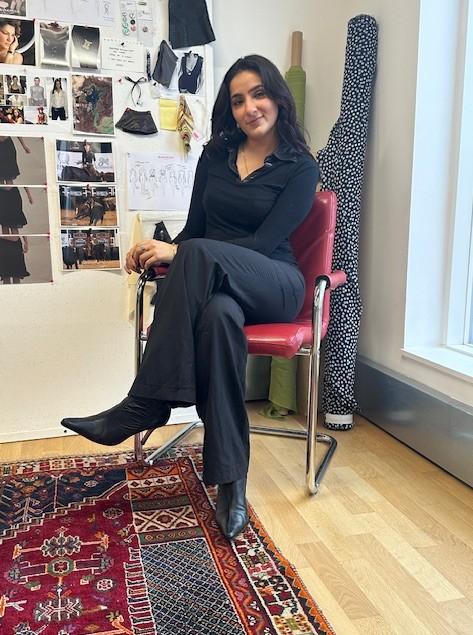
Even with London’s freezing winter rain lashing at the windows, an instant sense of warmth and welcome spills from Susamusa’s west London studio from the moment founder, Asal Tehrani, opens its doors.
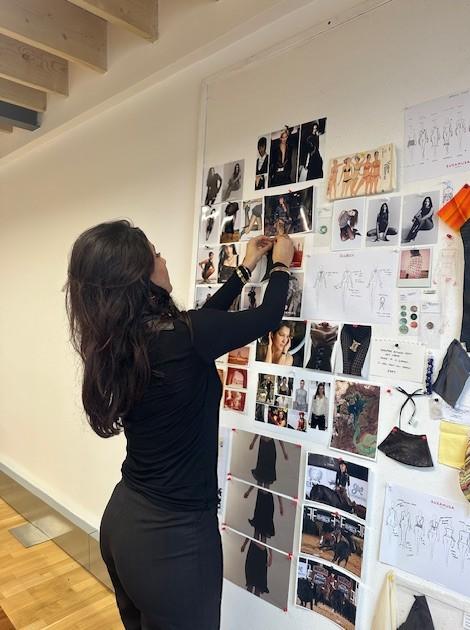
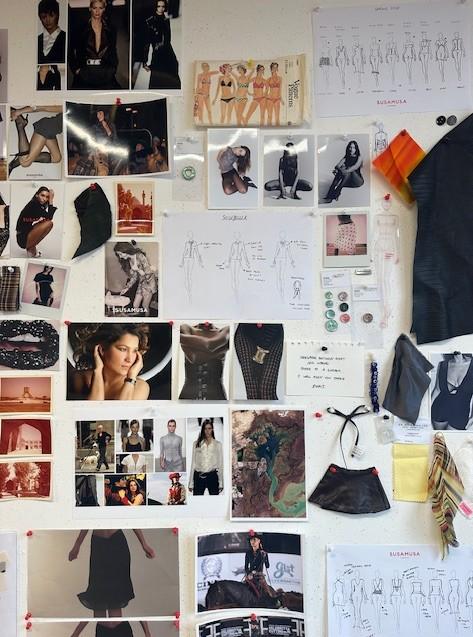
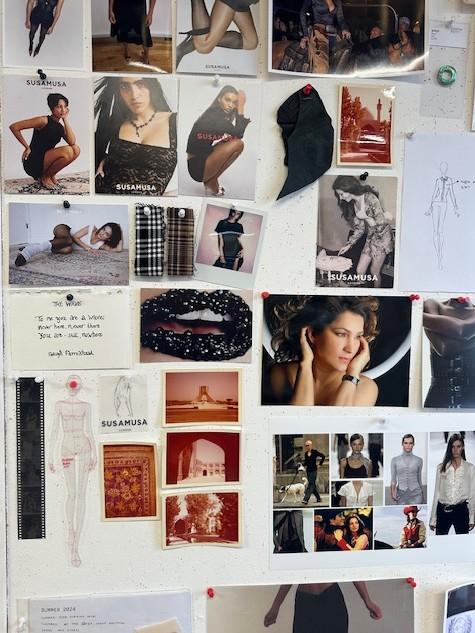
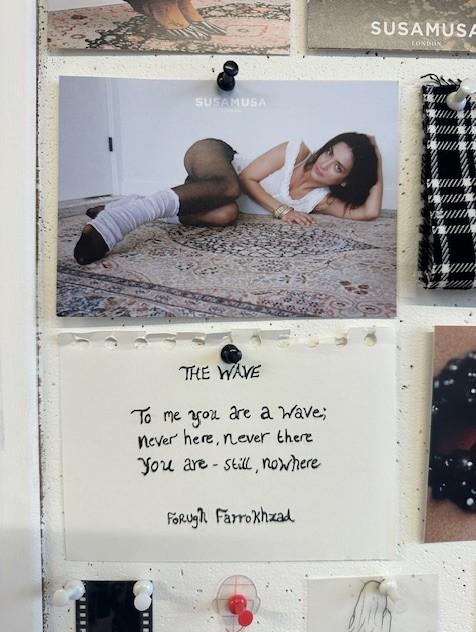
Moodboards propped against the wall feature inspirations ranging from nineties catwalk shots, to verses of poetry, to swatches, sketches and even a glamorous portrait of Asal’s mother who, alongside a small team, helps bring the Susmusa vision to life. Alongside the retro references and vintage Vogues, an ornate Persian rug lies on the floor, underneath a wooden table which, Asal tells us, has been a constant for the brand since it all began.
It is this convergence of influences sits at the core of Susamusa’s ethos and sets the brand apart in the contemporary space. Not only does the brand reference nineties and noughties fashion in a way which captures the sartorial hearts of a core Gen-Z customer, but Asal infuses her brand with heartfelt nods to her Persian heritage, making for an aesthetic that is playful, nostalgic and ever-so-slightly daring.
As the brand makes its debut in store, Susamusa invited Liberty for a glimpse into their world, to hear first hand how what began as a vintage reselling project, became one of the most intriguing brands on Liberty’s floors.
How would you describe Susamusa?
Susamusa is a womenswear brand based and made in London. We don’t launch many collections a year and we’re really intentional with what we put out. We’re very product-focused and only release pieces that we’re 100% sure girls will want and need.
You’ve spoken before about how your heritage influences your aesthetic. Can you tell us about that?
I was born in Iran and I moved to London when I was three. I grew up going to Persian mehmoonis, which are basically house parties. Everything was so chic and there was so much colour.
Iranians are really bold and over the top in how they furnish their houses, with Persian rugs and chandeliers, but the outfits were always so chic. I used to love going to them, especially seeing what the women and my aunties were wearing.
That influences so many of our pieces. Our Suri dress was inspired by a video of my family in the ‘90s and what they were wearing. Iran is so culturally rich that it’s hard not to be inspired by it and hard not to bring that into my everyday life.
How did you choose the name Susamusa?
Susa is an ancient town in West Iran, which we call Shush in Farsi. In Farsi, we play on words a lot, kind of how you would say something like “fancy schmancy”. Musa is a play on Susa, so that’s where Susamusa came from.


You initially focused on vintage and ‘90s styles. Where did that interest come from?
I started [my Depop shop] as a student, it was my first year of uni. I was just trying to make some space in my room and also make some money, so I just fell into it. There was no intention to start a business, honestly, it was just to pick up a little side hobby.
Growing up, I spent a lot of time in Athens, which has so much vintage. I was always really interested in vintage pieces because everything had a story, no one else had it, and everything had a bit of history to it. Being around that really sparked my interest in vintage.
The pieces I still have in my house [from when I started sourcing] are old Betsey Johnson dresses, silk slips from the 1920s, silk dresses. I honestly have so many of them and I never have the time or places to wear them!
Can you talk us through the journey from selling vintage to becoming a fully-fledged brand?
The transition felt quite organic and gradual. In the beginning, when we were selling vintage, I would customise pieces a lot, adding trimmings, cutting things, altering them. I think I had my hand in upselling pieces from the beginning.
My mum gave me the idea to start the website. We launched with 20 hand-picked dresses and they sold out. Having the website kind of separated the two for me, and that’s when we started the made-to-order process.
To keep up with demand, I started looking for factories. It was a really gradual process. We started with one hero piece and then added another, based on customer response and what people wanted.
What were some of the biggest challenges when you started producing your own clothes?
Production is a whole other world, which I had no idea about. Getting pieces made at factories, quality control, all of that is very different. With vintage, it was almost an instant reward. You’d source something on a Saturday, take a photo, sell it, and by Tuesday it would be at your customer’s house. Now we’re working months in advance on one silhouette, so it takes longer to see how girls are wearing it.
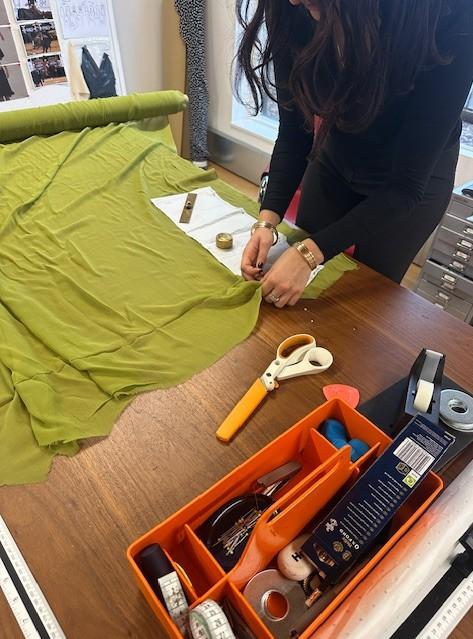
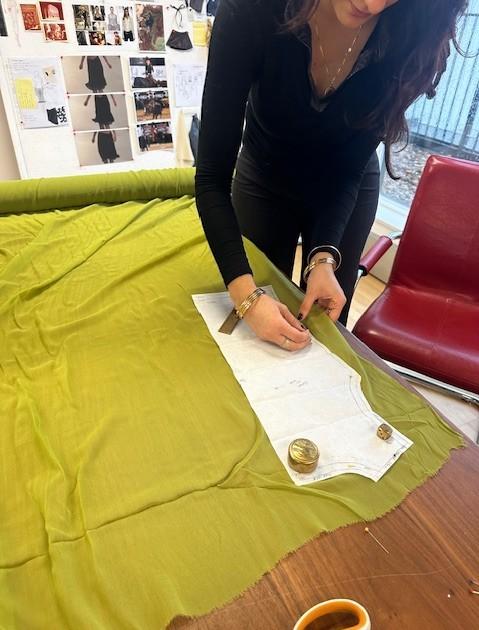
I’m constantly thinking about silhouettes and how girls would wear our pieces. I sketch ideas and send them to our pattern maker. We sample either in-house or with our factory.
Once we have a sample, I’ll wear the piece out, on a night out, to dinner, or on holiday, to see how it feels and what people’s reactions are. If I feel good in it and it gets a good response, we perfect the sample and put it into production.
We do everything in-house. We do fulfilment in-house, and our factories are within 10 miles from us, so we’re very hands-on.
In the lead-up to a collection, me and the team are constantly at the factory, making sure everything’s good. Then everything comes back here and we ship it from our studio.
Do you think starting with vintage gave you any advantages?
Definitely. When I was sourcing vintage, I probably went through tens of thousands of pieces. I familiarised myself with different cuts, prints, trimmings and fastenings, and really developed an eye for what I liked and didn’t like. That was invaluable and I use it now when we’re designing.
Fabric feels like a big part of your brand, especially sheers. Why is that?
In the beginning, for about the first year, we were mostly using vintage fabric. We would source the fabric and then work backwards, which was really fun creatively.
Sheers are definitely a signature for us. A sheer slip or dress is a little bit naughty, but girls wear it in such a chic and sophisticated way. We love working with silks and leathers as well. We started using leather trims and recently launched a leather jacket. Fabric is really important for us when designing.
What would you say are your signature pieces?
Sheers are definitely a signature. We’ve been quite daring with them. Our sheer polka dot skirt, which launched in August 2024, completely took off.
We also do a lot of subtle cut-outs. Our first pieces, like the Gina top and the O-ring styles, had small cut-outs, so it’s that subtly sexy feeling.
Where do you find your creative inspiration?
A lot of my creativity came from being fearless. I was 19 when I started and there were no expectations, so I wasn’t scared to try things. I had nothing to lose, which allowed me to be creatively free.
As I’ve got older, you lose a bit of that fearlessness, but that’s definitely where it started. Being open-minded, willing to experiment, and seeing how customers react.
I also get a lot of inspiration when I’m back home in Iran, from the landscapes, architecture, food, people and shop displays. Every time I leave, I feel full of ideas.
How does it feel to be stocked at Liberty?
Honestly, it’s a dream come true. Liberty is so iconic and such a big part of London. I was raised here, so it means a lot. Knowing our pieces are made within 10 miles of Liberty is really special.


?fmt=auto&qlt=default&metadata=true$poieg$&w=1000&h=1300&sm=c&poi={$this.metadata.pointOfInterest.x},{$this.metadata.pointOfInterest.y},{$this.metadata.pointOfInterest.w},{$this.metadata.pointOfInterest.h}&scaleFit=poi)


