
In The Studio with Bloomsbury Revisited
Founders of the artisanal lighting brand sit down with Liberty to discuss the joy of discovery, the allure of impermanence, and the endless inspiration of a bygone era
Read more
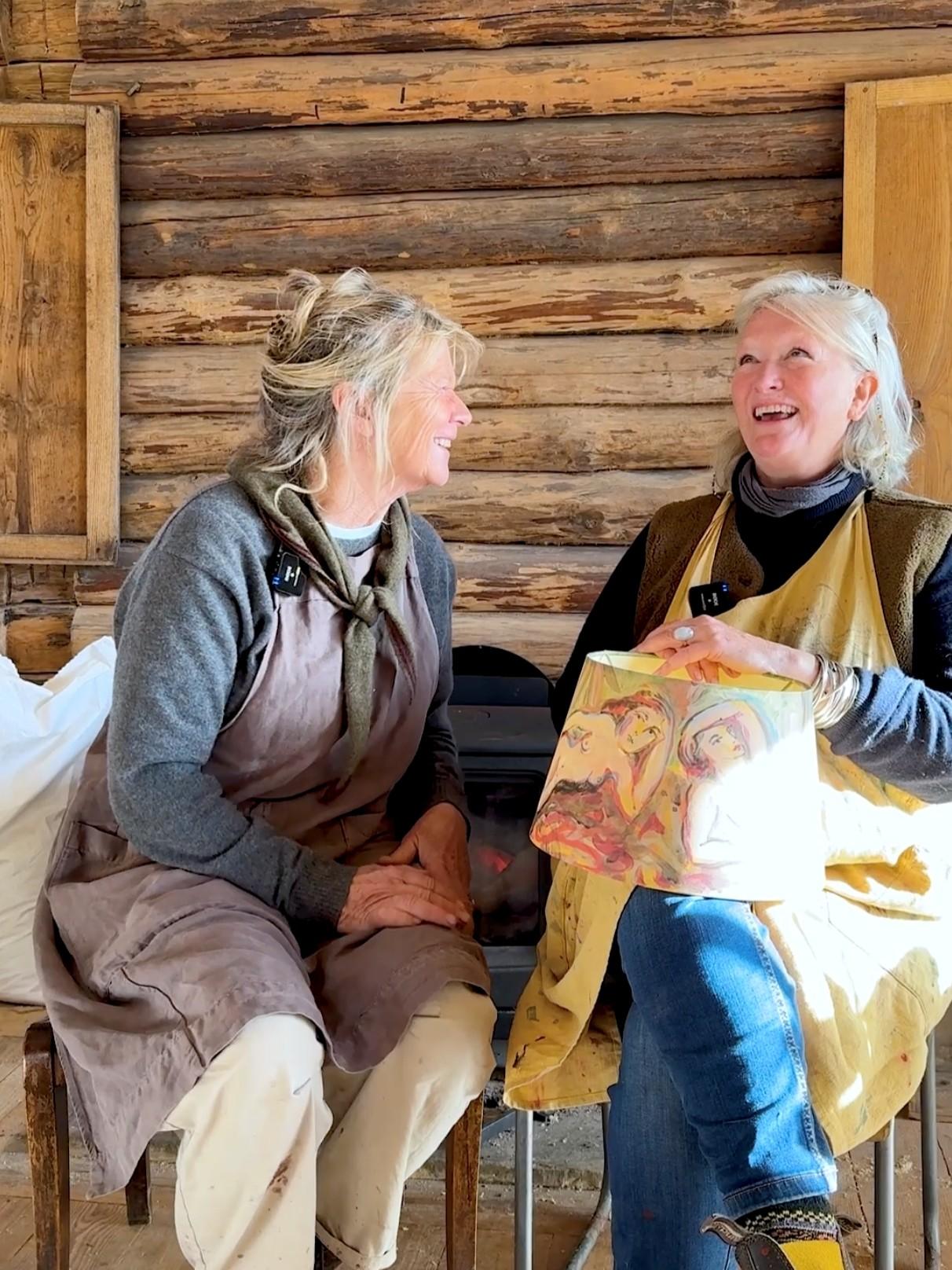
In The Studio with Bloomsbury Revisited
Founders of the artisanal lighting brand sit down with Liberty to discuss the joy of discovery, the allure of impermanence, and the endless inspiration of a bygone era
It only takes walking into artist Jane McCall’s home to grasp interiors brand Bloomsbury Revisited’s identity – everything from the kitchen cupboards, to skirting boards, picture frames and pot plants is painted with lilting florals and bohemian geometrics. It’s a habit not unlike that of the Bloomsbury Group artists, who provide endless inspirations for Jane’s own work. From a studio in the East Sussex countryside, Jane, alongside co-founder Jane Howard, crafts distinctive lampshades as Bloomsbury Revisited, with each creation paying homage to the famed Bloomsbury Group’s artistic legacy: capturing the aesthetic richness and the thoughtful philosophy of their muses.
Emerging in London’s fashionable west end in the early twentieth century, The Bloomsbury Group was a collective of literary, philosophical, and artistic minds renowned for living lives of reckless abandon, embracing progressive views and unconventional lifestyles. Charleston Farmhouse, near Lewes in East Sussex, became the group’s hideaway, a countryside escape where they could flee polite society’s grasp. Like in Jane’s home nearby, barely a surface was left undecorated – a philosophy ruled by spontaneity and impermanence, a perspective that drives each Bloomsbury Revisited design today.
Jane McCall and Jane Howard originally met when their daughters attended the same school, and despite careers drawing them to different parts of the country, their friendship endured. “We were both the mothers that forgot about National Book Day, so we both have that slightly chaotic, last-minute attitude,” Jane Howard says. After her move back to East Sussex, Jane McCall hosted a lampshade painting course organised by a mutual friend. Jane Howard took part and, when considering her own creation, had a light bulb moment: people would want to buy these. They set up a studio on Jane Howard’s farm (above a shed of cows), and Bloomsbury Revisited was born. In the years since, the two Janes have garnered an engaged following comprising lovers of art, creative freedom and all things whimsical.
As the brand makes its debut at Liberty, Jane and Jane sat down in their studio, surrounded by the rolling hills of the East Sussex countryside, to share how their shared passion led to Bloomsbury Revisited.
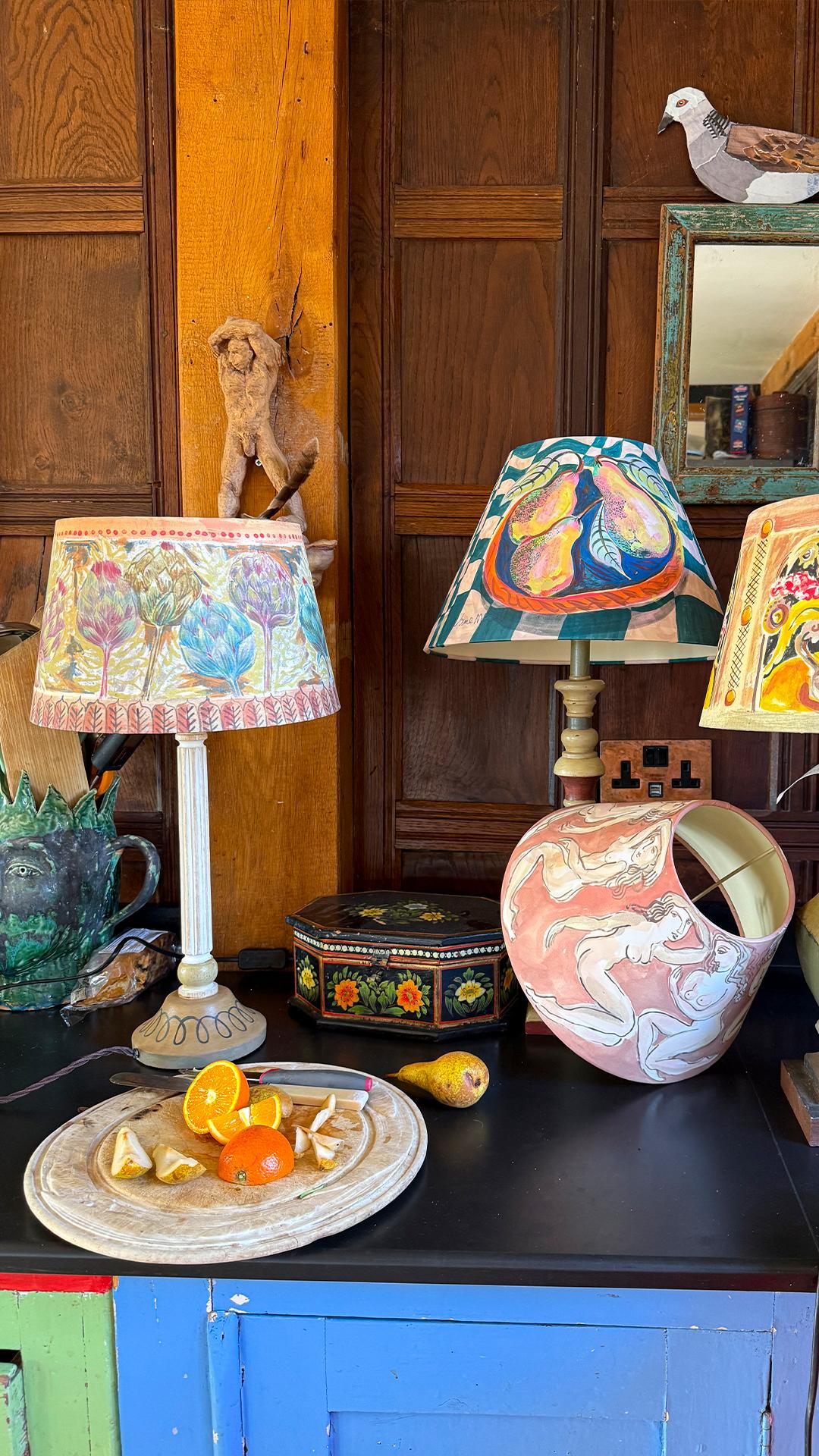
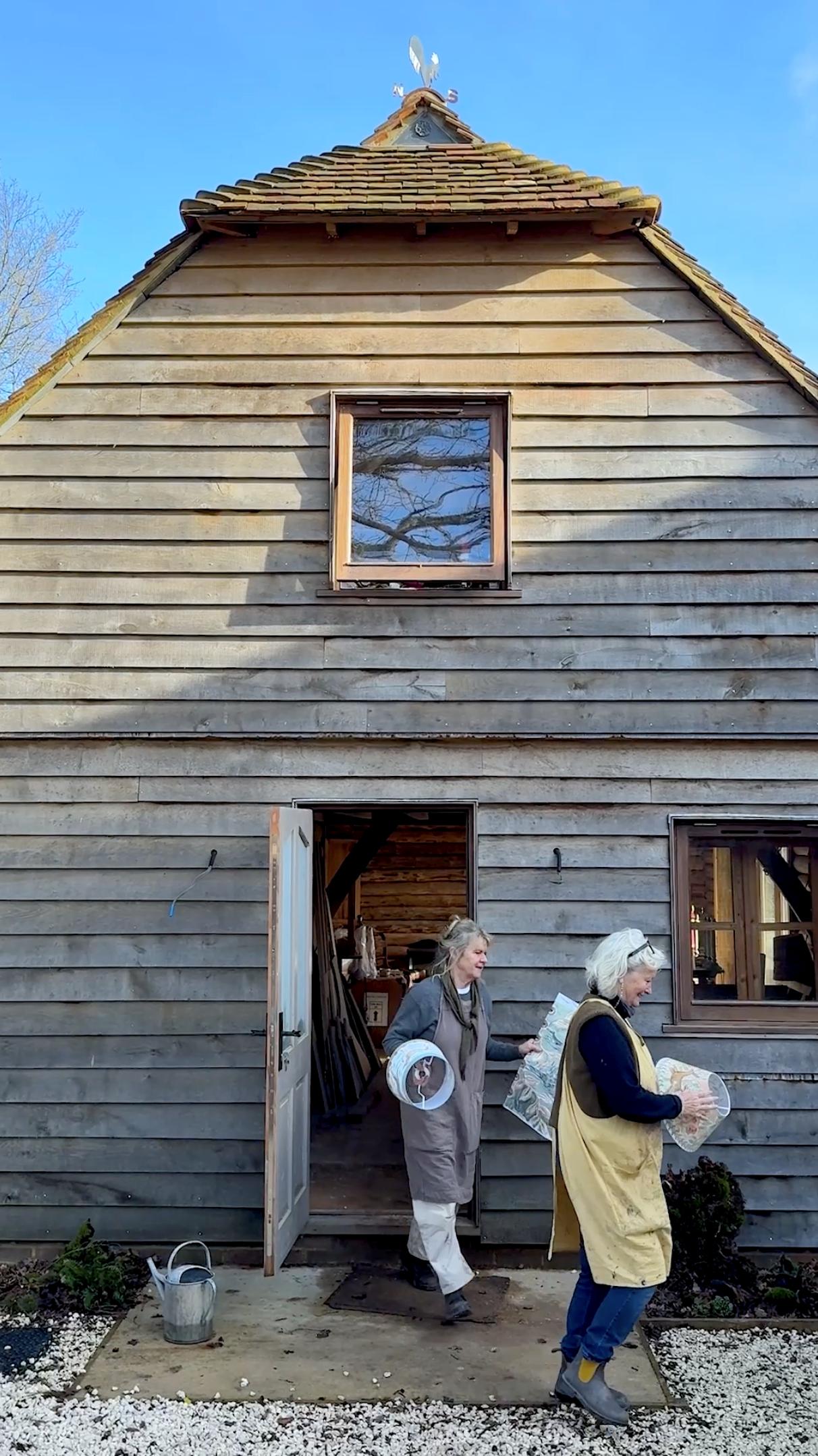
Take us back to the beginning - how did the two of you first start working together, and what drew you specifically to lampshades?
JM: I was running art day courses for a friend’s company, and we had decided to make lampshades for one of those courses, because you could make them in a day and then take something finished home. A lampshade is a fantastic way of adding a pop of colour to a room. Why just put art on the wall? This is art, and it’s functional.
JH: I went on Jane’s course, and although I’m not very artistic, I came away with a lampshade which I was thrilled with, but also with an idea. I suggested to Jane that we buy lampshades for her to paint, and we can sell them at fairs next summer.
JM: Then Covid hit. We had a palette of lampshades, and my paint, which I luckily hadn’t put into storage, so the top of Jane’s house became a studio, with cows giving birth underneath and everything, and we got to work. We never planned to start a lampshade business - it just happened.
JH: The very first day we set the website up, we were sitting in the garden drinking lots of rosé - it was gloriously warm and sunny.
JM: Jane’s rather tech-savvy daughter was with us and asked to check out the website. She looked and said, “Why is there this huge amount of money coming into your bank account?” We said, “You must be looking at the wrong number.” “No,” she said. “You’ve sold about £2,000 worth of lampshades”.
JH: So, we had to open another bottle of rosé, of course.
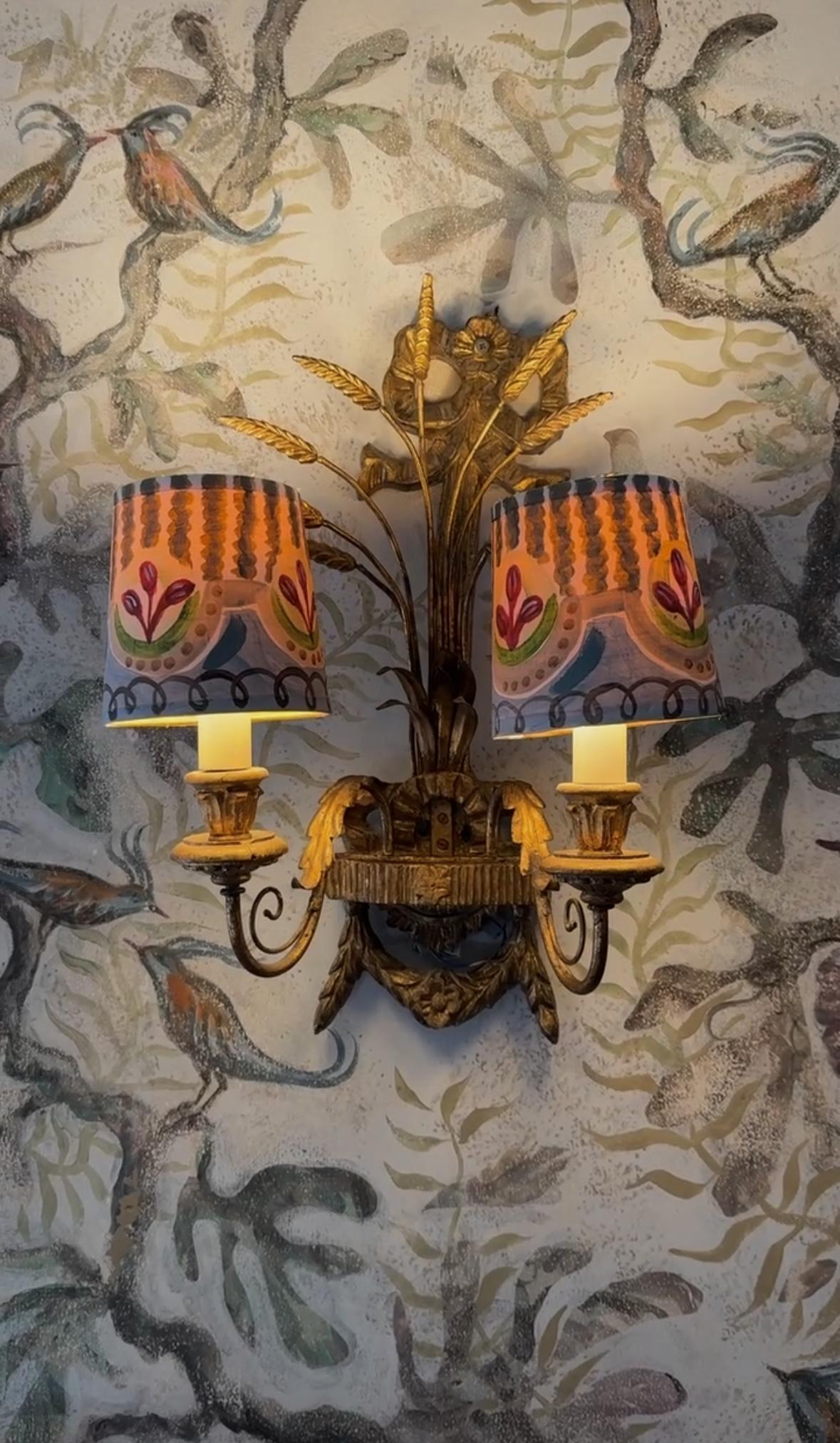
What was the Bloomsbury Group, and what do you find fascinating about it?
JM: The Bloomsbury Group started with Virginia Woolf, Vanessa Bell, and their brother Toby in the early twentieth century. As a group of artists, writers and thinkers, they rejected Victorian constraints and were all about freedom, experimentation, and expression.
JH: If you’ve been to Charleston Farmhouse, you’ll know they painted everything - walls, ceilings, doors, furniture - it’s part of the reason why we don’t limit our art to a framed painting on a wall.
JM: The way the Bloomsbury Group borrowed ideas, mixed design styles and colours, and never limited themselves creatively is why I’m endlessly fascinated by them.
How do you translate your passion for the Bloomsbury artists into your designs?
JM: What inspires us is the total freedom that guided the artists and thinkers in Bloomsbury Group. What we love to do is to mix ideas, colour, and design freely, without constraint, and ending up with something beautiful. All the colours are very painterly, so everything fits together.
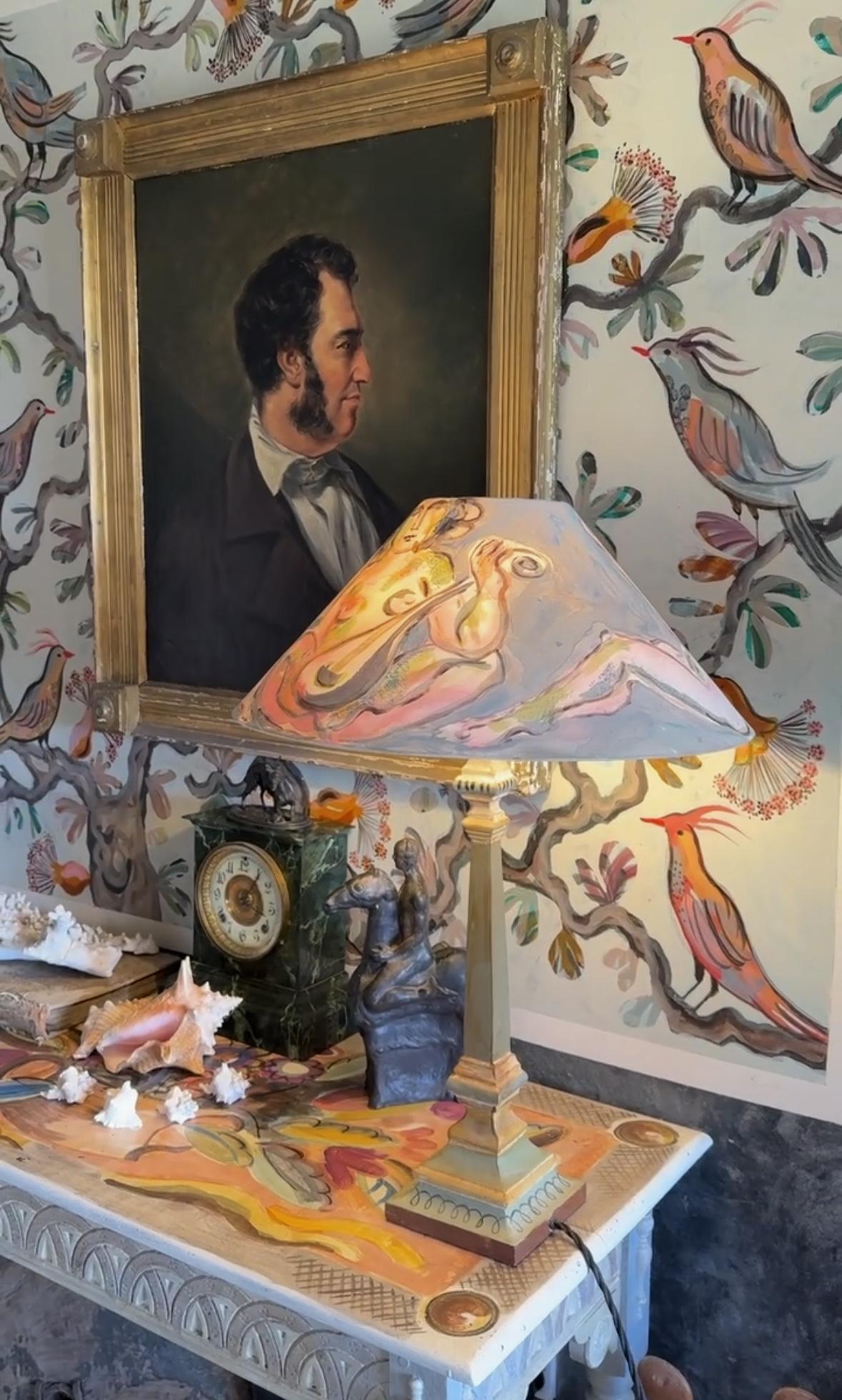
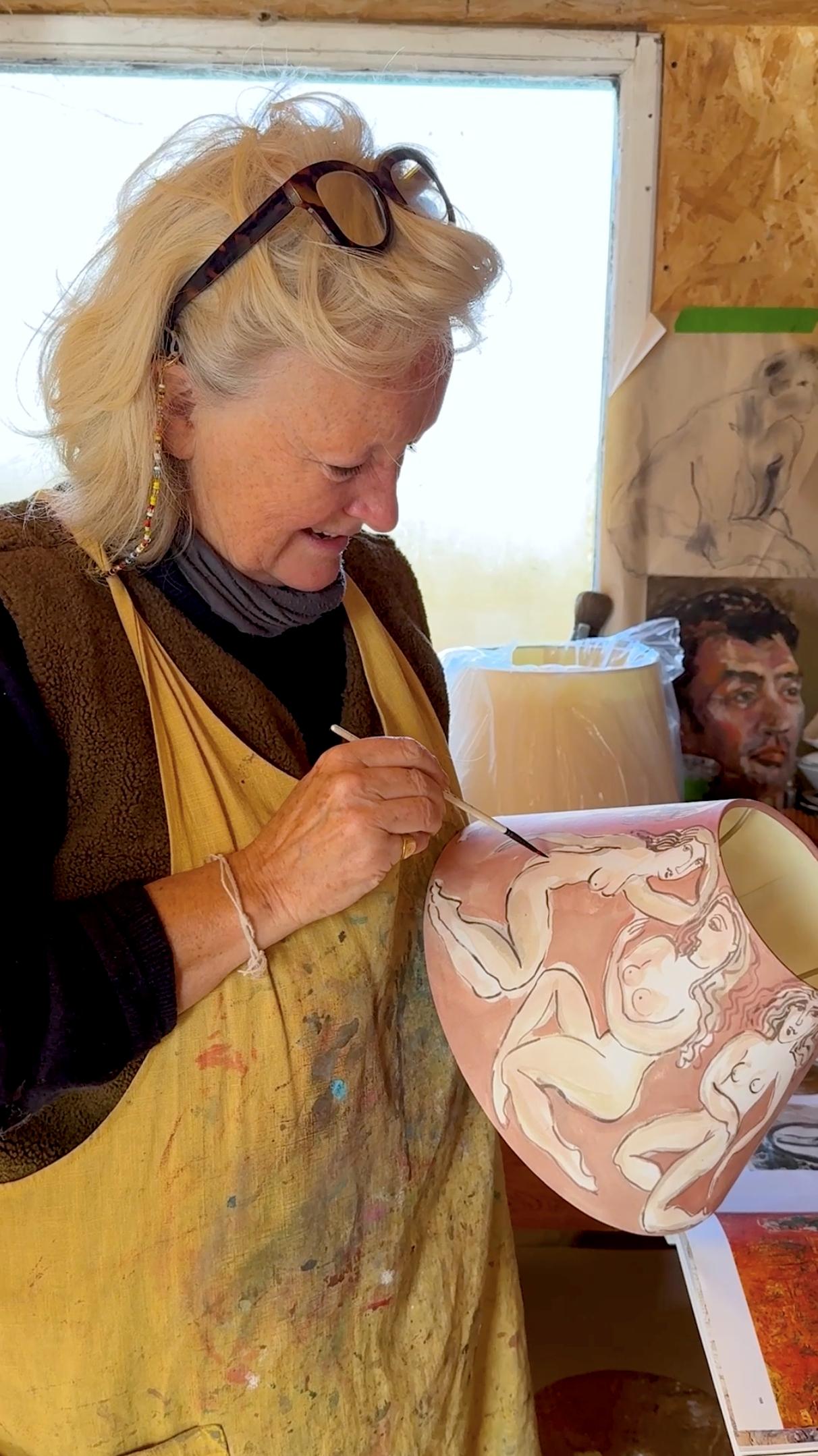
How do you work together – what roles do you each fulfil?
JM: Jane runs the business side, and I paint. We trust each other completely and it works really well having two completely separate parts of the business that can’t function without the other one.
JH: We talk all the time, but we allow ourselves to be moved by the day, which I think feeds into our work. We have no desire to be a huge brand; the real joy is people discovering us and loving our work. Jane is the creative talent, but I bring some of the business knowledge into the process too – I’ll be thinking of gaps in our offering or colours we haven’t done - things like that.
What is your process when creating your designs?
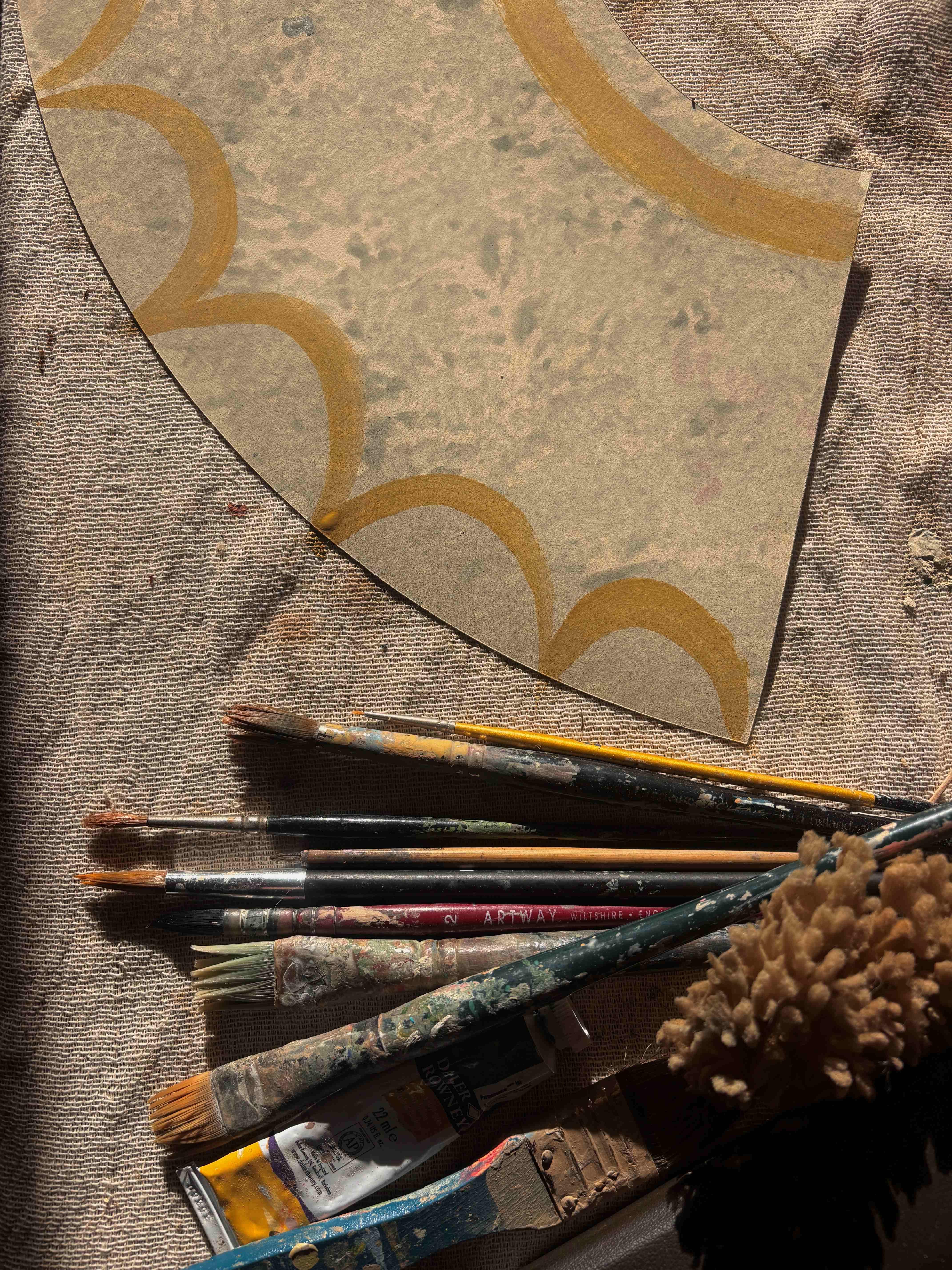
JM: Inspiration comes from everywhere. I pull references from pretty much everything I see. In my studio, I mix whatever colours I want in the moment. I never use paint straight from the tube. It’s just me, a paintbrush, water, and the surface. When we started, I was hand painting everything – there’s no recipe, so nothing can be repeated exactly. It was quite difficult to replicate my original design and keep it consistent with what’s online. We’re now able to print my original design, without compromising on texture and colour, which is fantastic.
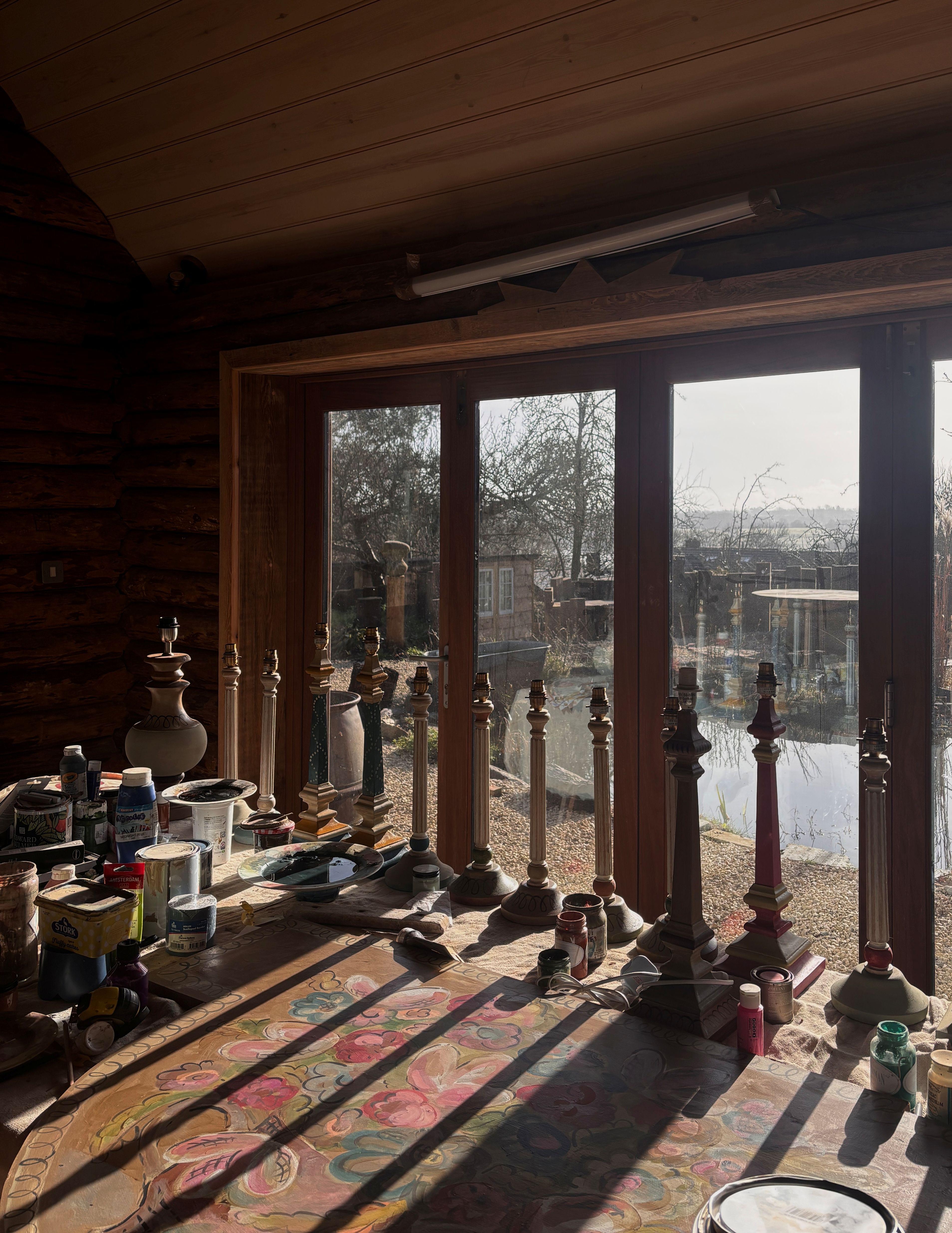
A log cabin in the middle of East Sussex makes for quite a unique studio. Can you tell us a bit about this space?
JM: When I moved here about six years ago, this house was actually a café. I got planning permission to build an annexe house on the land, which I wanted to use as my studio, but also as a guest house. A friend saw a fully built wood cabin on Facebook Marketplace and suggested I buy that. So, my studio is a Siberian log house I bought it from a stranger in Lithuania, which was brought over piece by piece. It’s now the most wonderful place to work - it’s spacious, light and this log burner is absolute heaven.


?fmt=auto&qlt=default&metadata=true$poieg$&w=1000&h=1300&sm=c&poi={$this.metadata.pointOfInterest.x},{$this.metadata.pointOfInterest.y},{$this.metadata.pointOfInterest.w},{$this.metadata.pointOfInterest.h}&scaleFit=poi)


?fmt=auto&qlt=default&metadata=true$poieg$&w=1000&h=1300&sm=c&poi={$this.metadata.pointOfInterest.x},{$this.metadata.pointOfInterest.y},{$this.metadata.pointOfInterest.w},{$this.metadata.pointOfInterest.h}&scaleFit=poi)


?fmt=auto&qlt=default&metadata=true$poieg$&w=1000&h=1300&sm=c&poi={$this.metadata.pointOfInterest.x},{$this.metadata.pointOfInterest.y},{$this.metadata.pointOfInterest.w},{$this.metadata.pointOfInterest.h}&scaleFit=poi)


