
75 in Residence: Alison Friend
Bringing contemporary whimsy to traditional portraiture, painter Alison Friend debuts her work at Seventy Five at Liberty
Read more
75 in Residence: Alison Friend
Bringing contemporary whimsy to traditional portraiture, painter Alison Friend debuts her work at Seventy Five at Liberty
Art has always been at the centre of the Liberty vision; we’ve remained at the forefront of the artistic movement for 150 years now, so it only makes sense to spotlight our thriving community of British artists at our all-day dining room, Seventy Five at Liberty – from the established to the up-and-coming – through an extraordinary series of residencies.
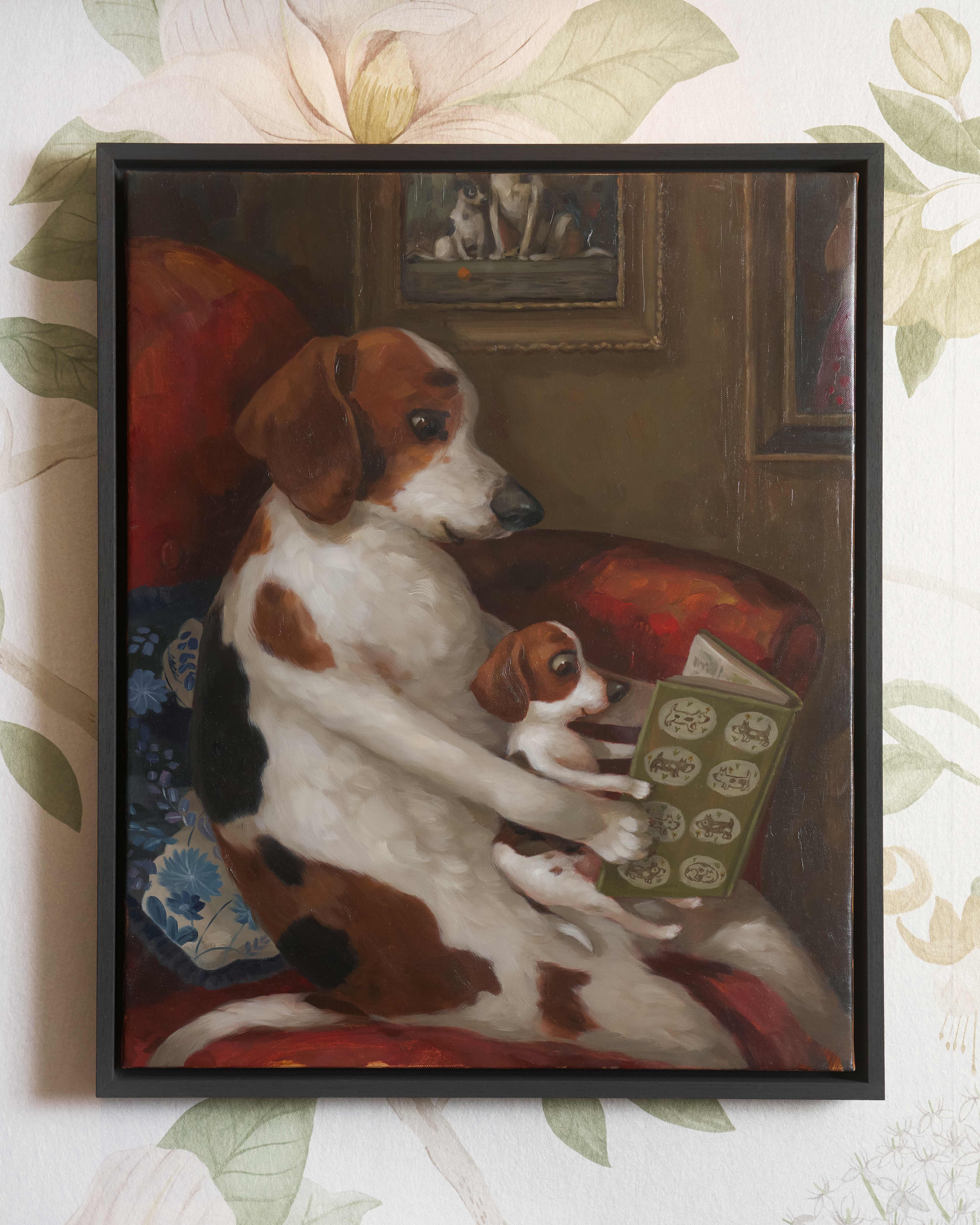
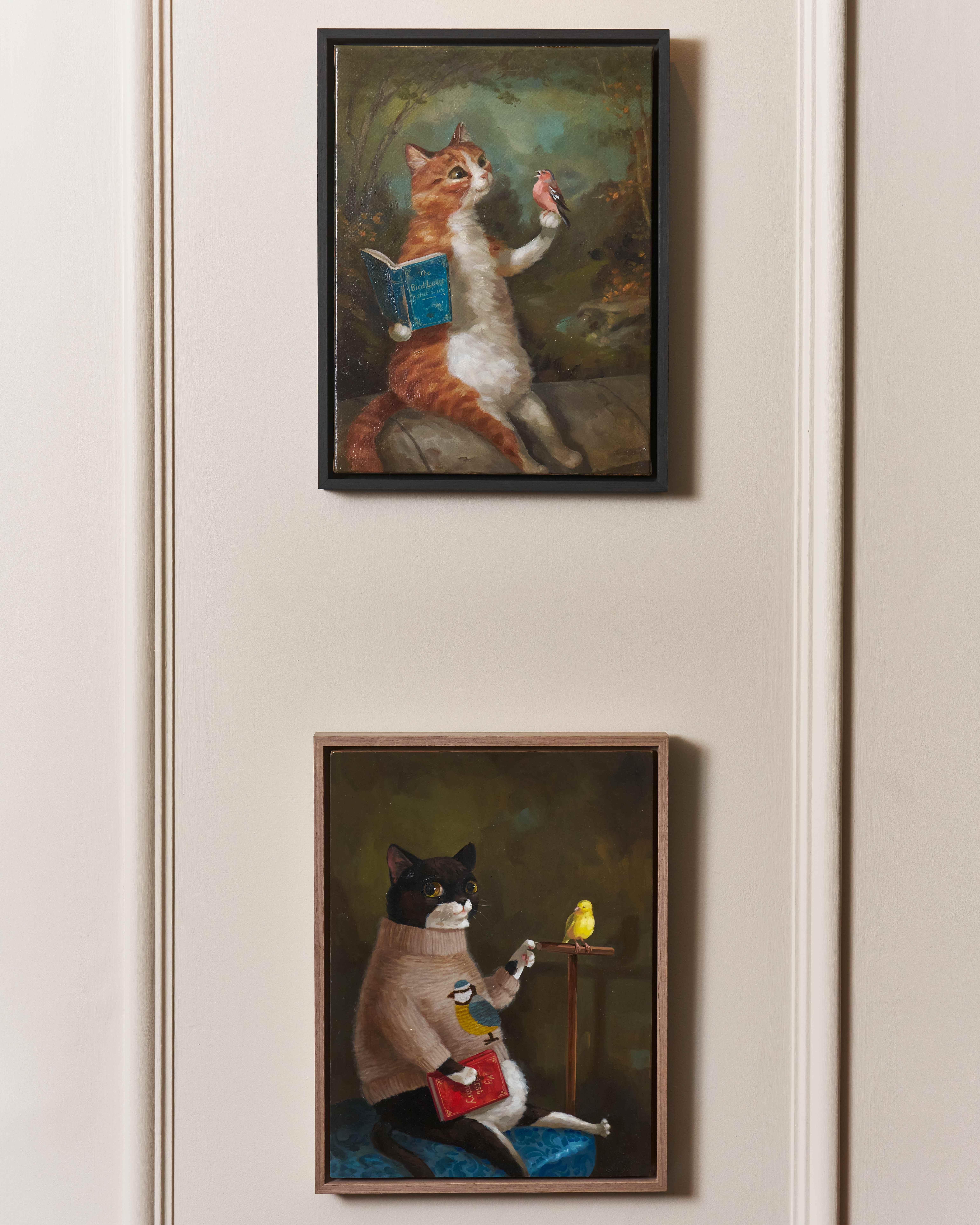
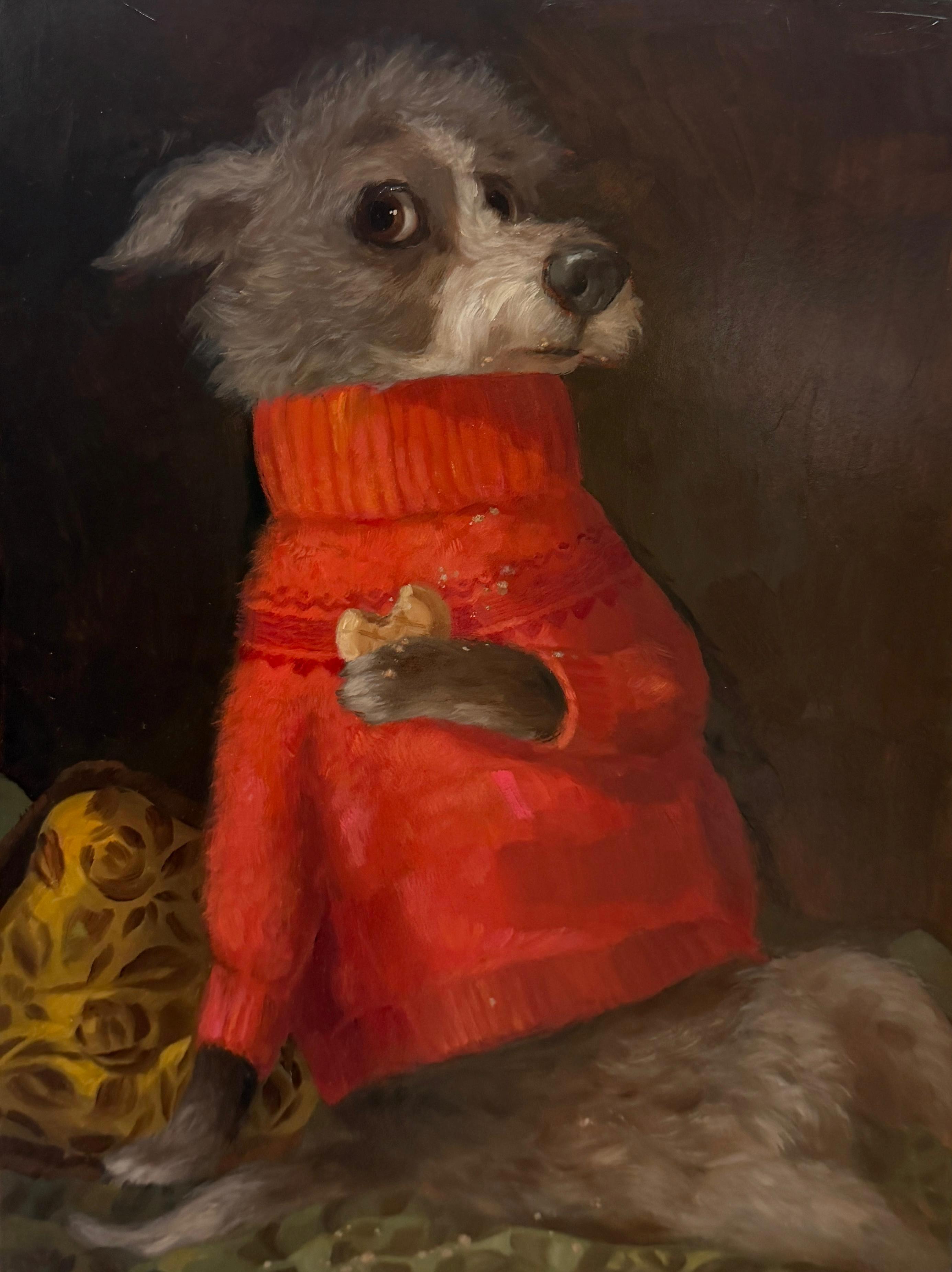
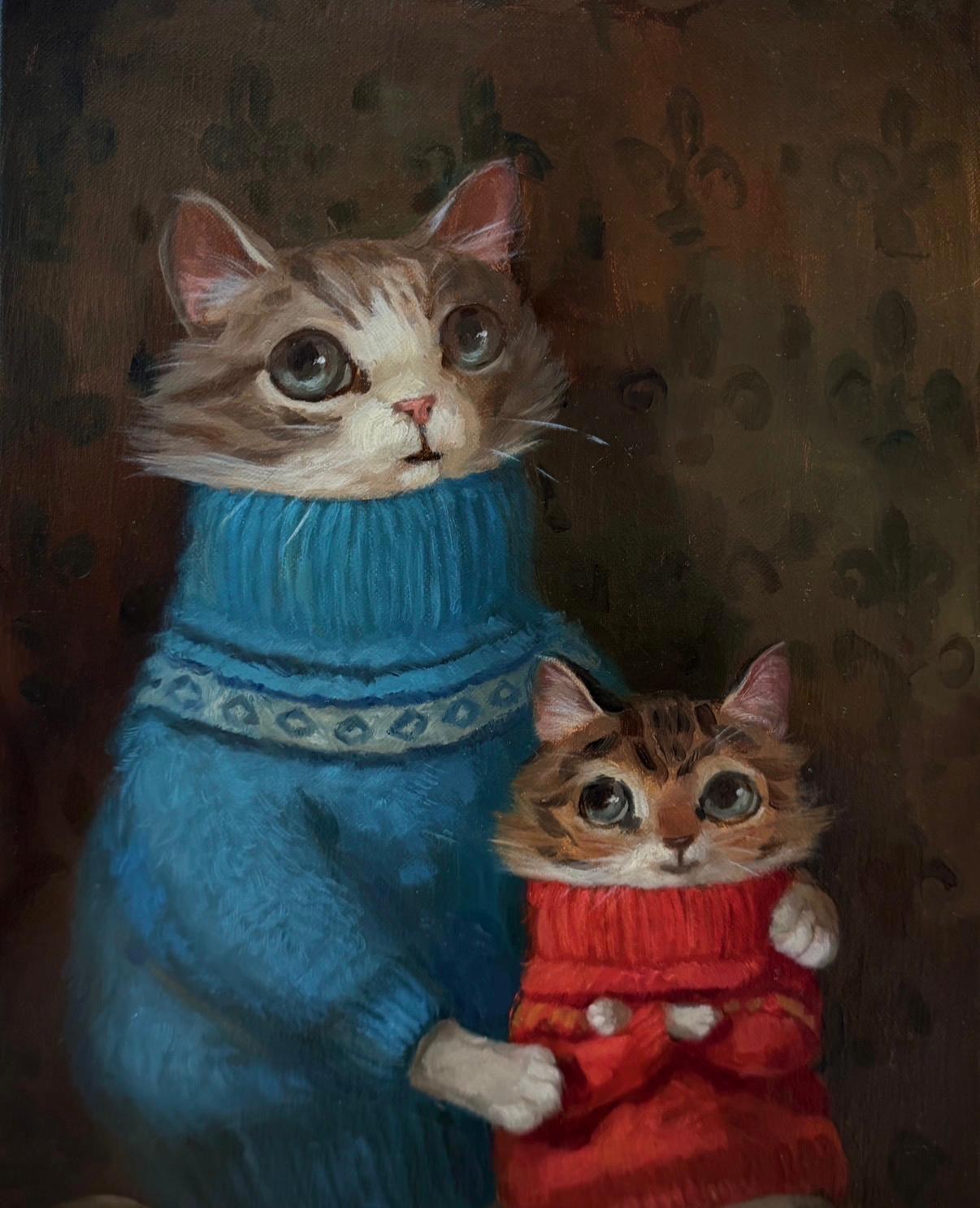
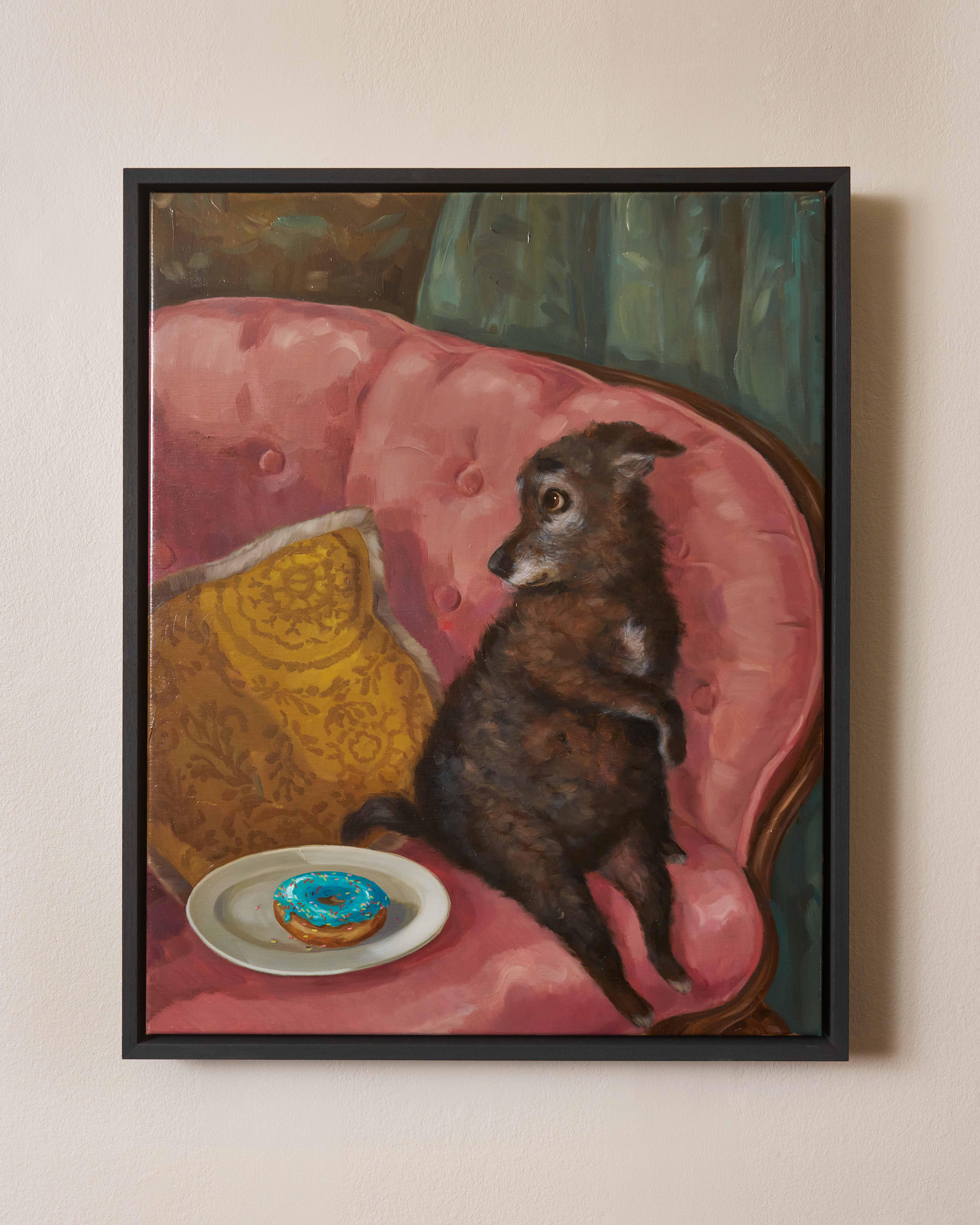
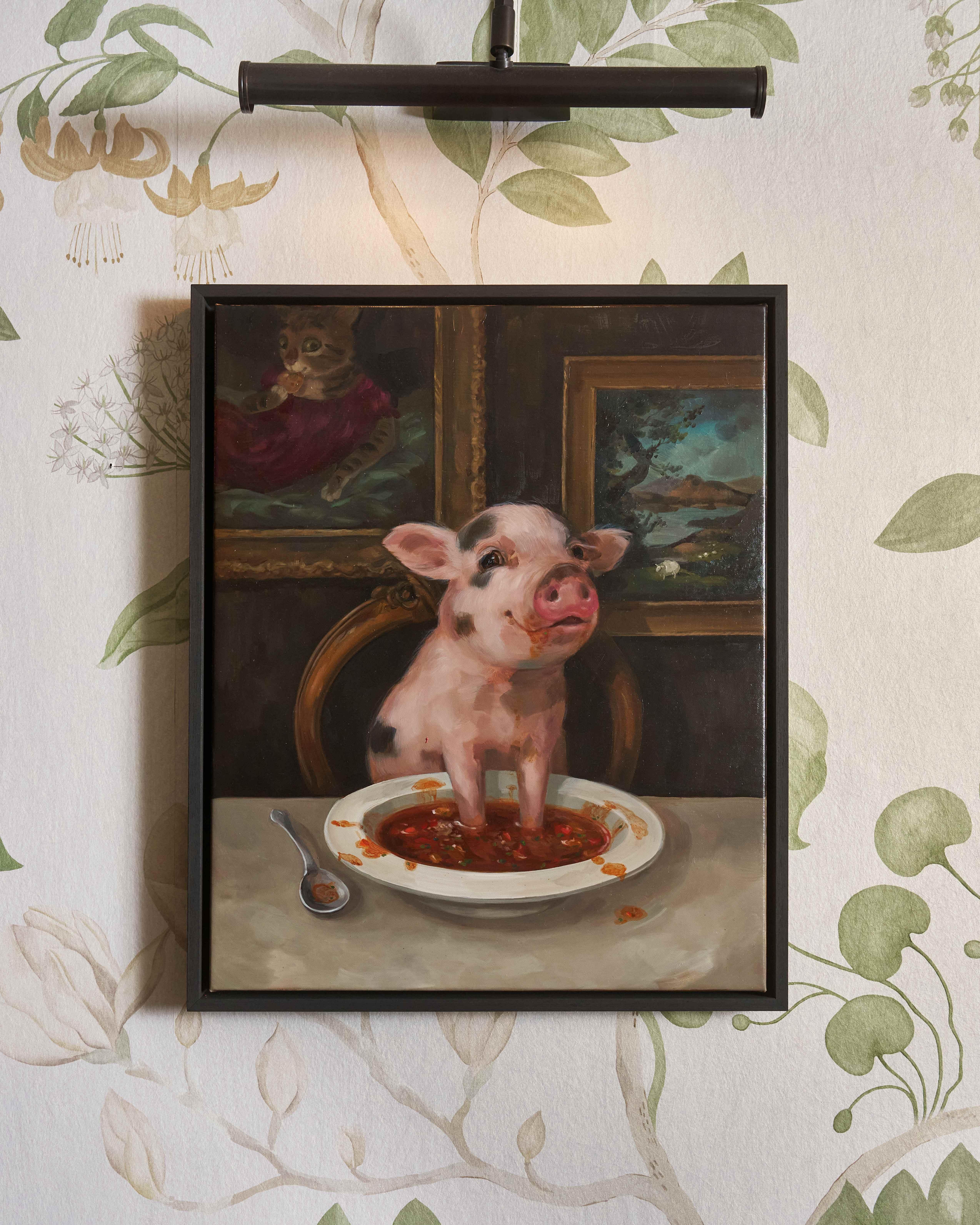
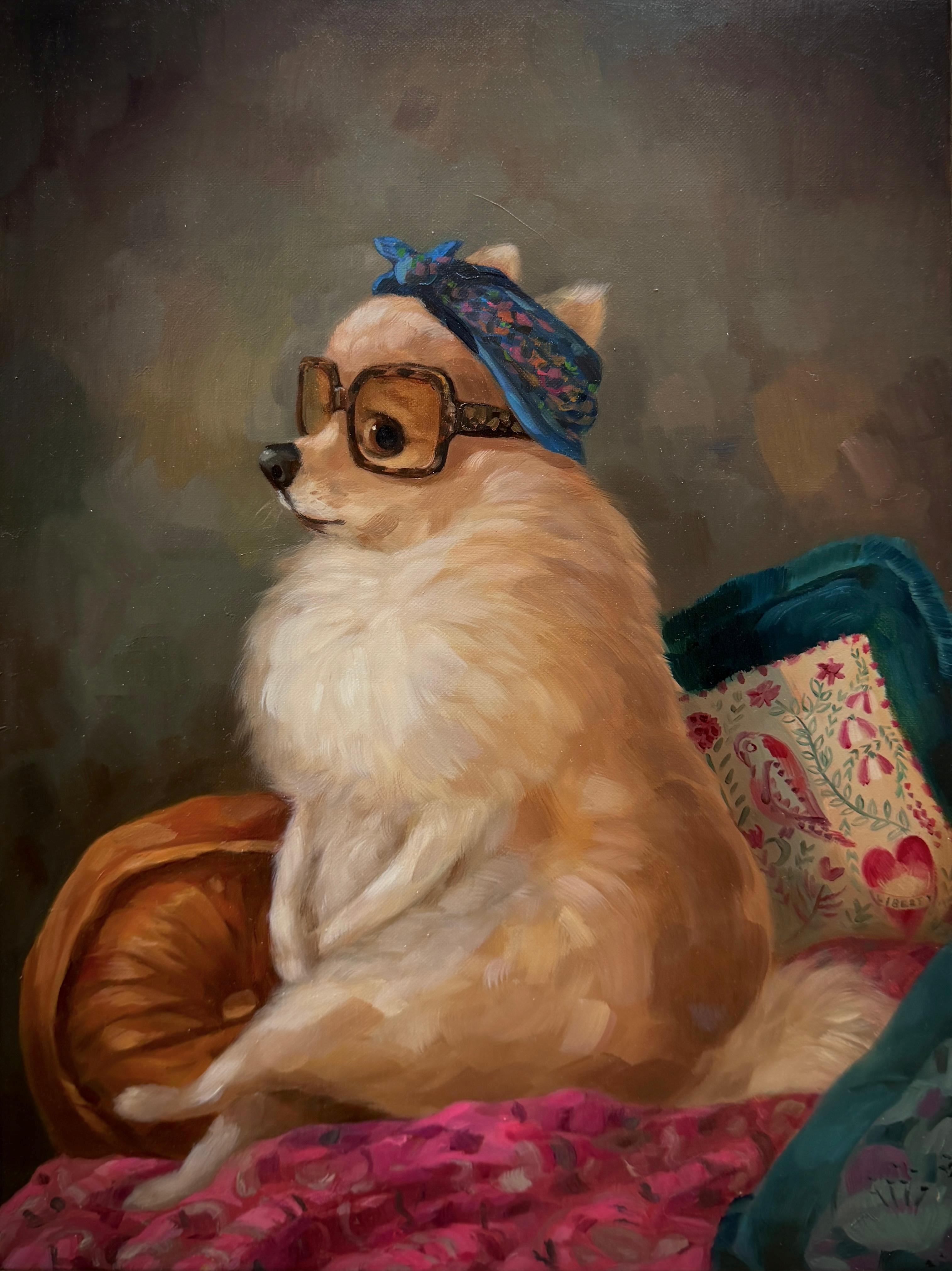
The latest artist to lay claim to our walls is British artist Alison Friend, who is known and loved for her whimsical, anthropomorphic animal portraits. Wielding the traditional, timeless techniques of the Old Masters with a playful, contemporary twist, Friend's distinctive style and playful characters charm, surprise and connect with audiences everywhere. In an exhibition that reflects our distinctly British sense of humour, man's best friends get Liberty makeovers with silk scarves, designer sunglasses and the latest ready-to-wear from our store - spotlighting our history as a home forthe unconventional, the collectible, and the delightfully unexpected.
When did animals first become part of your artistic practice?
I've always been an animal lover. I don't know whether that's something to do with being an only child, but I used to sit and draw obsessively as a kid, and it was always animals. The funny-animal aspect probably began when my dad passed away when I was seven. I saw it as a way to make my mum happy, so I'd draw the neighbour's cats in funny scenarios. She was having such a hard time, and I realised I could create something that would make her smile. I think that's when it became a tool for bringing people joy, and I've carried that through my entire career.
That's an incredible thing to realise at such a young age.
As a child, when you see a parent upset and realise there's something you can do to put a smile on their face, that's very powerful. I think that's what it was back then.
What does art mean to you, and what is the purpose of your work?
I think art should stir something in you. If you stand in front of a painting or a sculpture and it creates an emotion or a feeling, then it's served its purpose. At the end of the day, I don't think you need a big explanation. If it stirs an emotion in you, then it's been successful. As for my own work, the fact that it clearly brings people happiness is enough for me.
There's something about your work that feels very human. How important is that to you?
I think that's part of what resonates with people and why they connect with my characters so easily. It probably began when I started illustrating picture books and anthropomorphising animals because they were standing in for humans in my stories. I guess it all started there.
You've selected objects from Liberty to feature in the exhibition. How did you choose them?
They're the things I really associate with Liberty: the prints, the textiles. Having walked through the store whenever I come to London, they're the things I'm naturally drawn to - sweaters, beautiful cushions, and all those wonderful fabrics.
There's a strong sense of humour in your paintings, but your technique is highly skilled and traditional. Is that contrast important?
Humour is a big part of my painting. I don't like the paintings to be too saccharine or too sweet. I like the animals to have a little bit of an edge, whether it's a side-eye, a sulk, or an expression that suggests they're not entirely pleased. I want people to buy into the characters.
My technique has been described as having an Old Master quality. I think that seriousness exaggerates the humour in the characters because you have this very formal treatment of paint and posture, but then these amusing, almost cartoon-like characters. They're not quite cartoons, and that's where the humour comes from.
Which artist do you tend to look to for inspiration?
The artist who probably inspired me most when I started creating these animal portraits was the German surrealist painter Michael Sowa. Rather excitingly, he followed me on Instagram recently, which I was thrilled about.
Finally, how do you hope people respond to your work?
The feedback I get from people is that the work makes them happy, and I feel like that's my job done. I really paint to make people happy. It's what I've always done - to bring a smile to people's faces.
Visit Seventy Five at Liberty on the Third Floor to view or purchase Alison Friend's work.


?fmt=auto&qlt=default&metadata=true$poieg$&w=1000&h=1300&sm=c&poi={$this.metadata.pointOfInterest.x},{$this.metadata.pointOfInterest.y},{$this.metadata.pointOfInterest.w},{$this.metadata.pointOfInterest.h}&scaleFit=poi)


?fmt=auto&qlt=default&metadata=true$poieg$&w=1000&h=1300&sm=c&poi={$this.metadata.pointOfInterest.x},{$this.metadata.pointOfInterest.y},{$this.metadata.pointOfInterest.w},{$this.metadata.pointOfInterest.h}&scaleFit=poi)


?fmt=auto&qlt=default&metadata=true$poieg$&w=1000&h=1300&sm=c&poi={$this.metadata.pointOfInterest.x},{$this.metadata.pointOfInterest.y},{$this.metadata.pointOfInterest.w},{$this.metadata.pointOfInterest.h}&scaleFit=poi)


_0824_RETOUCHED?fmt=auto&qlt=default&metadata=true$poieg$&w=1000&h=1300&sm=c&poi={$this.metadata.pointOfInterest.x},{$this.metadata.pointOfInterest.y},{$this.metadata.pointOfInterest.w},{$this.metadata.pointOfInterest.h}&scaleFit=poi)


?fmt=auto&qlt=default&metadata=true$poieg$&w=1000&h=1300&sm=c&poi={$this.metadata.pointOfInterest.x},{$this.metadata.pointOfInterest.y},{$this.metadata.pointOfInterest.w},{$this.metadata.pointOfInterest.h}&scaleFit=poi)


?fmt=auto&qlt=default&metadata=true$poieg$&w=1000&h=1300&sm=c&poi={$this.metadata.pointOfInterest.x},{$this.metadata.pointOfInterest.y},{$this.metadata.pointOfInterest.w},{$this.metadata.pointOfInterest.h}&scaleFit=poi)
?fmt=auto&qlt=default&metadata=true$poieg$&w=1000&h=1300&sm=c&poi={$this.metadata.pointOfInterest.x},{$this.metadata.pointOfInterest.y},{$this.metadata.pointOfInterest.w},{$this.metadata.pointOfInterest.h}&scaleFit=poi)


?fmt=auto&qlt=default&metadata=true$poieg$&w=1000&h=1300&sm=c&poi={$this.metadata.pointOfInterest.x},{$this.metadata.pointOfInterest.y},{$this.metadata.pointOfInterest.w},{$this.metadata.pointOfInterest.h}&scaleFit=poi)


